What once sounded unthinkable is now being discussed openly at the highest levels of global politics.
When former U.S. President Donald Trump publicly raised the idea of annexing Greenland—a NATO-associated territory protected by international law—many initially dismissed it as rhetorical excess. That assumption no longer holds. In recent days, Trump has overseen military action in Venezuela, supported the capture of its president, and then openly entertained territorial expansion in the Arctic.
For Canada and its European allies, the message was unmistakable: words are no longer just words. Patterns are forming.
That is why Canada is moving with urgency, coordination, and strategic clarity—particularly with Europe.
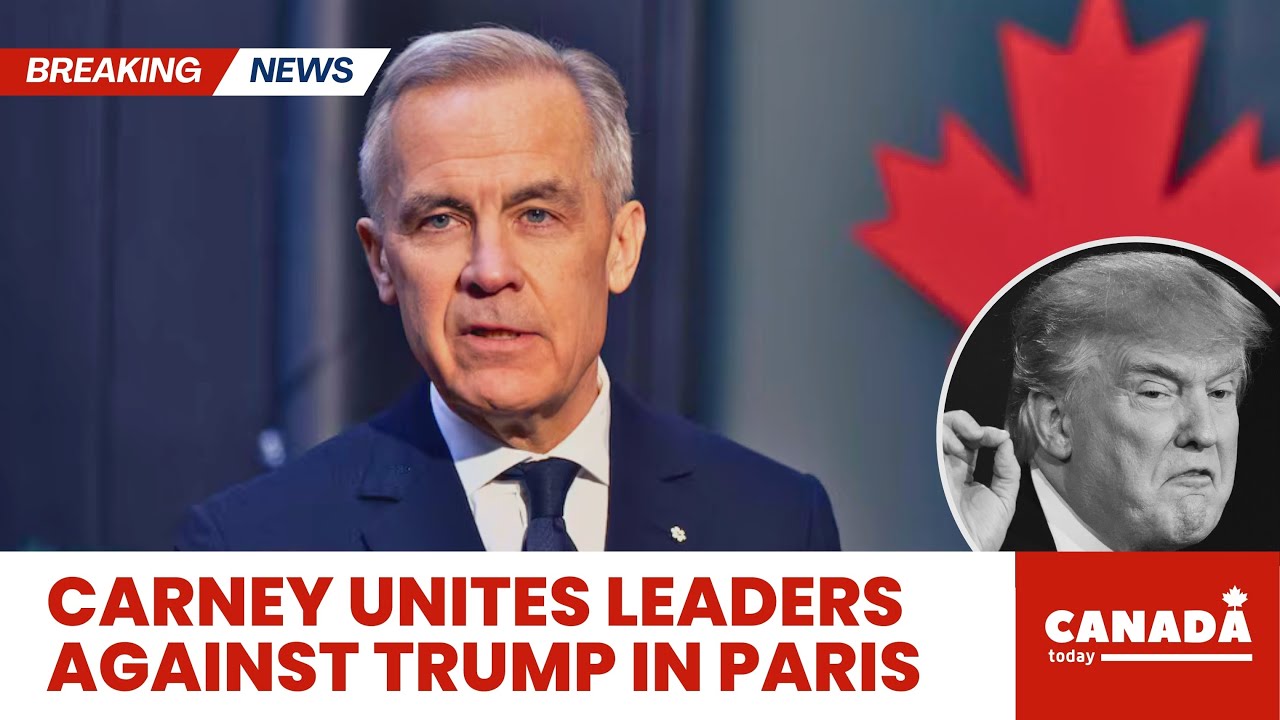
From Rhetoric to Pattern
The concern in Ottawa is not limited to Greenland itself. It is about what happens when annexation threats become normalized and unchallenged.
Only a year earlier, Trump had floated similar rhetoric about Canada, repeatedly referring to it as a potential “51st state” and framing sovereignty as negotiable. At the time, many European leaders viewed those remarks as political theater. Today, they are reassessing.
The sequence matters. Military action in Venezuela, followed by explicit discussion of territorial acquisition in the Arctic, has forced allies to reconsider the assumption that institutional norms alone are sufficient to constrain power.
Canada sees Greenland as a test case—not an isolated issue.
Mark Carney’s Paris Visit Becomes an Emergency Signal
When Prime Minister Mark Carney arrived in Paris this week, the meetings were expected to focus on routine diplomatic coordination. Instead, they quickly escalated into urgent discussions about alliance cohesion, Arctic security, and collective response.
The shift became public when Carney appeared alongside Denmark’s prime minister. The symbolism was deliberate.
Canada shares the Arctic with Greenland. It shares NATO responsibilities in the region. And it understands that Arctic security is inseparable from Canadian sovereignty.
Carney’s message was direct and unambiguous: Greenland’s future belongs solely to Greenland and Denmark—no external power has standing to decide otherwise.
This was not symbolic diplomacy. It was a strategic line being drawn.
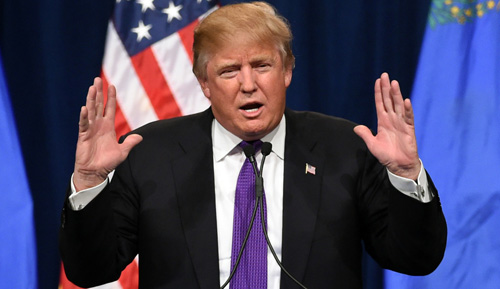
A Clear Position on Sovereignty and NATO
When asked whether the use of military force to annex Greenland would effectively end NATO, Carney avoided emotional language. Instead, he anchored Canada’s position in first principles.
Self-determination.
Sovereignty.
Territorial integrity.
He emphasized that NATO’s western flank—including the Arctic and Greenland—is an area requiring increased investment and coordination due to a rapidly evolving threat environment. Canada, he noted, has been pressing this point for years and has already begun expanding its Arctic military capabilities in cooperation with Nordic partners.
Rather than framing the issue as a confrontation with the United States, Carney framed it as a test of alliance credibility.
If NATO cannot defend the sovereignty of its own strategic regions, the alliance itself becomes hollow.
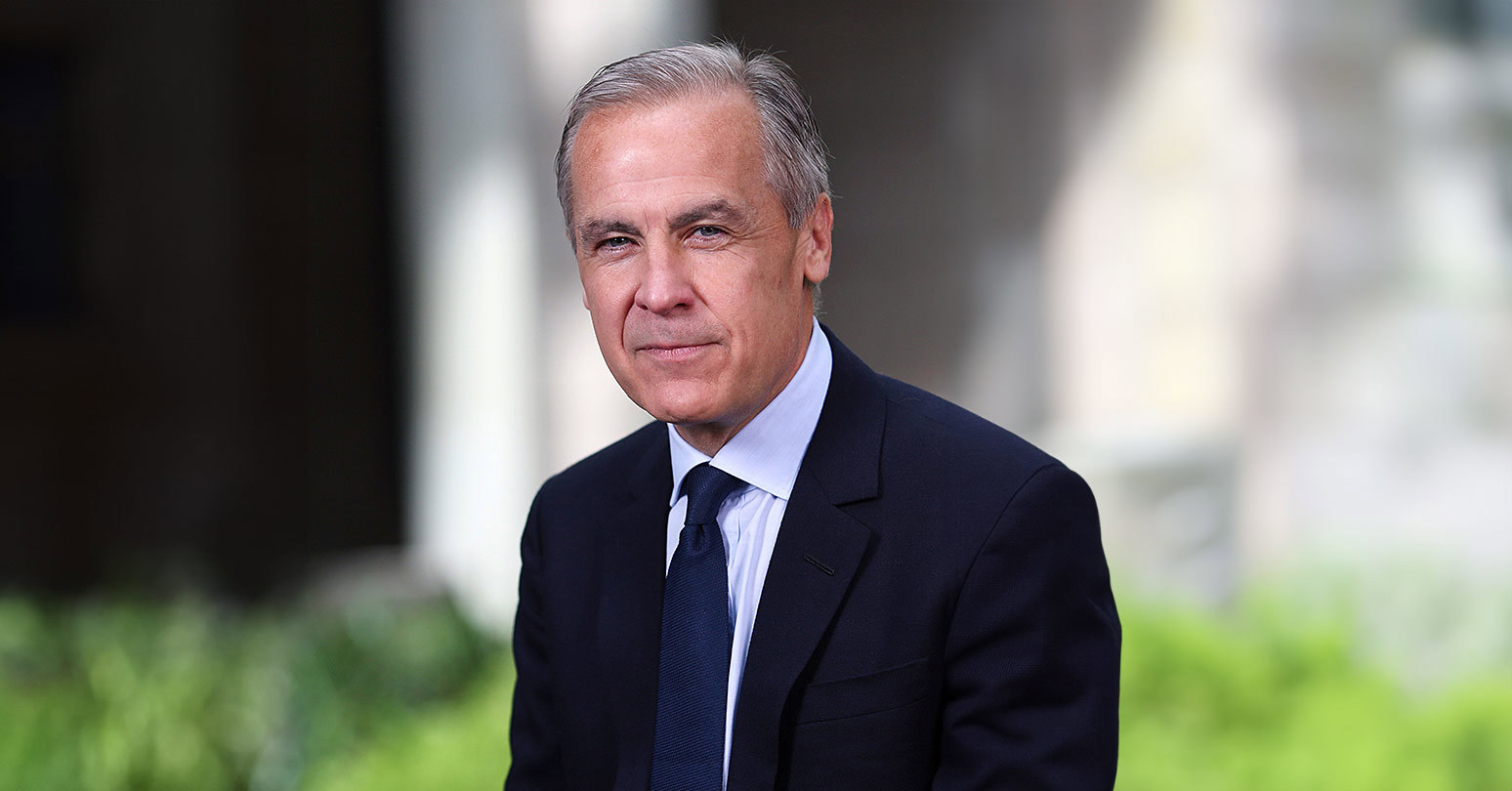
Why the Arctic Is No Longer Peripheral
For much of the post–Cold War era, the Arctic was treated as a quiet frontier. That era is over.
Climate change is opening new shipping routes. Resource competition is intensifying. Military postures are shifting northward. In this context, Greenland is not a remote outpost—it is a central node in transatlantic security.
Carney’s repeated emphasis on Arctic investment reflects Canada’s assessment that future geopolitical competition will increasingly be decided in regions once considered peripheral.
Trump’s language has accelerated that reassessment.
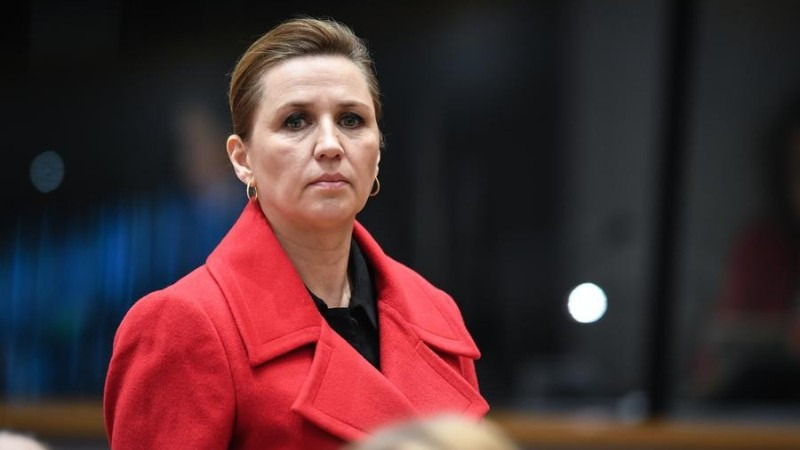
Coordination, Not Freelancing
One of the most striking elements of Carney’s visit was what he did not do. He did not posture unilaterally. He did not issue threats. And he did not frame Canada as acting alone.
Instead, he appeared publicly alongside NATO leadership, underscoring that Canada’s response is embedded within collective security structures. The visual message mattered: Canada is aligning, coordinating, and reinforcing alliances—not improvising.
In a volatile environment, predictability and partnership become strategic assets.
Energy, Venezuela, and Strategic Contrast
Carney’s remarks on energy further clarified Canada’s broader worldview.
When asked whether Trump’s actions in Venezuela—particularly the focus on oil—would affect Canada’s energy sector, Carney acknowledged that a stable, democratic Venezuela producing oil responsibly would be positive for its people and the region.
But he rejected the implication that Canada’s energy relevance depends on instability elsewhere.
Canadian energy, he emphasized, is competitive because it is low risk, increasingly low cost, and produced under the rule of law. Investments in emissions reduction and carbon capture are strengthening its long-term position, not weakening it.
In a world where energy is increasingly politicized, reliability and governance matter as much as volume.
A Subtle but Firm Contrast
Without naming Trump directly, Carney drew a clear contrast between two approaches to global influence.
One relies on coercion, unpredictability, and unilateral pressure.
The other relies on alliances, legality, and long-term credibility.
Canada’s strategy is built on the assumption that as global instability rises, trusted partners become more valuable—not less.
Why This Matters Beyond Greenland
This moment is not about Denmark alone. It is about whether the international system treats annexation threats as tolerable rhetoric or as unacceptable precedent.
Canada’s position reflects a broader realization now spreading across Europe: responding individually to coercive pressure increases vulnerability. Responding collectively reinforces boundaries.
Greenland is the immediate focus. The Arctic is the strategic theater. And alliance unity is the deterrent.
Prevention, Not Provocation
Carney’s European engagements were not about escalation. They were about prevention.
Canada is acting on a simple calculation: once threats to sovereignty are normalized, no country—no matter how friendly or integrated—is immune.
By clarifying its position early, publicly, and in coordination with allies, Canada is signaling that it will not wait for ambiguity to harden into precedent.
In a world where lines are being tested, the countries that define them early are the ones most likely to keep them intact.






