Banks, Politics, and the Power to Exclude: A New Test for American Finance
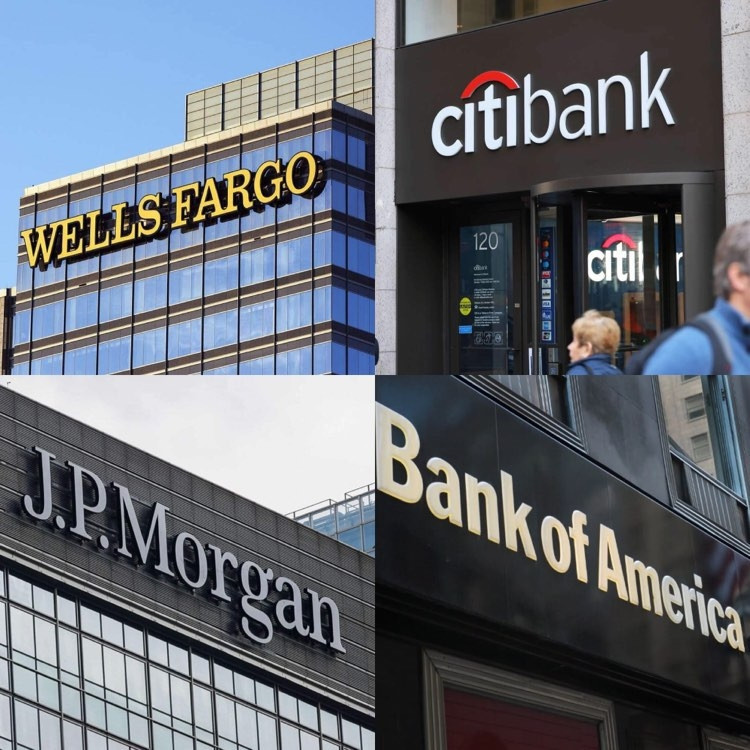
In the early hours of a recent January morning, a cascade of decisions inside some of the world’s largest banks set off a controversy now rippling through Washington, Wall Street and the courts. Within a span of roughly two weeks, four major financial institutions — JPMorgan Chase, Bank of America, Deutsche Bank and Wells Fargo — severed or suspended their banking relationships with one of the most influential and polarizing figures in American politics.
Each bank cited familiar language: “institutional risk,” “reputational concerns,” and standard contractual discretion. Yet the compressed timeline, overlapping internal deliberations and mounting political pressure have fueled allegations that the moves were not merely independent business judgments, but part of a coordinated strategy with profound legal and constitutional implications.
At stake is a question that goes far beyond any single individual: Can private financial institutions, acting in parallel and under political pressure, effectively cut a person or organization out of the modern economy — and if so, where are the limits?
A Pattern Emerges
According to documents and reporting circulating widely on social media platforms such as X (formerly Twitter), Substack and YouTube — some of it now referenced in court filings — JPMorgan Chase internally approved an account termination in mid-December, though the formal notice was not issued until early January. Bank of America followed days later, providing a shorter notice period and freezing certain accounts immediately. Deutsche Bank then suspended transactions without advance warning, reportedly blocking payroll transfers. Wells Fargo soon terminated both personal and business accounts, revoking access to safe-deposit boxes.
None of the banks publicly cited criminal charges, new regulatory actions or material changes in creditworthiness. Financial disclosures indicate that the individual involved had no recent defaults and, by conventional metrics, did not suddenly become a greater financial risk in December than in prior months.
That gap between stated rationale and observable financial facts has become central to the controversy.
Political Pressure and “Reputational Risk”
In the weeks following the 2024 election, progressive advocacy groups intensified public campaigns urging corporations to cut ties with figures they described as threats to democratic norms. At the same time, several Democratic senators signed letters reminding major banks of their “institutional responsibility to democracy,” language that critics describe as an implicit warning about reputational and regulatory scrutiny.
The Senate Banking Committee announced hearings on the relationship between financial institutions and democratic stability, with chief executives from several major banks expected to testify. Within days of those announcements, multiple bank boards and risk committees reportedly met and reached similar conclusions.
Banks have long argued — and courts have generally agreed — that they have broad discretion to choose their customers. Reputational risk, in particular, has become a dominant factor in compliance decisions since the 2008 financial crisis. But legal scholars note that discretion has limits when competitors act in concert.
“If independent firms reach the same decision separately, that’s lawful,” said a former Federal Trade Commission official in an interview shared widely online. “If they coordinate those decisions, directly or indirectly, you’re suddenly in antitrust and civil rights territory.”
Echoes of Operation Choke Point
For critics, the episode recalls Operation Choke Point, a Justice Department initiative during the Obama administration that pressured banks to cut ties with certain lawful but disfavored industries, including payday lenders and firearms dealers. Congressional investigations later concluded that the program relied on indirect coercion rather than formal regulation, leading to settlements and its eventual termination.
The parallel is unsettling to some lawmakers, particularly Republicans, who argue that political actors may now be outsourcing enforcement to corporations, achieving outcomes the government itself could not constitutionally impose.
“This is privatized punishment,” said one House member during a recent interview on Fox News. “No charges, no trial, no due process — just financial exile.”
The Legal Fight Ahead
A federal lawsuit filed in New York accuses the banks of antitrust violations, civil rights conspiracy and breach of contract. The plaintiffs argue that coordinated debanking deprived them of property and political participation without due process, pointing to internal communications and the use of identical termination language allegedly drafted by the same outside law firm.
The banks are expected to respond by emphasizing their contractual rights and denying any coordination, characterizing the timing as coincidence driven by shared risk assessments.
Legal analysts say discovery will be decisive. Subpoenas for emails, board minutes and communications with regulators could either substantiate or undermine claims of coordination. A preliminary injunction request seeks immediate restoration of accounts, arguing that the financial harm — including missed payroll and frozen vendor payments — is irreparable.
A Broader Precedent

Beyond the courtroom, the episode has reignited debate over the power of financial intermediaries in an increasingly cashless economy. In 2025, access to banking is not optional: employers, tax authorities and payment platforms all require it.
Civil liberties advocates warn that if political views or associations become grounds for exclusion, the consequences could extend far beyond high-profile figures. Activist groups, journalists, religious organizations and small businesses operating in controversial but legal spaces could all face heightened vulnerability.
Supporters of the banks counter that corporations should not be forced to maintain relationships that expose them to reputational or regulatory harm. “This is the free market at work,” one former banking executive wrote on LinkedIn. “Clients create risk. Banks manage it.”
An Unsettled Question
The controversy now sits at the intersection of corporate governance, constitutional law and democratic accountability. Supreme Court precedents on state action suggest that private entities can become subject to constitutional constraints if they act under government encouragement or pressure. Whether that standard applies here remains an open and intensely contested question.
As congressional hearings loom and courts begin to weigh the evidence, the outcome may help define a new boundary between political power and financial infrastructure.
For now, the episode underscores a reality of modern life: in an economy mediated by a small number of global institutions, access to money is access to participation itself. Who controls that access — and under what rules — is no longer an abstract question. It is a live one, unfolding in real time, with implications that could shape American finance and politics for years to come.






