Jack Smith Defends Trump Prosecution as House Republicans Turn Hearing Into Political Spectacle
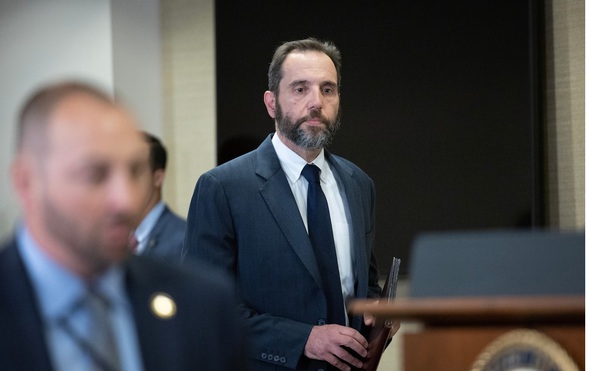
Washington — In a tense and often chaotic hearing before the House Judiciary Committee, Special Counsel Jack Smith forcefully defended his prosecution of former President Donald J. Trump, rejecting accusations of political bias and warning that efforts to intimidate prosecutors threaten the rule of law itself.
What Republican leaders billed as a reckoning for the Justice Department instead became a vivid illustration of the nation’s deepening institutional divide: Democrats framed the hearing as a defense of accountability after the January 6, 2021, attack on the Capitol, while Republican lawmakers used their time to relitigate grievances, attack federal law enforcement, and portray Mr. Trump as the victim of a politicized justice system.
From the outset, Mr. Smith adopted a sober and unyielding tone.
“I stand by my decisions as special counsel, including the decision to bring charges against President Trump,” he told lawmakers. “Our investigation developed proof beyond a reasonable doubt that President Trump engaged in criminal activity.”
Mr. Smith emphasized that the prosecution would have proceeded regardless of political affiliation. “If asked whether to prosecute a former president based on the same facts today,” he said, “I would do so whether that president was a Democrat or a Republican. No one should be above the law.”
A Hearing Shaped by January 6 — and Efforts to Avoid It
Although the hearing nominally focused on the conduct of the special counsel, January 6 loomed over nearly every exchange. Democrats repeatedly returned to the attack on the Capitol and Mr. Trump’s alleged role in attempting to overturn the 2020 election. Republicans, by contrast, often sought to redirect the discussion toward procedural grievances, past investigations involving Mr. Smith, or claims of selective prosecution.
Several Republican members attempted to restrict Mr. Smith from discussing the classified-documents case involving Mr. Trump’s retention of sensitive materials at his Mar-a-Lago residence, citing ongoing litigation and judicial restrictions. Mr. Smith nevertheless summarized the allegations in broad terms, noting that highly sensitive national security documents had been stored “in a ballroom and a bathroom” and that investigators had uncovered repeated efforts to obstruct their recovery.
“Rather than accept his defeat in the 2020 election,” Mr. Smith said, “President Trump engaged in a criminal scheme to overturn the results and prevent the lawful transfer of power.”
Threats, Intimidation, and the Cost of Prosecution
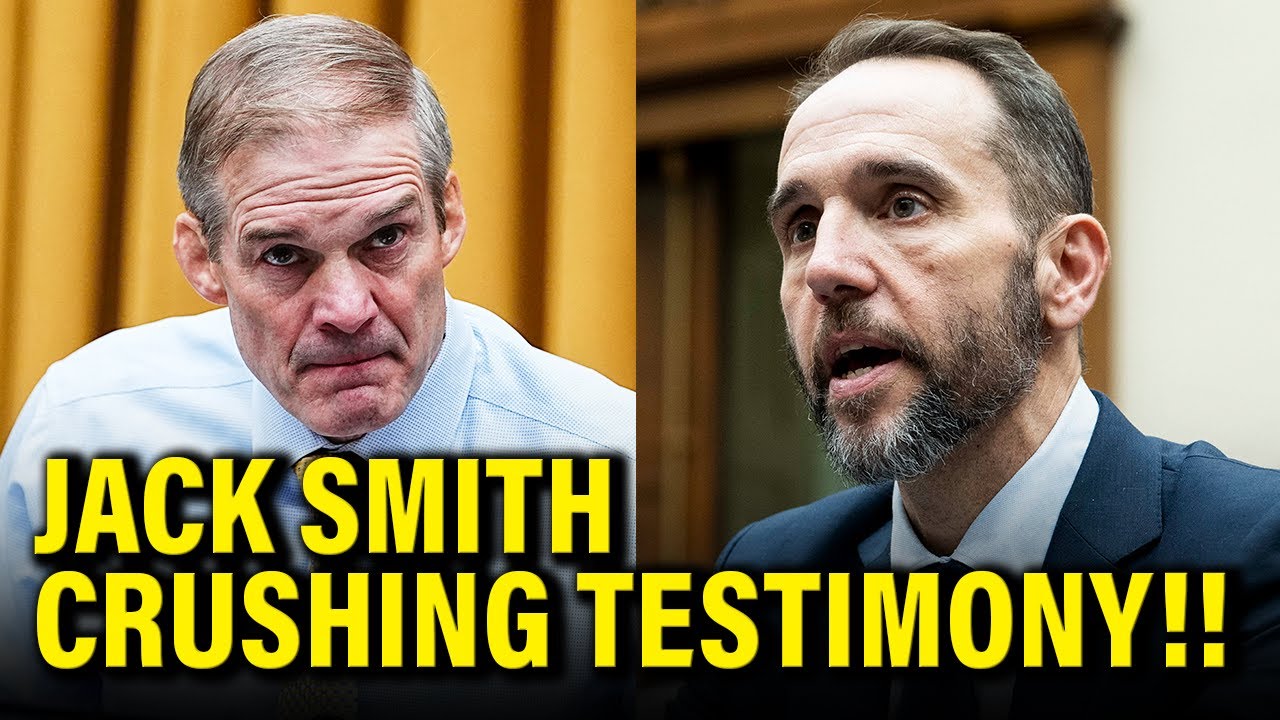
One of the most striking moments came when Democratic lawmakers questioned Mr. Smith about repeated attacks leveled against him by Mr. Trump, who has called the prosecutor a “deranged Marxist” and suggested he should be imprisoned.
Mr. Smith did not minimize the danger.
“These statements are meant to intimidate me,” he said. “They are also made as a warning to others — what will happen if they stand up.”
Nevertheless, he insisted, the threats had not altered the course of the investigation. “I will not be intimidated,” he said. “We followed the facts and we followed the law.”
Democratic lawmakers argued that the pattern mirrored Mr. Trump’s conduct before January 6, when inflammatory rhetoric, they said, created an atmosphere in which violence became foreseeable. Representative Jamie Raskin of Maryland, the committee’s ranking Democrat, rejected claims that Mr. Trump’s speech was protected by the First Amendment.
“The First Amendment does not protect speech used to facilitate a crime,” Mr. Raskin said. “All frauds are perpetrated by speech. All conspiracies are perpetrated by speech.”
Mr. Smith concurred, citing settled Supreme Court precedent.
Pardons, Policing, and Accountability
Another flashpoint involved Mr. Trump’s past pardons and promises of clemency for individuals convicted in connection with January 6. Mr. Smith described those convicted of assaulting police officers as “dangers to their communities,” noting that some had already reoffended.
“I do not understand why you would mass pardon people who assaulted police officers,” he said. “I never will.”
The exchange took a sharp turn when Representative Troy Nehls, Republican of Texas, suggested that responsibility for the violence lay with Capitol Police leadership rather than the rioters themselves. His remarks drew visible reactions from former officers injured during the attack, including Officer Michael Fanone, who was present in the hearing room.
Democrats accused Republicans of rewriting history. Representative Jared Moskowitz of Florida read into the record a series of statements made by Republican leaders in the days after January 6 — statements that condemned the violence and held Mr. Trump responsible.
“Those who were responsible should be brought to justice,” Mr. Moskowitz quoted former Speaker Kevin McCarthy as saying at the time.
Claims of “Spying” and Prosecutorial Practice
Republican lawmakers also accused Mr. Smith of improperly surveilling members of Congress by subpoenaing phone records. Mr. Smith flatly denied the charge, explaining that investigators had obtained toll records — logs showing call times and numbers, not content — covering a narrow window surrounding January 6.
Former federal prosecutor Representative Dan Goldman, Democrat of New York, underscored that such subpoenas are routine in conspiracy investigations.
“This was not spying,” Mr. Goldman said. “This was basic investigative work.”
A Broader Institutional Clash
As the hearing stretched on, its underlying purpose appeared increasingly clear: not to extract new facts, but to stage a political confrontation over the legitimacy of the justice system itself.
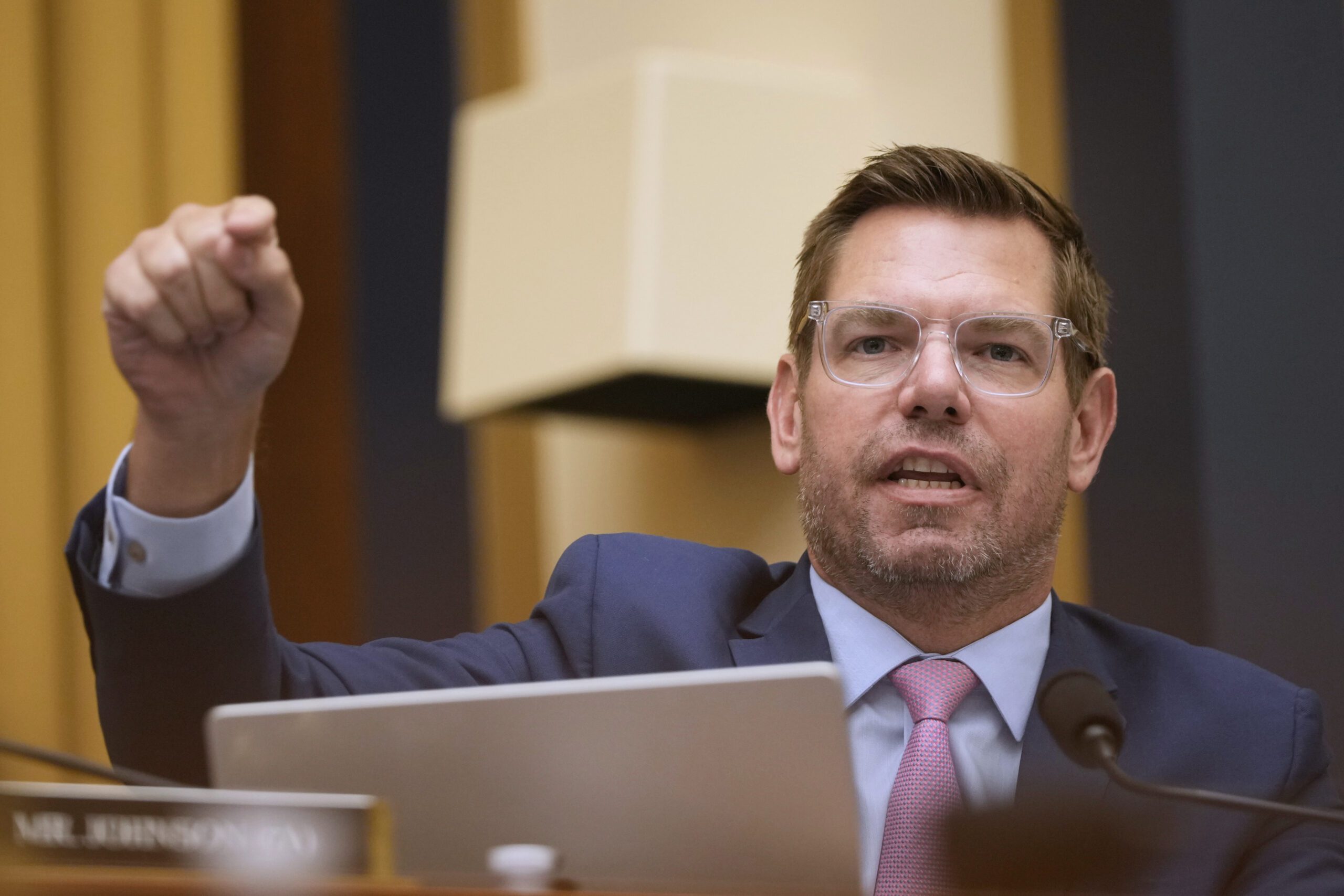
Representative Eric Swalwell of California accused Republican lawmakers of privately acknowledging Mr. Trump’s misconduct while publicly defending him. “When the cameras are on,” he said, “you shrink.”
Republicans countered that the prosecution of Mr. Trump has eroded public trust and deepened partisan divisions — a claim Democrats dismissed as an attempt to shield a former president from accountability.
In closing moments, Mr. Smith reiterated his core message: the law, not politics, guided his actions.
“To have done otherwise,” he said, “would have been to shirk my duties as a prosecutor and as a public servant.”
Whether the hearing altered public opinion is uncertain. But it made one reality unmistakable: nearly four years after January 6, the struggle over its meaning — and over whether powerful figures can be held to account — remains at the center of American political life.






