Trump’s Greenland Remarks Rekindle Questions About Judgment, Alliances, and Accountability
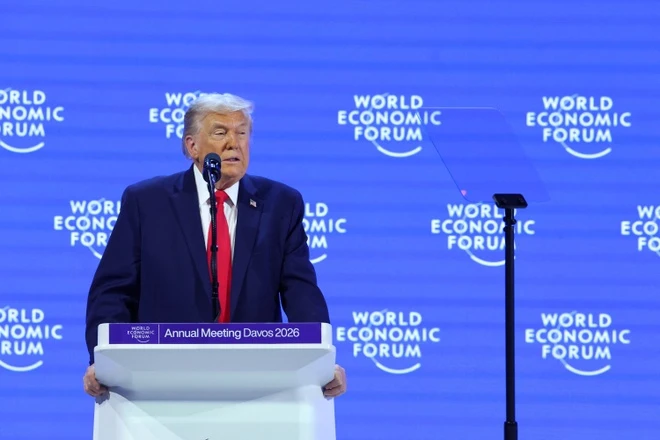
WASHINGTON — When President Donald J. Trump stood before global leaders at the World Economic Forum and repeatedly referred to Greenland as “Iceland,” the moment might once have been dismissed as an inconsequential verbal slip. Instead, it ignited a broader debate in Washington and across Europe about presidential judgment, diplomatic credibility, and the political culture that now surrounds even the most basic scrutiny of executive power.
The episode, captured on video and widely circulated on social media platforms including X, TikTok, and YouTube, occurred as Mr. Trump reiterated his long-standing interest in asserting American control over Greenland, a semi-autonomous territory within the Kingdom of Denmark and a strategic Arctic region. In the same remarks, he questioned whether NATO allies would come to the United States’ aid in a crisis — comments that drew immediate pushback from European leaders.
The confusion between Greenland and Iceland, two distinct nations separated by geography, governance, and alliance structures, was not merely a rhetorical stumble, critics said. It came amid renewed threats by Mr. Trump to impose tariffs on European allies unless they agreed to negotiations over Greenland — an idea polling suggests is deeply unpopular with American voters.
A Question That Triggered a Backlash
Back in Washington, the moment took on added significance when Speaker of the House Mike Johnson, Republican of Louisiana, was asked by a reporter whether the president’s remarks raised concerns about his health or mental acuity.
“Is this a serious question?” Mr. Johnson replied sharply, according to footage aired by CNN and shared widely online. “I cannot even believe that you asked me that.”
Mr. Johnson went on to defend the president by arguing that Mr. Trump “sleeps about three hours a night” and “outworks everybody in this building by a factor of two or three.” The response, intended as a show of loyalty, instead fueled further commentary on cable news and digital platforms, where critics noted the contrast with past Republican reactions to verbal missteps by President Joseph R. Biden Jr.
“If this were Biden,” one refrain echoed across progressive media and social networks, “there would be immediate calls for the 25th Amendment.”
The dynamic underscored a recurring feature of the Trump era: when faced with uncomfortable facts or visible errors, allies often challenge the legitimacy of the question itself rather than address the substance of the concern.
European Alarm and Diplomatic Fallout
In Europe, the response was far less dismissive.
Nearly 30 European ambassadors reportedly convened an emergency meeting to discuss Mr. Trump’s escalating rhetoric toward Greenland, according to Reuters and Politico. Leaders from Denmark, France, Germany, Sweden, and the United Kingdom publicly rejected any suggestion that Greenland’s sovereignty was negotiable.
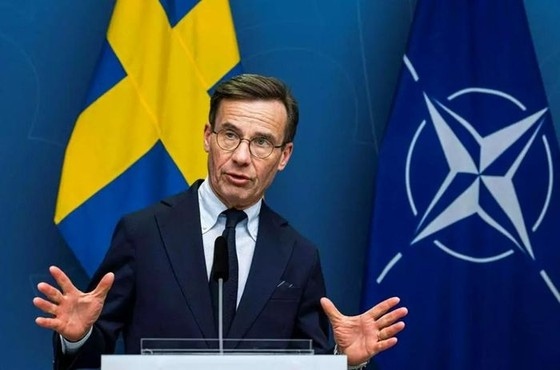
“Only Denmark and Greenland decide on issues concerning Denmark and Greenland,” Sweden’s prime minister said, warning against what he described as political blackmail.
Denmark’s prime minister struck a measured but firm tone, emphasizing that while Copenhagen welcomed deeper NATO cooperation in the Arctic, “our status as a sovereign state cannot be discussed or changed.”
NATO officials also responded directly to Mr. Trump’s doubts about alliance commitments. The alliance’s secretary general reminded audiences that NATO allies had fought and died alongside American troops in Afghanistan, noting that for every two American service members killed, one soldier from another NATO country also lost their life.
The remarks, analysts said, highlighted a growing rift between the president’s transactional view of alliances and the collective-security framework that has defined NATO for more than seven decades.
Polling and Public Opinion
Domestically, the Greenland episode appears to have landed poorly with voters.
Polling data circulated by Axios and discussed extensively on political Substacks shows that proposals to purchase or coerce control of Greenland rank among the most unpopular policy ideas associated with Mr. Trump — even polling worse than controversies surrounding the release of files related to Jeffrey Epstein, an issue that already places the president deeply underwater with the public.
According to aggregated polling averages, Mr. Trump’s net approval rating roughly one year into his second term trails that of every modern two-term president except Richard Nixon. Ronald Reagan, Bill Clinton, George W. Bush, and Barack Obama all enjoyed significantly higher approval at comparable points in their presidencies.
For political strategists, the numbers suggest that far from boosting support, confrontations with allies over Greenland may be exacerbating voter fatigue and concern about global instability.
A Broader Pattern
To Mr. Trump’s critics, the Iceland-Greenland confusion fits into a longer pattern of unscripted remarks, factual inaccuracies, and improvisational diplomacy that they argue carry real-world consequences.
Supporters counter that such moments are irrelevant compared with what they view as the president’s energy, decisiveness, and willingness to challenge international norms. On conservative media outlets, the controversy was often framed as media obsession or partisan hypocrisy.
Yet even some Republican strategists privately acknowledged that the episode was avoidable and distracting, particularly at a time when economic uncertainty and geopolitical tensions already dominate the news cycle.
“What makes this different,” said one former Republican national security official, speaking on condition of anonymity, “is that Greenland isn’t a metaphor. It’s an actual place, with actual allies, and actual consequences.”
Accountability and the Culture of Power
At the heart of the controversy lies a deeper question about accountability in modern American politics.
Mr. Johnson’s response — rejecting the premise of the question outright — exemplified a defensive posture that has become increasingly common among Republican leaders when addressing concerns about Mr. Trump. Rather than offering clarification or acknowledging error, party leaders often portray scrutiny itself as illegitimate.
That instinct, political analysts warn, may carry long-term costs.
“Democracies depend on the ability to ask basic questions of those in power,” said a constitutional scholar interviewed by MSNBC. “When questions about competence or judgment are treated as acts of hostility, institutions weaken.”
Looking Ahead

For now, the White House has not issued any formal clarification regarding the president’s remarks at Davos. The video continues to circulate online, where it has become fodder for satire, criticism, and partisan debate.
But for European leaders, the matter is no joke. For American voters, it is another data point in an ongoing assessment of leadership. And for Republicans in Congress, it presents a familiar dilemma: how far to go in shielding a president from scrutiny — and at what cost.
As the world grapples with war in Ukraine, tensions in the Middle East, and competition in the Arctic, even small moments can reverberate widely. In that sense, the confusion between Greenland and Iceland has become something more than a gaffe. It has become a mirror, reflecting the strains on alliances, institutions, and the norms that once governed presidential accountability.






