When Electricity Becomes Leverage: How Quebec’s Hydropower Exposed a Quiet American Vulnerability

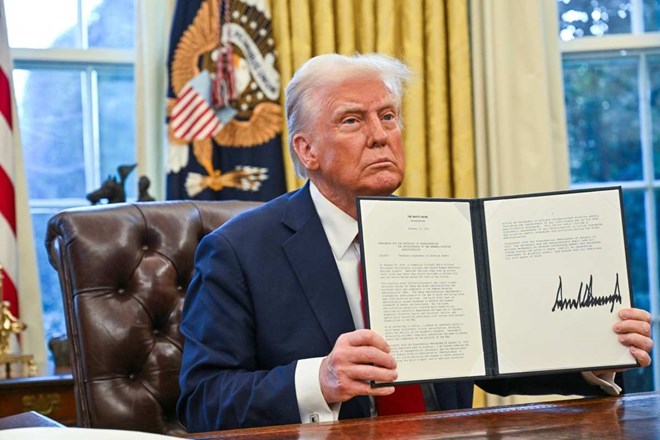
By early March, when President Trump announced a new round of tariffs on Canadian energy exports, the decision appeared routine — another escalation in a trade agenda built on economic pressure and unilateral leverage. Oil, natural gas, electricity: Canada sells them all to the United States. A 10 percent tariff, administration officials argued, would raise revenue and remind Ottawa who controlled access to the world’s largest market.
But within days, officials in Quebec offered a reminder of their own.
“If they want to come at us with tariffs, we have options too,” said Quebec Premier François Legault, speaking to reporters in Montreal. “One of those options is the electricity that keeps their lights on.”
It was not a threat, Mr. Legault insisted, but a statement of fact. For four decades, New England and parts of New York have depended on hydropower generated in Quebec to stabilize their electric grid, keep prices down and meet increasingly ambitious climate goals. What the tariff fight revealed — to policymakers, investors and energy planners alike — was how asymmetric that dependence has quietly become.
A Structural Reliance, Not an Emergency Backup
Hydro-Québec has been exporting electricity to the northeastern United States since the 1980s, drawing on massive hydroelectric complexes along the James Bay watershed and the St. Lawrence River. What began as supplemental power during peak demand periods has evolved into something far more foundational.
Today, Quebec supplies roughly 10 percent of New England’s electricity, according to regional grid operators, with the share rising significantly during winter cold snaps and summer heat waves. Vermont receives about 25 percent of its power from Quebec dams. New York imported nearly 8 terawatt-hours of electricity from Quebec and Ontario last year — enough to power hundreds of thousands of homes.
In January 2026, that dependence deepened further. Two major transmission projects — both years in the making — finally came online.
The New England Clean Energy Connect, a $1.6 billion transmission line running 145 miles through western Maine, now delivers up to 1,200 megawatts of electricity directly into the Massachusetts grid under a 20-year fixed-price contract. Massachusetts utilities have said the project will supply about 9.5 terawatt-hours annually — nearly 20 percent of the state’s electricity needs — while saving ratepayers an estimated $50 million a year.
At the same time, the Champlain Hudson Power Express, a 339-mile underground and underwater cable linking Quebec to New York City, is nearing full operation. When complete, it will deliver 1,250 megawatts into Queens, enough to power roughly one million homes. New York officials project savings of $17 billion over three decades.
Together, the projects represent more than $13 billion in sunk infrastructure costs, all designed around one assumption: that Quebec would remain a reliable, cooperative supplier.
A Tariff Shock — and a Quiet Response
That assumption was tested almost immediately after the Trump administration’s tariff announcement.
Within days, Hydro-Québec halted electricity sales into New England’s wholesale spot market. Power flows on the long-standing Phase II transmission line dropped to zero for more than a week. The utility cited warmer weather and market conditions, but the timing was widely noted by energy traders and regional grid analysts.
Then came the political response.
Mr. Legault confirmed that Quebec was reviewing the legal feasibility of withdrawing from — or renegotiating — new long-term electricity contracts with Massachusetts and New York if tariffs remained in place. He emphasized that existing legacy contracts, including Vermont’s decades-old agreement, were not under consideration. But the message was unmistakable: Quebec had leverage, and it was prepared to examine it.
Hydro-Québec’s chief executive, Michael Sabia, was more direct. Speaking at an industry event in Montreal, he described the tariffs as “bullying” and suggested that if Washington imposed a 10 percent charge on electricity, Quebec could respond with equivalent pricing adjustments or surcharges within contractual limits.
Electricity, unlike oil or gas, cannot be rerouted easily. It flows through dedicated wires between synchronized grids. Quebec can store water in reservoirs and choose when to generate power. New England cannot store electricity at scale — and relies heavily on natural gas plants that become expensive and constrained during peak demand.
That asymmetry matters.
Climate Policy Meets Energy Reality
For years, northeastern states have relied on Canadian hydropower as a way to square political commitments to decarbonization with the practical need for reliable baseload electricity. Natural gas still accounts for more than 60 percent of New England’s generation, but gas prices are volatile, especially in winter, when pipelines are constrained by heating demand.
Hydropower smooths those spikes. It also allows states to retire coal and oil plants without replacing them one-for-one.
Without Quebec’s electricity, New England faces grim alternatives: building new gas plants that contradict climate targets, or deploying massive grid-scale battery storage that remains prohibitively expensive at the required scale.
That reality is well understood by governors in Boston and Albany. Both Gov. Maura Healey of Massachusetts and Gov. Kathy Hochul of New York have publicly celebrated their Quebec power deals as cornerstones of their climate strategies.
What neither anticipated was becoming collateral damage in a trade war they did not initiate.
The $290 Billion Question
Energy economists estimate that, at current prices and contracted volumes, electricity flowing from Quebec into New England and New York over the next three decades could exceed $290 billion in cumulative value. That figure includes existing contracts, newly commissioned transmission lines and likely renewals as older agreements expire.
For Quebec, electricity exports are lucrative but not existential. In recent years, export revenues have ranged from $1.4 billion to $3 billion annually, depending on market conditions. The province can redirect power to Ontario, store it for later use, or prioritize domestic consumption.
For New England, the flexibility does not exist.
If Quebec reduced exports by even 30 percent, analysts say the region would face higher wholesale electricity prices, increased emissions and heightened blackout risks during peak demand periods. Ratepayers would notice. So would voters.
That imbalance — more than any rhetorical flourish — explains why Mr. Legault’s comments reverberated so strongly in Washington policy circles and on American social media.
A Relationship Changed

In the end, the immediate crisis eased. The Trump administration paused portions of the tariff regime amid market pressure and diplomatic pushback. Hydro-Québec resumed normal power flows. No contracts were broken.
But the damage, energy officials on both sides privately acknowledge, is lasting.
“Trust is not a switch you turn back on,” one U.S. grid operator said. “Once suppliers realize they’re a pressure point, planning assumptions change.”
Quebec officials have said as much publicly. Future transmission projects, they note, may involve shorter terms, more flexible delivery clauses or greater diversification away from U.S. markets.
For decades, electricity cooperation across the border functioned quietly, technocratically — almost invisibly. President Trump’s tariffs did not end that cooperation. But they transformed it into something newly political, newly strategic.
Electricity, once just infrastructure, became leverage.
And in New England, where the lights are still on, policymakers are now forced to reckon with a reality that had long gone unspoken: the grid they built assumes a neighbor’s goodwill. That assumption can no longer be taken for granted.






