Canada Tightens the Spigot on Critical Minerals, Jolting Washington and Redrawing North American Trade

OTTAWA — In a move that sent shock waves through boardrooms in California, auto plants in Michigan and policy circles in Washington, Canada on Tuesday unveiled sweeping export restrictions on a broad range of critical minerals, asserting control over materials that underpin the modern global economy and exposing a long-ignored vulnerability in the United States’ supply chain.
The announcement, delivered quietly but with unmistakable force by officials at Canada’s Department of Natural Resources, introduces new export controls and national security reviews on 23 strategic materials, including lithium, cobalt, nickel, graphite and rare earth elements. These resources are essential for electric vehicle batteries, advanced semiconductors, aerospace manufacturing and modern weapons systems — and Canada holds some of the world’s largest, most accessible reserves.
For decades, Washington has operated on a comfortable assumption: that Canada, its closest ally and largest trading partner, would remain a predictable supplier, even amid trade disputes and political tensions. That assumption is now under serious strain.
“This is not a symbolic gesture,” said one former U.S. trade official, speaking on background. “This is leverage — real leverage — and Canada is using it.”
A Sudden Shift, Carefully Prepared
While the formal announcement came Tuesday morning, analysts say the groundwork had been laid for months. Market watchers noted postponed bilateral meetings, intensified consultations between Ottawa and major mining firms, and an acceleration of foreign investment reviews under Canada’s national security framework. Then, abruptly, those signals stopped.
“When Ottawa goes quiet, that’s usually when something big is coming,” said a Toronto-based commodities analyst.
By midday, Canadian task forces had begun notifying U.S.-operated mines in Ontario, Quebec and British Columbia that their export permits were under immediate review. These were not routine audits but emergency national security procedures — the kind Canada typically reserves for moments of geopolitical consequence.
Within hours, the White House response was unusually blunt. Senior administration officials described the move as “unexpected,” “firm” and “unlikely to be reversed soon.” Behind the scenes, according to people familiar with the discussions, there was a mix of anger and alarm.
On social media platform X, former Trump-era trade advisers warned of a “supply chain crisis in the making,” while technology executives openly questioned how quickly alternative sources could be secured. A prominent venture capitalist wrote that “Washington spent years talking about China risk while ignoring Canada risk.”
Redirection, Not Retaliation

Canadian officials have avoided framing the move as retaliation, but the practical effects are already clear. According to industry sources, Ottawa is preparing to redirect shipments of strategic materials toward Europe, Japan and South Korea — countries that have quietly negotiated long-term supply agreements with Canada over the past year.
German and Japanese officials confirmed accelerated talks with Ottawa, and South Korean manufacturers acknowledged stepping up purchases of Canadian rare earths to replace supplies previously earmarked for U.S. customers. European trade officials, posting cautiously worded comments on LinkedIn and X, praised Canada’s “reliability as a strategic partner.”
In Alberta, energy firms said rare earth shipments bound for Asia had already been rerouted, drawing on stockpiles prepared months in advance. In Quebec, mining companies indicated they would prioritize European contracts, leaving U.S. automakers scrambling for alternatives.
“This wasn’t improvised,” said a senior executive at a Canadian mining firm. “The contracts were there. The logistics were ready.”
Washington Caught Flat-Footed
The U.S. response has so far lacked cohesion. Public statements have ranged from threats of higher tariffs to vague references to sanctions, with no clear diplomatic off-ramp offered. Trade associations rushed to issue warnings, and defense contractors privately pressed the administration for assurances that critical material supplies would not be disrupted.
On Capitol Hill, lawmakers from manufacturing states expressed concern that years of warnings about supply chain resilience had gone unheeded. “We talked endlessly about decoupling from China,” one senator said, “but we never asked what happens if Canada decides to decouple from us.”
According to security officials briefed on the situation, Ottawa’s move was partly designed to test Washington’s trade decision-making after a series of erratic tariff actions. The result, they say, was telling: fragmented messaging, internal contradictions and reactive threats rather than a coherent strategy.
A Question of Sovereignty
Prime Minister Mark Carney addressed Parliament later in the day in a calm but resolute tone. Canada, he said, would no longer “subsidize industries in countries that treat us merely as instruments for their own profit.” Canada’s resources, he added, are a matter of sovereignty — “and sovereignty is not something to be bargained away.”
Polling suggests his message is resonating at home. A majority of Canadians support taking a firmer stance toward Washington, and provincial leaders have urged the federal government to go further. Business groups see opportunity in deeper ties with Europe and Asia, where demand for secure, non-Chinese supply chains is surging.
The timing is particularly sensitive. President Trump faces mounting domestic pressure from automakers, technology companies and defense contractors, all warning that unstable supply chains threaten competitiveness and national security. With an election approaching, neither leader appears eager to back down.
A Turning Point for North America
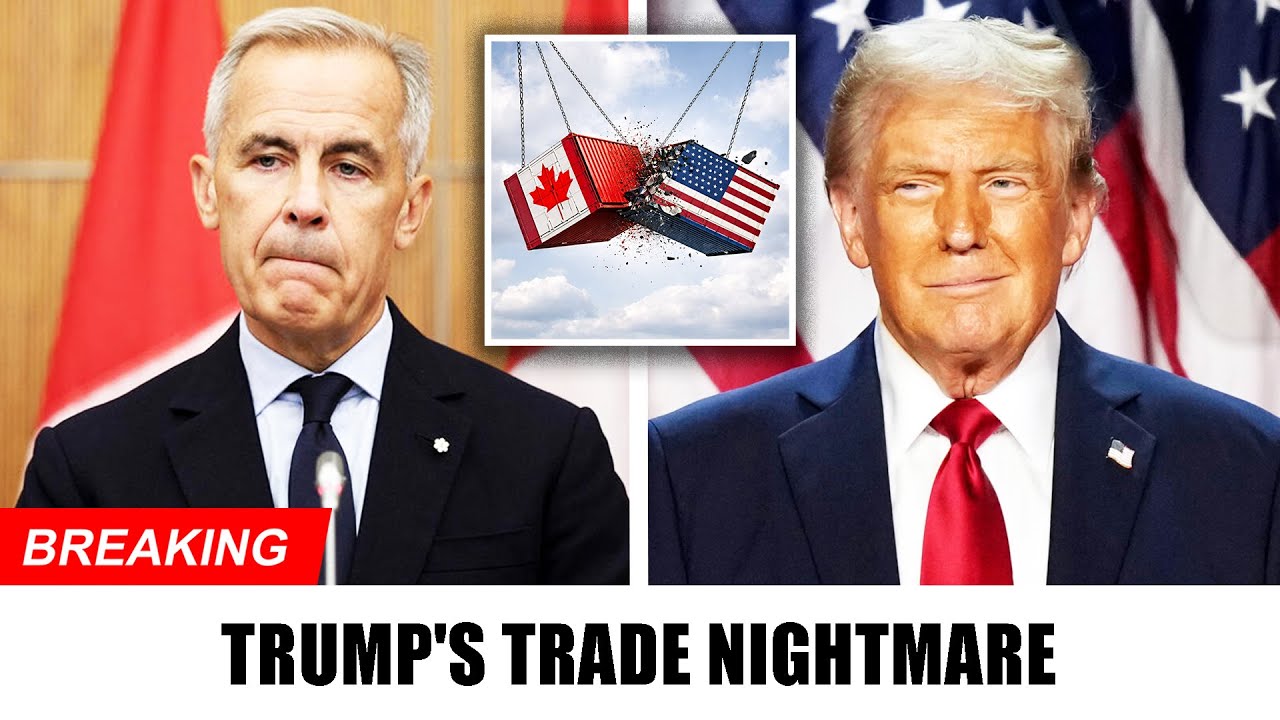
Analysts are weighing three possible paths forward. Canada may be executing a long-term pivot to reduce reliance on the U.S. market. It may be applying pressure to force Washington into negotiations on more equal terms. Or, most concerning for U.S. officials, it may be quietly building a supply network capable of functioning with minimal American involvement.
Trade observers monitoring shipping data report a surge in Canadian exports to European ports, while U.S. orders are being delayed, redirected or canceled. The pattern aligns with Ottawa’s stated goal of diversifying trade partners — not as a temporary tactic, but as a structural shift.
For Washington, the implications are profound. The materials at issue are the fuel of the modern economy, and access to them can no longer be taken for granted. For decades, North American trade rested on assumptions of stability and asymmetry. Those assumptions are now collapsing.
What happens next will depend largely on choices made in the coming weeks. Continued escalation could fracture the continent’s economic architecture. Serious dialogue, however, may yet restore a measure of balance.
For now, the silence from the White House is striking. In politics, such silence often signals that the stakes are high and every move is being weighed with care. One reality is already clear: Canada is no longer playing a secondary role — and the balance of power in North American trade has shifted.






