When Washington Says It Doesn’t Need Canada, the Math Tells a Different Story

For generations, the border between the United States and Canada has stood as a quiet rebuttal to the idea that power must be enforced through coercion. Stretching more than 5,500 miles, it is the world’s longest undefended frontier, a line that has symbolized stability, trust and economic interdependence between two nations that built their prosperity together.
That assumption is now under strain.
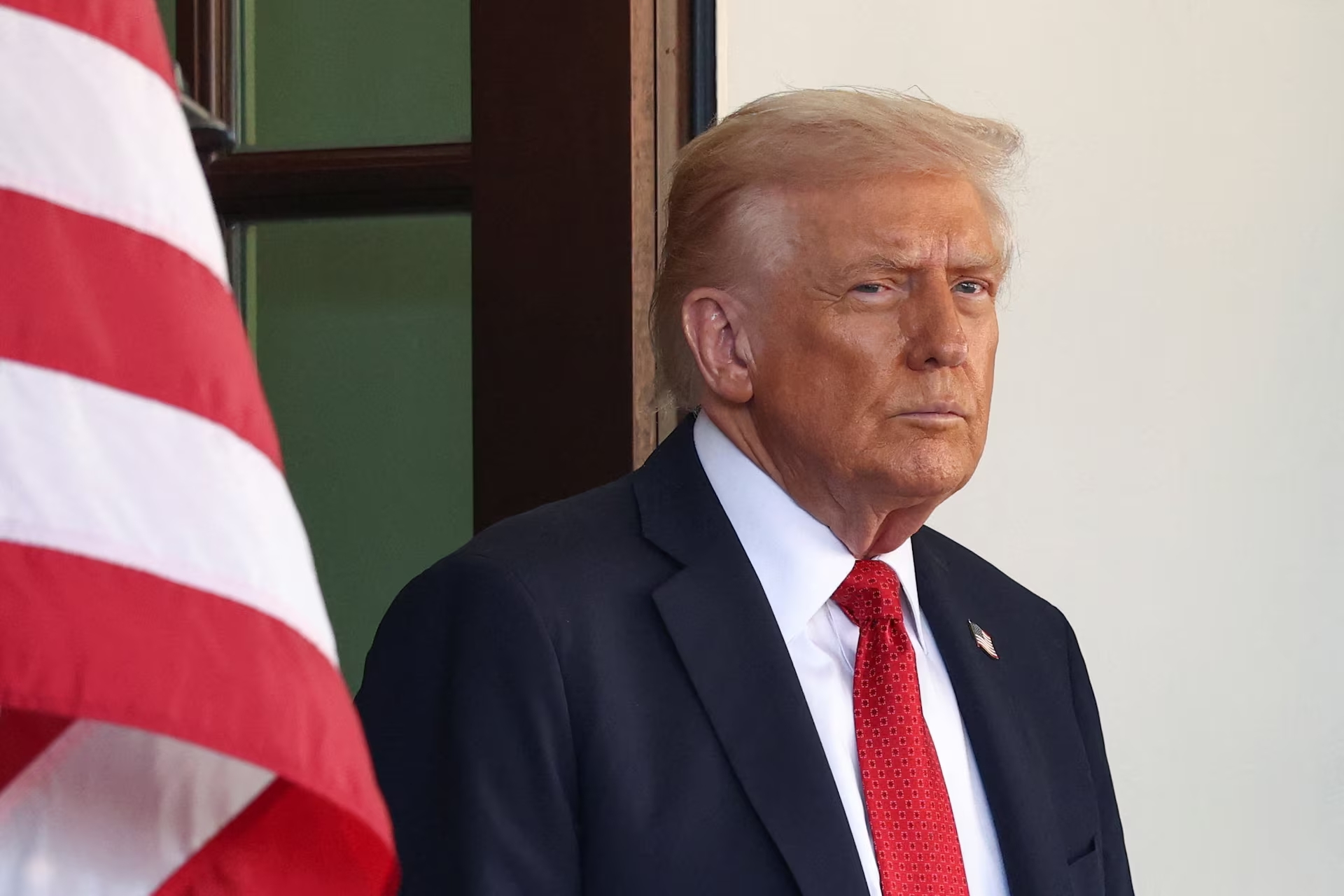
In recent months, President Trump has repeatedly declared that the United States does not rely on Canada — a claim he has paired with escalating tariffs, threats to abandon the U.S.–Mexico–Canada Agreement (USMCA), and remarks suggesting Canada would be better off as America’s “51st state.” The statements, delivered with unmistakable certainty, have reverberated far beyond diplomatic circles. On social media, they have been replayed millions of times. On cable news, they are often framed as negotiating tactics. Among economists and energy analysts, they have triggered something closer to disbelief.
Because stripped of politics, the numbers tell a story that is difficult to reconcile with the rhetoric.
Canada is not a marginal supplier to the United States. It is foundational.
Every day, roughly 4.1 million barrels of Canadian crude oil flow into American refineries — more than from any other foreign source. In 2024, Canada accounted for 63 percent of all U.S. crude oil imports, according to data cited widely by Bloomberg and the Energy Information Administration. Much of that oil is heavy crude from Alberta, precisely the kind American refineries along the Gulf Coast were designed to process after decades of multibillion-dollar investment.
Replacing it is not as simple as signing new contracts. Venezuelan production has collapsed. Mexican output is declining. Middle Eastern crude would require costly logistical adjustments and expose U.S. energy security to geopolitical volatility measured in weeks, not decades.
Natural gas dependence is even starker. Canada supplies approximately 98 percent of U.S. natural gas imports, heating homes across the Midwest and Northeast and fueling power plants during peak demand. Electricity follows the same pattern: more than 80 percent of U.S. electricity imports come from Canada, helping stabilize regional grids in states like New York, Michigan and Minnesota.
This is not leverage created by diplomacy. It is the consequence of geography, infrastructure and integration.
Altogether, the bilateral energy relationship was valued at $151 billion in 2024, a figure often cited by analysts at the Brookings Institution and echoed across financial media. It exists because American utilities, refiners and consumers have found Canadian supply reliable, close and economically rational.
Trade beyond energy is equally intertwined. Canada was the largest destination for U.S. goods exports last year, absorbing roughly $350 billion worth of American products. The United States imported about $413 billion in Canadian goods, resulting in a bilateral goods deficit of roughly $62 billion — a number frequently cited by the administration.
But trade economists emphasize that this framing is incomplete. When services are included, the U.S. runs a surplus with Canada. More importantly, nearly half of all U.S.–Canada trade consists of intermediate goods — components crossing the border multiple times before becoming finished products.
The automotive industry illustrates the point. A pickup truck assembled in Michigan may contain steel from Ontario, parts stamped in Ohio, components finished in Canada and returned again for final assembly. As analysts at the Peterson Institute for International Economics have noted, disentangling these supply chains is not protectionism. It is self-harm.
The effects are already visible.

After new tariffs were imposed in early 2025, Canadian exports to the United States fell by more than 25 percent within months, hitting manufacturing-heavy provinces like Ontario and Alberta particularly hard. But the shock did not stop at the border. U.S. imports overall declined by roughly 20 percent in a single month, the steepest non-pandemic drop since the 2009 financial crisis. American manufacturers faced higher input costs. Profit margins narrowed. Layoffs followed quietly.
Inflation, which had been easing, began edging upward again — a trend flagged repeatedly by Federal Reserve watchers on CNBC and in The Wall Street Journal. Consumer confidence weakened. Markets, initially dismissive, started pricing in sustained uncertainty.
The political consequences have been just as striking.
In Canada, anti-American sentiment has surged to levels unseen in modern history. Polls conducted in 2025 showed nearly 90 percent of Canadians opposed to any form of annexation, and more than 80 percent saying they would rather rejoin the British Commonwealth than become part of the United States — an extraordinary sentiment in a country long defined by pragmatic proximity to its southern neighbor.
Canadian tourism to the United States dropped sharply. Cross-border shopping declined. “Buy Canadian” campaigns gained traction not as symbolism but as consumer behavior. Provincial leaders openly discussed retaliatory tariffs and, in Ontario’s case, even floated the idea of restricting electricity exports to U.S. states — a proposal later walked back, but unthinkable only a few years ago.
Internationally, allies are watching closely. Trump’s language about Canada has been compared by some foreign-policy analysts — including voices in Foreign Affairs and Politico — to the rhetoric used by Russia toward Ukraine or China toward Taiwan: the suggestion that sovereignty is conditional, that independence exists at the pleasure of greater power.
Such comparisons would once have seemed exaggerated. They no longer are dismissed out of hand.
For NATO allies in Eastern Europe, for partners in Asia, the lesson is unsettlingly clear: if the United States is willing to economically coerce its closest ally, what assurance do others have?
This erosion of trust may prove more costly than any tariff. Trade can be rerouted. Supply chains can be rebuilt — slowly and at great expense. But credibility, once damaged, is not easily restored. Canadian firms are already diversifying toward Europe and Asia. Mexico is doing the same. Every alternative market developed, every non-U.S. supply chain reinforced, represents economic gravity that will not automatically return.
The irony is that interdependence was never a weakness. It was the engine of North American prosperity. The postwar order the United States helped design was built on the premise that shared growth creates stability — that allies bound together economically are less likely to fracture politically.
To reject that logic is to conduct a risky experiment in real time.
Can the world’s largest economy afford to alienate its most reliable trading partner? Can it impose sweeping tariffs without triggering inflation, job losses and slower growth? Can it treat alliances as transactions and still expect loyalty?
History suggests otherwise. Britain’s experience after Brexit offers a cautionary parallel. So does every great power that confused dominance with durability.
Whether the U.S.–Canada relationship ultimately recovers remains uncertain. Perhaps negotiations will cool. Perhaps the 2026 USMCA review becomes a reset rather than a rupture. But what is already clear is this: the claim that America does not rely on Canada is not merely provocative. It is mathematically false.
Oil flows do not stop because of speeches. Pipelines do not reroute themselves in response to slogans. Supply chains do not obey political instinct.
And sooner or later, reality has a way of asserting itself — regardless of what any president believes.






