Trump’s NATO Remarks Ignite Transatlantic Backlash, Forcing Allies and Friendly Voices to Respond
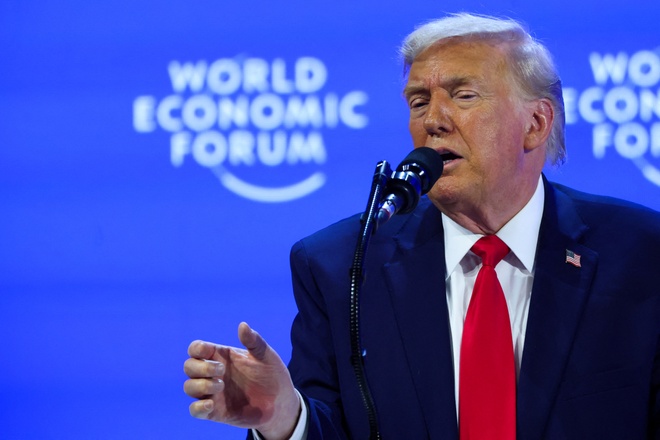
When President Donald J. Trump dismissed the role of NATO allies in defending the United States, suggesting that European forces “stayed a little back” during America’s wars, the reaction was swift, emotional, and unusually bipartisan across borders. The remarks, delivered during a public appearance following the World Economic Forum in Davos, reopened a long-running fault line in transatlantic relations—and placed some of Trump’s most sympathetic commentators and political allies in an uncomfortable position.
Within 24 hours, criticism emerged not only from longtime Trump opponents, but from figures who have often defended or minimized his conduct: the British broadcaster Piers Morgan, Prime Minister Keir Starmer of the United Kingdom, and even Nigel Farage, the populist leader of Britain’s Reform Party and a longtime admirer of Trump’s political style.
The controversy underscores a recurring feature of Trump’s political presence: statements that strain factual accuracy, test alliances, and force even friendly voices to choose between loyalty and record.
A Claim at Odds With History
Trump’s remarks centered on NATO’s mutual defense obligation and the wars that followed the September 11, 2001 attacks. “We’ve never really asked anything of them,” Trump said, referring to U.S. allies. “They’ll say they sent some troops… they stayed a little back, a little off the front lines.”
The claim contradicts established historical record. After the attacks on New York and Washington, NATO formally invoked Article 5—its collective defense clause—for the first and only time in its history, explicitly in defense of the United States. European and allied forces deployed in Afghanistan for two decades, sustaining significant casualties.
According to official figures from the British Ministry of Defence, 457 British service members were killed in Afghanistan. Hundreds more were wounded, many with life-altering injuries. Danish forces—despite Denmark’s small population—suffered one of the highest per-capita casualty rates among coalition partners. In total, more than 1,000 non-U.S. NATO troops lost their lives in Afghanistan.
These facts are well documented and widely acknowledged by military historians, NATO officials, and veterans’ organizations on both sides of the Atlantic.
An Unusual Rebuke From Piers Morgan

The intensity of the backlash was notable in part because it compelled a forceful response from Piers Morgan, the British media personality who has maintained a volatile but longstanding relationship with Trump. Morgan has often defended Trump from what he describes as unfair media treatment and has previously characterized Trump’s abrupt reversals as strategic rather than reckless.
This time, Morgan struck a different tone.
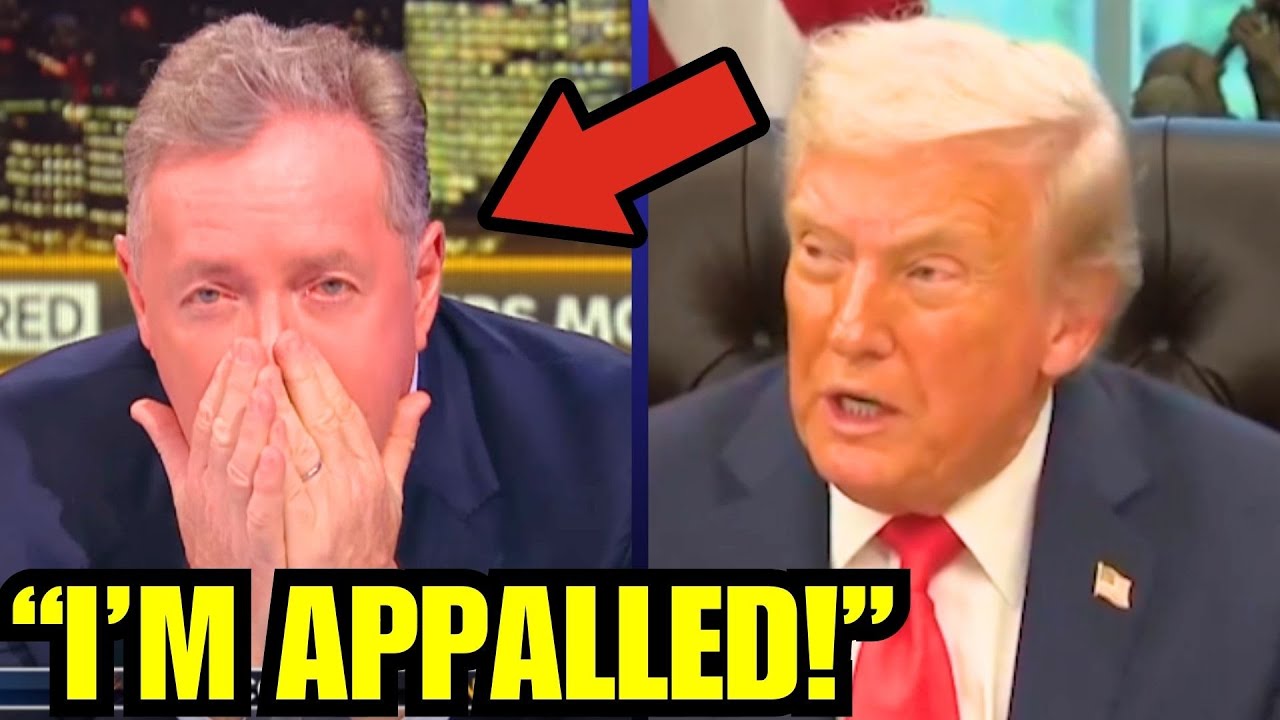
“This is an appalling slur,” Morgan wrote on social media, calling Trump’s comments “a massive insult to all the NATO troops who answered America’s call.” He specifically cited the 457 British personnel killed in Afghanistan and rejected the notion that they had remained behind the front lines.
Morgan went further, stating that Trump “needs to apologize” to the families of those killed and wounded. The language marked one of Morgan’s sharpest public rebukes of Trump in recent years and drew widespread attention across U.S. and U.K. media.
Still, critics noted the tension between Morgan’s condemnation and his previous pattern of praising Trump’s leadership style or downplaying his rhetoric. Several commentators suggested that Morgan’s criticism, while justified, illustrated the recurring difficulty of reconciling Trump’s statements with sustained public defense.
Britain’s Leaders Respond
The response from Britain’s political leadership was more direct.
Prime Minister Keir Starmer, speaking at a public event, described Trump’s remarks as “insulting and frankly appalling,” emphasizing the courage and sacrifice of British forces. “I will never forget their bravery,” Starmer said, referencing those killed and injured in Afghanistan.
Starmer’s statement carried diplomatic weight. British prime ministers typically avoid escalating disputes with U.S. political figures, particularly those with strong domestic followings. His willingness to speak so plainly reflected both the sensitivity of military service in British public life and the depth of anger triggered by Trump’s comments.
Nigel Farage, whose political movement has often mirrored Trump’s populist messaging and whose personal admiration for Trump is well known, responded more cautiously. Farage acknowledged that Britain had stood “shoulder to shoulder” with the United States in Afghanistan and noted that British losses were proportionate to those of American forces. However, his criticism was notably restrained, framed as a polite disagreement rather than a condemnation.
That hesitancy drew criticism from veterans and commentators who argued that Farage’s response illustrated the limits of personal loyalty when national sacrifice is questioned.
A Broader Pattern
Trump’s remarks fit into a broader pattern of skepticism toward NATO that has defined much of his political career. As president, he repeatedly accused allies of failing to meet defense spending targets and questioned the value of collective defense. Supporters have argued that such rhetoric pressured allies into increased military investment.
Critics counter that Trump’s language often conflates legitimate policy disputes with dismissive or inaccurate characterizations of allied contributions—undermining trust while offering little strategic gain.
What made this episode different was not merely the inaccuracy of the claim, but the moral dimension it touched. Military service and wartime sacrifice occupy a sensitive space in both American and British public life. Suggesting that allied troops avoided danger struck many observers as crossing a line beyond conventional political provocation.
Even conservative commentators sympathetic to Trump voiced concern. Writing online, columnist Charles C.W. Cooke called the remarks “grotesque and disrespectful,” noting that British troops fought and died in some of the most dangerous regions of Afghanistan, including Helmand Province.
David French, a former military officer and conservative legal writer, argued that a “decent man would apologize profusely,” adding that such comments should never have been made at all.
The Diplomatic Cost
The episode arrives at a moment of heightened global instability, with NATO deeply involved in supporting Ukraine and reassessing European security amid renewed Russian aggression. Public unity among allies has been a central strategic objective.
While Trump currently holds no office, his status as a leading figure in American politics gives his statements international resonance. Foreign leaders, diplomats, and military officials are keenly aware that his views could once again shape U.S. policy.
For allies who fought alongside American forces after September 11, the concern is not merely rhetorical. It is whether shared sacrifice is recognized—or dismissed—by a potential future U.S. administration.
An Unsettled Conversation
Whether Trump will apologize remains uncertain. Historically, he has rarely retracted statements, even when faced with overwhelming factual correction. His supporters have largely dismissed the controversy, framing it as media exaggeration or misinterpretation.
Yet the breadth of the response—from veterans, allied leaders, conservative commentators, and even sympathetic media figures—suggests that this moment has struck a deeper nerve.
For Piers Morgan, Nigel Farage, and others who have sought to navigate proximity to Trump without fully embracing his rhetoric, the episode highlights a recurring dilemma: moments when loyalty collides with record, and when silence becomes harder to justify.
As the debate continues, one fact remains unchanged and uncontested across serious discourse: NATO allies did answer America’s call after September 11. They fought. Many died. And that history, for many on both sides of the Atlantic, is not a matter of political interpretation, but of honor.






