The Quiet Repricing of America

For decades, the United States occupied a singular position in the global financial imagination. Political turbulence came and went, governments changed, crises erupted — yet capital returned, again and again, to American markets. The dollar strengthened in moments of fear. U.S. Treasuries absorbed global savings without question. Confidence was not debated; it was assumed.
That assumption is now being quietly reassessed.
There has been no dramatic rupture. No emergency summits. No coordinated statements from foreign governments warning of retaliation. Instead, the signal has emerged in a far subtler form: capital hesitating, portfolios shifting, and long-term investors openly acknowledging risks that were once considered unthinkable.
In financial circles across Europe, a phrase has begun circulating with increasing frequency: “Sell America.” Not as a call to arms, and not as a sudden exit — but as a recalibration. A reconsideration of exposure to the United States itself.
A Signal From the Quietest Players
The first hints did not come from politicians or central bankers. They came from institutions designed to ignore short-term politics entirely: pension funds.
Earlier this year, a Reuters investigation reported that several large Northern European pension funds were reassessing their exposure to U.S. assets, citing growing uncertainty around American fiscal policy, foreign relations, and long-term debt sustainability. Pension funds rarely speak publicly about geopolitics, and almost never in real time. Their mandate is stability. Their timelines stretch decades.
That is precisely why the disclosures mattered.
Officials from pension institutions in Finland, Sweden, and Denmark confirmed that perceived risk tied to U.S. Treasuries and dollar-denominated assets had increased. The language was careful. There was no mention of protest or retaliation. Instead, executives cited “risk management,” “currency exposure,” and “policy unpredictability.”
Two institutions stood out. Denmark’s AkademikerPension and Sweden’s Alecta confirmed they had reduced or were in the process of reducing holdings of U.S. Treasuries. At the time, Treasury markets were broadly stable. Prices alone could not explain the move.
The implication was clear, even if unstated: something structural had changed.
The Netherlands Follows
Attention soon turned to the Netherlands, home to ABP, Europe’s largest pension fund and one of the largest in the world. In its latest disclosures, ABP reported a sharp decline in the value of its U.S. Treasury holdings — from approximately $29 billion to around $19 billion within months.
Market volatility could not fully account for the shift. Analysts noted that yields and prices during the period were relatively stable. The most plausible explanation was an active reduction or a decision to let holdings roll off without reinvestment.
ABP did not frame the move as political. It did not need to. When institutions of that scale adjust positioning, the market listens.
Why Europe Matters More Than Anyone Else
Foreign investors hold trillions of dollars in U.S. assets, but Europe’s role is unique. According to Deutsche Bank research, European investors collectively hold close to $8 trillion in U.S. equities and bonds — nearly double the combined holdings of all other foreign regions.
For decades, this arrangement was mutually reinforcing. Europe needed a deep, liquid market to absorb long-term savings. The United States provided predictability, institutional continuity, and alliance cohesion.
That cohesion is now under quiet strain.
In a recent research note, Deutsche Bank analysts posed an uncomfortable question: if the geopolitical and institutional stability of the Western alliance is being disrupted, why should European investors continue absorbing such a disproportionate share of U.S. financing needs?
The note was not alarmist. It did not predict a crash. It simply reframed the United States — not as an unquestioned anchor, but as an asset subject to reassessment.
Markets Are Already Pricing Something In
The effects have not been dramatic, but they are measurable.
Over the past year, the U.S. dollar weakened against several major currencies, even as American equity markets continued to post strong headline gains driven by artificial intelligence and technology stocks. At the same time, long-term Treasury yields climbed toward levels not seen since before the global financial crisis. Thirty-year yields hovered near 5 percent.
Such yields signal something specific: investors are demanding greater compensation to hold long-dated U.S. debt.
This is not the result of a growth collapse or an imminent recession. Instead, analysts point to uncertainty — sudden tariff announcements, public disputes with allies, revived territorial rhetoric, and policy reversals that arrive without warning.
Each episode alone appeared manageable. Together, they altered expectations.
The Scale Problem
The U.S. Treasury market is enormous, valued at roughly $30 trillion. Its size and liquidity have long been its greatest strength. But that scale also creates vulnerability. Even modest reallocations by foreign holders can ripple outward, pushing borrowing costs higher and tightening financial conditions domestically.
Crucially, capital does not need to flee to change outcomes. It only needs to hesitate.
When long-term allocators shorten duration, spread exposure across regions, or demand higher yields to compensate for uncertainty, the impact compounds slowly — and persistently.
The Counterargument — and Why It Still Matters
Supporters of the U.S. outlook point, correctly, to enduring strengths. The dollar remains the world’s primary reserve currency. U.S. markets remain the deepest and most liquid on earth. The technology sector continues to attract global capital at scale.
There is also no obvious alternative capable of absorbing trillions of dollars overnight.
But even among these voices, the tone has shifted. Confidence has given way to contingency planning. Diversification has replaced concentration. Gold has re-emerged as a favored hedge. Currency risk is no longer treated as theoretical.
On financial social media platforms, from X to LinkedIn, macro strategists increasingly frame U.S. exposure as something to be “managed” rather than assumed. Substack essays by American and European economists echo the same theme: not collapse, but recalibration.
Why This Moment Is Different
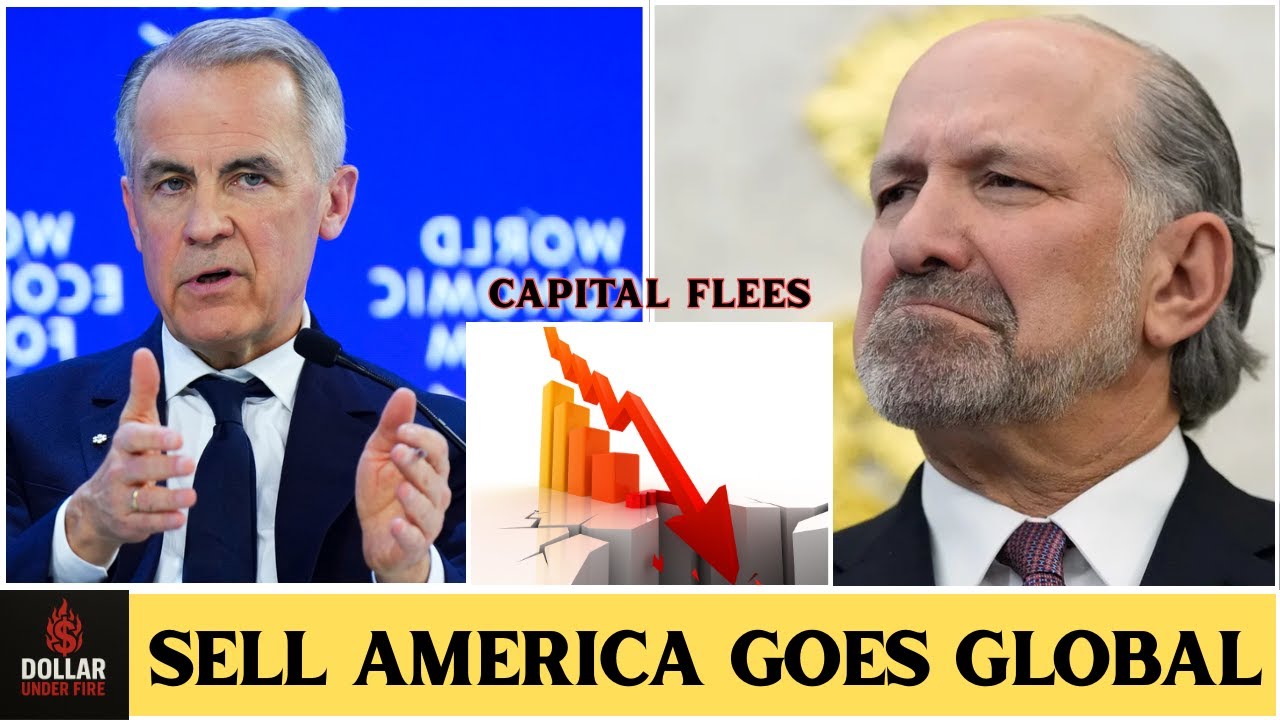
The most important distinction is not magnitude, but direction.
Historically, global capital flowed toward the United States during moments of uncertainty. Today, uncertainty itself is being associated with the United States.
This is not about one administration or one election. Analysts describe it as a growing perception that U.S. policy has become harder to model. Alliances are tested publicly. Long-standing assumptions are treated as negotiable. Predictability — once America’s quiet advantage — now carries a risk premium.
Pension funds and sovereign allocators are built to look past headlines. When they begin adjusting assumptions, it signals more than a passing reaction. It signals a reassessment of trust.
The Most Dangerous Backlash Is Silence
There has been no financial panic. No dramatic sell-off. No public confrontation.
Instead, there has been silence — spreadsheets updating quietly, allocations shifting incrementally, assumptions being rewritten behind closed doors.
History suggests that the most consequential financial changes rarely announce themselves. They unfold slowly, invisibly, and then suddenly feel permanent.
The danger for the United States is not that global capital is leaving. It is that global capital is no longer unquestioning.
Confidence, once priced, is difficult to reclaim. And when trust erodes, money does not shout. It waits.
That may be the most consequential signal of all.






