🔥 BREAKING: TRUMP LOSES IT After JIMMY KIMMEL DESTROYS HIM LIVE — BRUTAL ON-AIR TAKEDOWN SENDS STUDIO INTO CHAOS ⚡
Late-night television is not usually where battles over free speech and executive power are fought. Its weapons are jokes, not subpoenas; punchlines, not policy. Yet on a September night in 2025, Jimmy Kimmel Live! briefly became something else: a stage on which the mechanics of intimidation, resistance and public accountability were laid bare for millions of viewers.
The episode followed an extraordinary sequence of events. Days earlier, Jimmy Kimmel had criticized prominent Trump allies for politicizing a violent crime. The response from Washington was swift. Brendan Carr, the Trump-appointed chairman of the Federal Communications Commission, publicly condemned Kimmel’s remarks and warned that ABC and its parent company, Disney, could face regulatory consequences. Within hours, the network suspended Jimmy Kimmel Live! indefinitely. President Trump celebrated the move online.
For six days, a late-night comedy show was effectively silenced by the implied threat of government action. In a different era, the story might have ended there — a cautionary tale about the chilling effect of power. Instead, it escalated.
On September 23, Kimmel returned to the air. The opening monologue was unusually long and uncharacteristically somber, a direct defense of free speech and a rebuke of political pressure on the press. Then came the moment that transformed the broadcast from commentary into confrontation. Kimmel announced that Chairman Carr would be joining the show. The studio tensed. Instead, Robert De Niro walked onstage, not as himself, but as a caricature of an FCC chairman reimagined as a mob enforcer.
The sketch landed instantly. De Niro, whose career has been defined by portrayals of organized crime, played the role with chilling familiarity. In his version of government oversight, praise of the president was free, criticism came at a price and silence was encouraged through “gentle suggestions.” The audience roared — not simply because it was funny, but because it felt uncomfortably accurate.
What followed was not just a viral television moment but a cultural event. According to network figures, more than six million viewers watched the episode live, making it the most-watched regular installment in the show’s history. Clips of the monologue and the De Niro sketch amassed tens of millions of views across social media platforms within a day. Notably, the ratings surge came despite the fact that major broadcast groups declined to air the episode in parts of the country.
The resonance was political as much as comedic. De Niro has been one of Trump’s most outspoken critics for more than a decade, warning repeatedly that Trump’s leadership style resembled that of a gangster rather than a statesman. On Kimmel’s stage, that critique crystallized. The sketch suggested that the issue was not thin skin or partisan conflict, but a governing philosophy that treats dissent as disloyalty and regulation as a weapon.
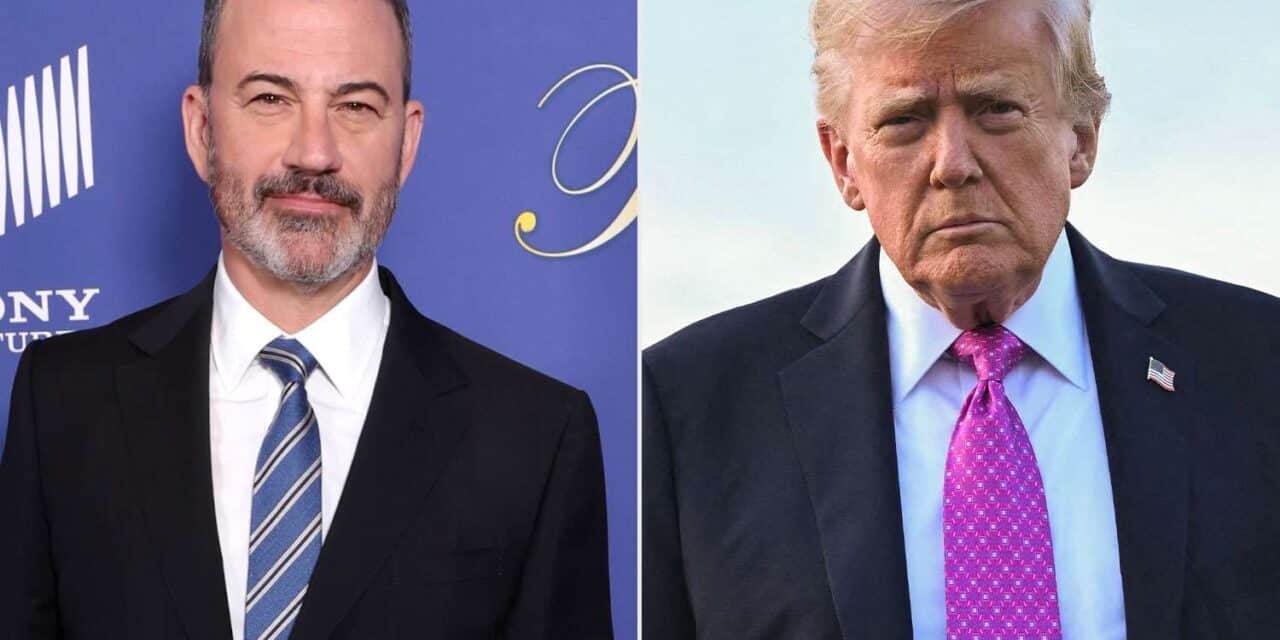
Trump’s reaction followed a familiar pattern. He lashed out online, deriding De Niro as “unwatchable” and threatening lawsuits against media outlets, including The New York Times, over unfavorable polling. But the fury only underscored what the broadcast had exposed: a striking contrast between a president who responds to criticism with threats and two entertainers who answered pressure with defiance.
The episode mattered because it inverted the usual power dynamic. The government had flexed its authority. A network had blinked. Yet when the show returned, it did so louder, not quieter. Comedy, often dismissed as frivolous, became a vehicle for saying plainly what formal institutions had struggled to articulate — that the soft coercion of speech is still coercion, and that democratic norms erode not only through laws but through fear.
There was no shouting match onstage, no direct confrontation with a government official. The resistance was theatrical, satirical and meticulously calibrated. De Niro’s performance worked because it did not exaggerate Trumpism into absurdity; it distilled it. The audience recognized the pattern: loyalty rewarded, criticism punished, power personalized.
In the days that followed, the practical consequences were telling. Broadcast groups that had initially refused to carry the show reversed course. The attempt to marginalize Kimmel had failed. The spectacle of silencing had backfired.
In a polarized media environment, such moments are rare. They cut across ideology not by appealing to consensus, but by illuminating process — how power behaves when challenged, and how easily institutions can fold unless challenged in return. That was the enduring lesson of the night.
For one hour, late-night television ceased to be an escape from politics and became a mirror held up to it. The laughter was loud, but the message was sober. Intimidation thrives on fear. It falters when the target refuses to flinch.






