As Allies Hesitate, Trump’s Vision of Power Faces a Quiet Revolt

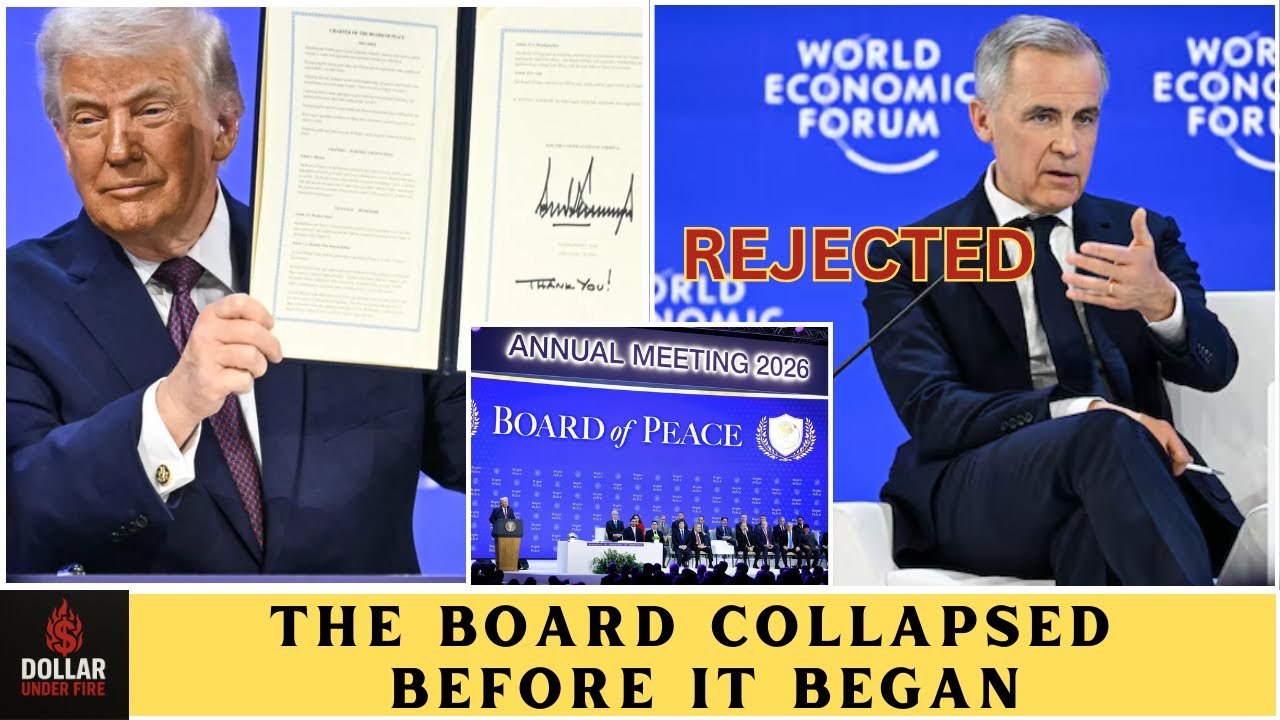
By early winter, President Donald Trump had begun boasting about what he described as one of the most ambitious diplomatic initiatives of his second term: a new global “Board of Peace,” an exclusive council of world leaders that, he promised, would cut through bureaucracy and restore American leadership at the center of global decision-making.
But before the board ever convened — before it voted, before its structure was finalized, before it formally existed — it began to unravel.
Not through protest or public rejection, but through something more subtle and far more destabilizing: silence.
Behind closed doors, diplomats from some of America’s closest allies — including Canada, France, Germany, Britain and Italy — expressed growing unease about a project that appeared less like a multilateral peace forum and more like a test of loyalty to Washington. Invitations were received politely, responses delayed carefully, commitments left conspicuously vague.
By the time the White House realized enthusiasm had cooled, the damage had already been done.
What had been pitched as a historic peace initiative was increasingly viewed, according to several officials familiar with the discussions, as an instrument of hierarchy — one that demanded alignment, not collaboration, and public deference rather than shared governance.
“There were no clear rules, no collective decision-making process, and no assurance that dissent would be tolerated,” said one European diplomat, speaking on condition of anonymity to discuss private deliberations. “That made it feel less like diplomacy and more like submission.”
The unease was compounded by a broader pattern in Mr. Trump’s approach to allies. Tariff threats framed as negotiating leverage. Economic pressure campaigns applied to partners as readily as to rivals. And, most jarringly for European capitals, renewed talk of acquiring Greenland — a move that, while dismissed publicly, was interpreted privately as evidence that territorial pressure was no longer off the table, even among allies.
Within NATO circles, the Greenland rhetoric triggered particular alarm. Officials in several European governments privately described it as destabilizing, not strategic — a signal that long-standing assumptions about alliance norms could no longer be taken for granted.
Against that backdrop, the Board of Peace began to look less like a forum and more like a fork in the road: join and accept the terms, or hesitate and risk marginalization.
Rather than confront Mr. Trump directly, America’s allies chose a quieter path. They stalled. They asked questions. They delayed decisions. And in diplomacy, hesitation is often the clearest form of dissent.
It was Canada that ultimately brought the tension into the open — though not by design.
Just days before the board’s unraveling became public, Mr. Trump had praised the prospect of Canadian participation, presenting it as evidence that U.S. leadership still commanded global loyalty. Then, abruptly, the tone shifted.
In a letter addressed to Prime Minister Mark Carney, the White House announced that Canada’s invitation was being withdrawn.
The message was pointed. The narrative was unmistakable. Canada had not declined the board; the board had rejected Canada.
The timing raised immediate questions in diplomatic circles.
One week earlier, Mr. Carney had concluded a closely watched visit to Beijing, where he met with President Xi Jinping. The outcome was not dramatic — no sweeping alliance, no rhetorical flourish — but it was strategic. Canada and China agreed to lower certain trade barriers, a move that signaled Ottawa’s accelerating effort to diversify its economic relationships amid growing volatility in U.S. trade policy.
Officials familiar with the talks said the shift reflected months of uncertainty triggered by tariff threats and unpredictable declarations from Washington. Supply chains had become political tools. Economic integration had become conditional.

Mr. Carney, a former central banker known for caution rather than confrontation, was not reacting emotionally. He was planning structurally.
Then came Davos.
At the World Economic Forum, Mr. Carney delivered a speech that reverberated well beyond the Alpine conference halls. Without naming Mr. Trump, he warned that the so-called rules-based international order no longer functioned as advertised. Economic integration, he argued, was being used as a tool of coercion. Tariffs had become leverage. Financial infrastructure had become pressure points. Supply chains were now vulnerabilities to be exploited.
“When leaders continue to invoke the rules-based order as though it still operates effectively,” he said, “they ignore the reality that those rules are increasingly being bent or broken.”
The room fell silent. Then, according to multiple attendees, Mr. Carney received a standing ovation.
Within hours, the response from Mr. Trump was unmistakable.
Speaking at Davos, the president pointed to his proposed “Golden Dome” missile shield, suggesting it would protect Canadian airspace as much as America’s. The remark initially sounded cooperative — until the tone shifted. Mr. Trump accused Canada of receiving protection without paying its share. He said Canada should be grateful.
Then came the line that stunned diplomats on both sides of the border.
“Canada lives because of the United States,” Mr. Trump said.
It was not policy language. It was hierarchy.
The remark landed less as a warning than as a declaration — one that framed alliances not as partnerships, but as debts. Protection was no longer mutual. Gratitude flowed upward.
Shortly afterward, the withdrawal of Canada’s invitation to the Board of Peace was announced.
The sequence mattered. Speech. Rebuke. Punishment.
To many observers, the message was clear: challenge American authority publicly and access disappears.
Canada’s response, however, confounded expectations.
Mr. Carney did not reply immediately. There was no late-night post, no escalation, no rhetorical volley. Days later, standing before his cabinet in Quebec City, he spoke calmly.
Canada, he said, does not live because of the United States. Canada thrives because it is Canadian.
There was no anger in his voice. That restraint gave the words their force.
He acknowledged decades of shared defense, trade and cooperation — then reframed the moment as something larger than a bilateral dispute. The same forces destabilizing the global order, he warned — coercion, intimidation and aggressive nationalism — were beginning to surface closer to home. Unity mattered now more than ever.
But the message was not merely rhetorical. Mr. Carney outlined plans to strengthen alliances, reduce internal trade barriers, invest in infrastructure and prepare Canada for a future shaped by artificial intelligence and defense modernization.
The subtext was unmistakable: cooperation without submission.
The claim that Canada survives solely because of the United States collapses under even modest scrutiny. The two countries jointly operate NORAD, a continental defense system in which Canada is not a passenger but a co-architect. In 2022, Ottawa committed more than $38 billion to modernize Arctic defense, investments that benefit Washington as much as Ottawa.
Canadian troops fought alongside American forces in Korea and Afghanistan. More than 40,000 served after September 11. One hundred fifty-eight did not return.
That history matters — not as sentiment, but as fact.
Across Europe, officials took note. Not because Canada is the world’s largest power, but because it demonstrated something increasingly rare: defiance without chaos, independence without isolation, strength without dominance.
The collapse of the Board of Peace was not simply a diplomatic setback. It was a signal.
The long-standing assumption that allies must fall in line or be punished is beginning to fracture — quietly, gradually, but unmistakably.
The question now is not whether the global order is changing. It is who will shape what comes next.
Because once countries realize they can remain connected without submitting, power does not disappear.
It redistributes.
Silently. Strategically.
And often before those at the center realize control is slipping.






