Trump’s 100% Tariff Threat Against Canada Signals a Breakdown of Leverage, Not a Trade Strategy
WASHINGTON — When President Donald Trump threatened to impose a 100 percent tariff on all Canadian goods entering the United States, the announcement arrived not through a policy paper, a trade filing, or even a formal press briefing, but via a post on Truth Social. The message was sweeping, unqualified and immediate: if Canada deepened trade cooperation with China, every Canadian product would face punitive tariffs at the U.S. border.
The scale of the threat was unprecedented. So was its lack of specificity. No sector exemptions. No timeline. No legal justification. No reference to the dispute-resolution mechanisms embedded in existing trade agreements. Just a blanket economic warning aimed at America’s closest ally and largest trading partner.
Within hours, the question dominating Washington, Ottawa and global markets was not whether Canada had violated trade rules, but whether the United States president was acting out of strategy — or out of frustration.
For decades, trade tensions between the two countries followed a familiar script. Disagreements flared over lumber, dairy or steel. Harsh rhetoric surfaced. Negotiations followed. Markets adjusted. The relationship endured. This time felt different. Analysts across U.S. cable news and economic commentary on X described the threat not as leverage, but as escalation without a clear endgame.
What made the moment especially striking was what preceded it.
Just days earlier, Canada’s prime minister, Mark Carney, stood on the stage at the World Economic Forum in Davos and spoke about the dangers of economic coercion, the overuse of tariffs and the need for middle powers to build resilience rather than dependency. He did not mention President Trump by name. He did not criticize U.S. policy directly. But few in the room — or watching online — missed the point.
The speech was widely shared across American political media, particularly among foreign policy analysts who have grown increasingly concerned about the use of tariffs as instruments of intimidation rather than negotiation. It was also notable for its tone. Calm. Measured. Unemotional. Carney did not sound like a leader preparing for confrontation. He sounded like one preparing for independence.
Shortly after, the tone from Washington changed.
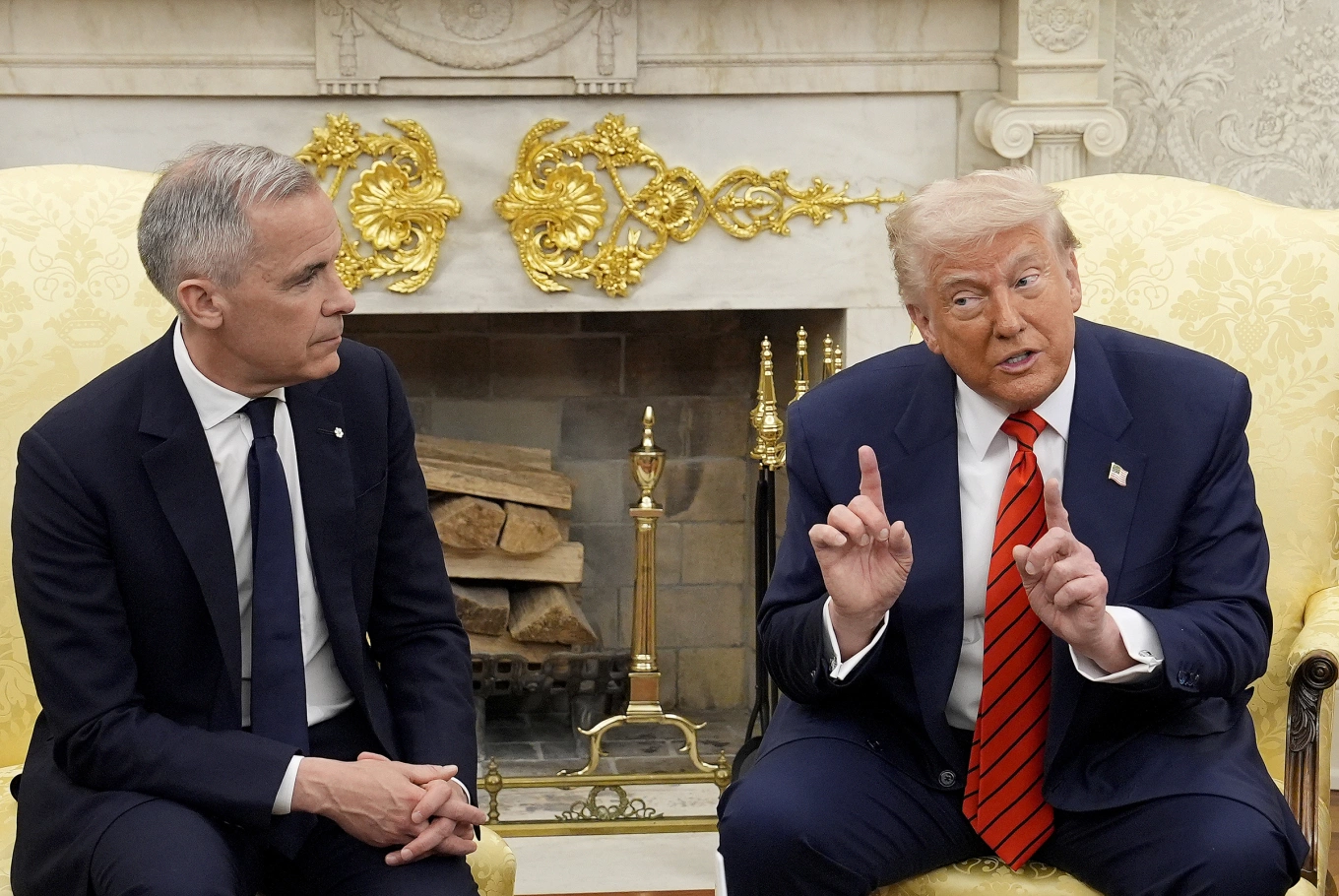
President Trump, who only days earlier had publicly said Canada should pursue trade deals where it could, reversed himself. The same limited Canada-China arrangement he had described as acceptable suddenly became, in his words, a national security threat. He accused Canada of becoming a “drop-off port” for Chinese goods and warned that China would “eat Canada alive.”
Trade experts were quick to note that the arrangement in question was not a sweeping free-trade agreement. It involved narrow tariff adjustments, temporary relief for Canadian canola exports and continued Canadian restrictions on Chinese electric vehicles — a posture closely aligned with U.S. concerns about Chinese industrial overcapacity. In substance, it resembled the kind of selective trade management Washington itself routinely practices.
“What changed wasn’t the deal,” one former U.S. trade official said on MSNBC. “What changed was the politics.”
That political shift became unmistakable when President Trump began referring to Carney not as prime minister, but as “governor,” language that American commentators interpreted less as humor than as an attempt to diminish Canada’s standing. When leaders abandon policy arguments for status attacks, analysts say, it often reflects a loss of confidence in their leverage.
The tariff threat also exposed a deeper miscalculation.
For years, Trump’s trade strategy toward Canada rested on the assumption of dependency: that Canada’s economy was too integrated with the U.S. market to withstand sustained pressure. That assumption once held weight. It does not anymore.
Quietly and methodically, Canada has diversified. Trade with Europe has expanded under CETA. Indo-Pacific partnerships have deepened. Domestic supply chains in critical sectors have been reinforced. While the U.S. remains Canada’s largest trading partner, it is no longer Canada’s only viable option.
That reality explains the response from Ottawa — or, more precisely, the lack of one.
There was no emergency summit. No retaliatory tariff list. No fiery press conference aimed at Washington. Instead, within hours of Trump’s post, Carney released a short video message focused almost entirely inward. Its theme was simple: “Choose Canada.”
Buy Canadian. Build Canadian. Invest in Canadian workers, materials and technology.
Housing, infrastructure, manufacturing and defense were framed not as political slogans, but as economic insulation. The message was not defiance, but preparation. Not escalation, but repositioning.
In Washington, the contrast was hard to miss.
While the U.S. president escalated publicly, the Canadian prime minister de-escalated structurally. Trade analysts noted that resilience, not retaliation, is what ultimately weakens tariffs as a weapon. When a country reduces reliance on external markets, tariffs lose their power to coerce.
This dynamic helps explain why markets reacted with more concern about U.S. unpredictability than Canadian vulnerability. Investors are accustomed to trade disputes. They are less comfortable with policy threats untethered from process or consistency.
On social media, even some of Trump’s traditional defenders questioned the move. Conservative economists warned that a 100 percent tariff on Canadian goods would raise prices for American consumers, disrupt U.S. manufacturing supply chains and invite legal challenges under existing trade agreements. Others pointed out the irony of threatening the country that supplies much of the lumber, aluminum and energy underpinning American housing and infrastructure.
In the end, the episode revealed more about the limits of pressure than the power of tariffs.
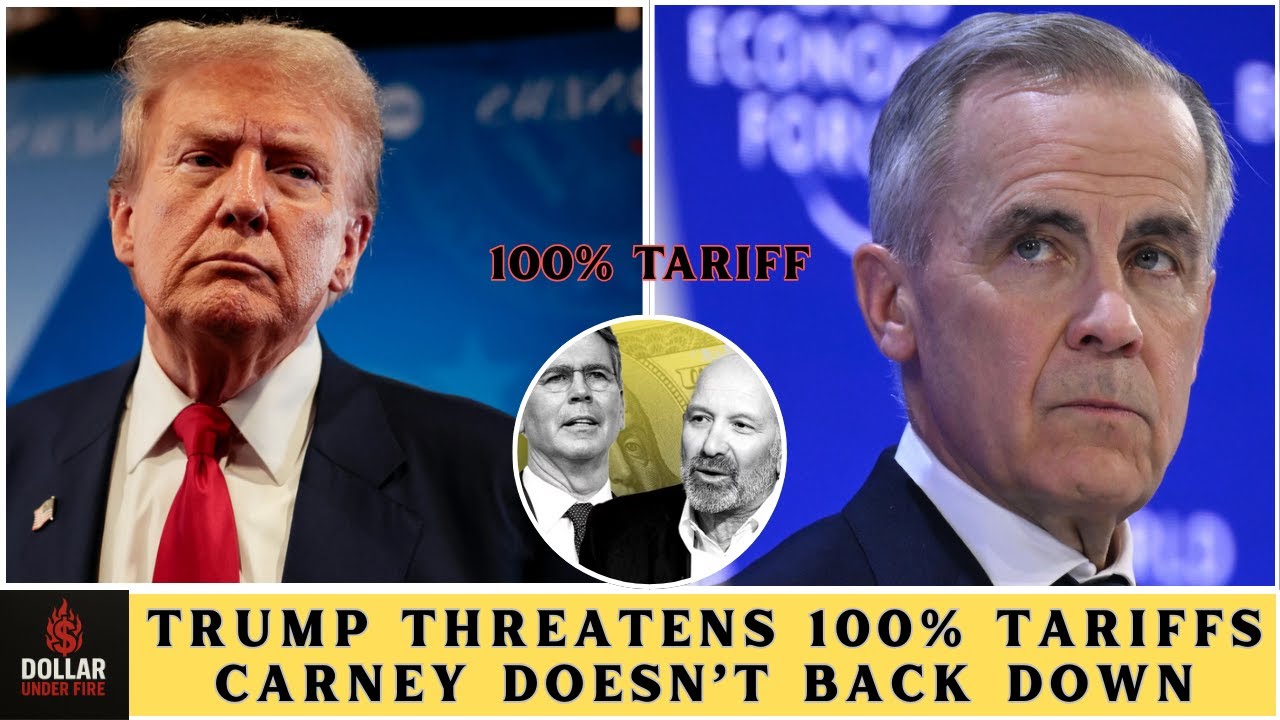
Intimidation works only when dependency is absolute. When alternatives exist, threats become noise. The louder the threat, the clearer the anxiety behind it.
President Trump reached for the tool that had served him before. What he encountered instead was a partner no longer organized around fear of access to the U.S. market. Canada did not win by confronting Washington. It won by making the confrontation unnecessary.
This was not merely a trade dispute. It was a turning point in how power is exercised — and resisted — in a global economy increasingly shaped by resilience rather than dominance.
The lesson may extend far beyond the U.S.-Canada relationship. In a world where tariffs are deployed as political weapons, the most disruptive response may not be retaliation, but preparation. Not shouting back, but stepping aside.
And in this case, the quiet move proved louder than the threat.






