Canada’s Quiet Lumber Move Sends Shock Waves Through U.S. Housing
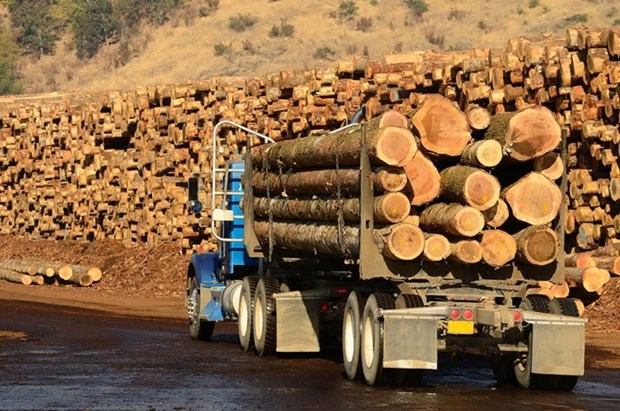
The shock did not arrive with a presidential speech, a signed executive order or a televised announcement from Washington or Ottawa. There were no emergency summits or retaliatory threats. Instead, the disruption spread quietly, contract by contract, invoice by invoice, through the American housing market.
A subtle pricing adjustment on Canadian lumber exports to the United States—made without fanfare and framed as a market decision rather than a political act—has begun to ripple through an industry already strained by high interest rates, labor shortages and chronic undersupply. Builders noticed almost immediately. Suppliers adjusted. Projects slowed. And for many Americans hoping to buy or rent a home, the consequences are now becoming harder to ignore.
The move comes as the United States has raised tariffs on imported Canadian softwood lumber, pushing the total effective burden on some Canadian producers above 45 percent. But Canada’s response did not mirror Washington’s approach. Rather than imposing its own tariffs or launching a formal trade challenge, Canadian producers adjusted export prices. The distinction matters. Under existing trade rules, pricing decisions are harder to contest than tariffs and take effect far more quickly.
According to industry estimates cited by the National Association of Home Builders and echoed widely across housing-focused social media platforms, lumber-related costs have already added as much as $6,000 to the price of constructing a typical single-family home. That figure may rise further if price volatility persists.
For an American housing market where affordability is already stretched to its limits, even incremental cost increases can have outsized effects.
A Market Reaction, Not a Trade War
What makes this episode unusual is not merely its economic impact, but its method. Trade conflicts have traditionally followed a predictable script: tariffs are announced, political reactions follow, legal challenges are filed and negotiations stretch on for months or years. Markets have time to adjust.
This time, there was no warning.
Builders discovered the change after contracts had been signed and budgets set. Lumber was still available, but at higher prices. Projects that had penciled out one week suddenly looked marginal the next. Developers began delaying procurement. Suppliers hesitated to lock in quotes. In some regions, construction timelines quietly slipped.
“The uncertainty is the real problem,” one Midwest homebuilder wrote on X, echoing a sentiment that has spread across industry forums. “You can plan for higher costs. You can’t plan for instability.”
Canada supplies a substantial share of the softwood lumber used in U.S. residential construction, particularly in single-family homes, modular housing and disaster rebuilding. In many parts of the country, especially the Midwest and Northeast, alternatives are limited in the short term. Domestic timber production cannot be scaled up quickly due to regulatory, environmental and labor constraints.
As a result, price increases at the border move rapidly through supply chains and into housing costs.
Housing Affordability Takes Another Hit

The timing could hardly be worse. Mortgage rates remain elevated. Land prices have risen sharply in many metropolitan areas. Labor shortages continue to push up wages in construction trades. Public and private developers alike are operating with thin margins.
When lumber prices rise at the input stage, the effect multiplies. Financing costs increase. Risk assessments change. Some builders attempt to absorb the increase, cutting into profits. Others pass it on to buyers. Many simply delay or cancel projects.
The impact extends beyond homebuyers. Rental markets are affected as well. Fewer housing starts mean fewer new units, tightening supply and pushing rents higher. For lower- and middle-income households, already struggling with rising costs, the squeeze becomes more severe.
In regions still recovering from natural disasters, the consequences are especially acute. Federal and state rebuilding programs depend on predictable material costs. Sudden increases force agencies to revise budgets, reduce scope or extend timelines, delaying visible progress and eroding public confidence.
Jobs, Credit and Local Economies
Construction remains one of the most labor-intensive sectors of the U.S. economy. When projects slow, the effects are immediate. Workers lose hours. Subcontractors see fewer contracts. Transportation firms move fewer materials. Local suppliers feel the decline in orders.
Financial institutions feel it too. Lenders underwriting residential and commercial projects rely on stable cost assumptions. When material prices fluctuate unpredictably, loan approvals slow and terms tighten. Marginal projects are shelved. Caution spreads through the system.
Economists describe this dynamic as a “pressure multiplier.” The pricing shift itself may be modest, but it amplifies existing vulnerabilities in housing, labor and finance.
A New Form of Leverage

From Canada’s perspective, the move reflects a broader reassessment of economic leverage in a world where tariffs increasingly invite retaliation and legal challenges. Pricing power over critical inputs offers a quieter and often more durable form of influence.
Export pricing decisions can be defended as market behavior rather than political retaliation. They are harder to challenge under World Trade Organization rules and take effect immediately. Once exercised, they are difficult to neutralize without finding alternative suppliers—an option that takes years, not months.
International observers have taken note. Analysts on financial media platforms have pointed out that the lesson extends beyond lumber. Energy, critical minerals and agricultural commodities all present similar dynamics. Control over inputs, rather than access to markets, is becoming a central source of leverage.
A Narrowing Policy Corridor
For U.S. policymakers, the response options are limited and politically fraught. States heavily dependent on residential construction and Canadian imports are pressing for relief. Builders and labor groups warn of job losses and affordability impacts.
At the same time, aggressive retaliation risks escalating tensions with a close ally and raising costs further. Domestic timber producers, while benefiting from higher import prices, face capacity constraints that limit their ability to offset supply gaps in the near term.
The result is a narrowing policy corridor, where every option carries trade-offs.
Rethinking Supply Chain Dependence
This episode underscores a deeper structural challenge. Decades of economic integration delivered efficiency and lower prices but also created dependencies that are difficult to unwind. Expanding domestic production of key materials requires long-term investment, regulatory reform and workforce development.
Diversification, rather than full self-sufficiency, may be the more realistic goal. In construction, that could mean alternative suppliers, new building techniques and materials that reduce lumber intensity.
Diplomatically, it may also require recalibrating assumptions about allied relationships. Economic alignment can no longer be taken for granted when domestic political pressures collide with resource sovereignty.
A Quiet Turning Point
What began as a technical pricing adjustment has become a case study in how economic power operates in the 21st century. The disruption did not come through borders or tariffs, but through the materials that hold homes—and economies—together.
For American households, the effects are tangible: higher prices, fewer choices, longer waits. For policymakers, the challenge is strategic and long-term. And for the global trading system, the message is clear.
Influence no longer needs to announce itself. Sometimes, it moves quietly through wood, steel and concrete—reshaping markets before anyone has time to respond.






