As Epstein Files Stall, Trump Allies Mount a Familiar Defense
As pressure mounts on the Justice Department to release long-promised files related to the late financier Jeffrey Epstein, President Donald Trump and his allies have turned to a strategy that has become deeply familiar over the past decade: delay, deflection, and the deployment of trusted surrogates to discredit critics and reframe the controversy.
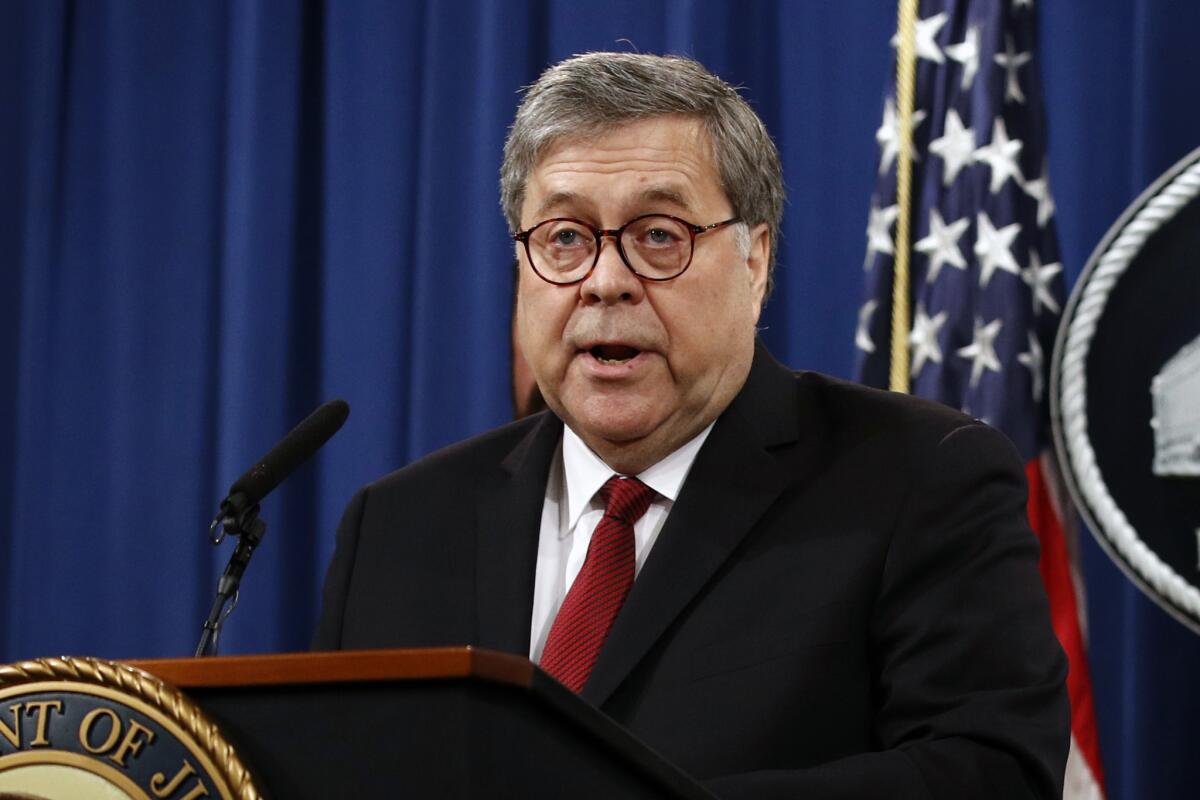
At the center of the latest defense is William P. Barr, Mr. Trump’s former attorney general, who published an op-ed in The Wall Street Journal arguing that the Department of Justice could not realistically comply with a statutory 30-day deadline to release Epstein-related materials. Mr. Barr’s intervention came as congressional Democrats accused the administration of intentionally withholding documents to shield politically powerful individuals — including, they allege, the president himself.
The clash has reignited scrutiny of Mr. Trump’s past association with Epstein, a convicted sex offender who died in federal custody in 2019, and raised broader questions about transparency, institutional accountability, and whether the federal government is selectively enforcing disclosure laws.
A Law Signed, Files Withheld
The dispute centers on the Epstein Transparency Act, a bipartisan measure requiring the Justice Department to publicly release unclassified materials related to Epstein, subject to limited redactions for victims and ongoing investigations. Mr. Trump signed the bill into law with little fanfare, declining to hold a public signing ceremony — a notable departure from his usual practice for major legislation.
While the administration highlighted the law on social media as evidence of its commitment to combating human trafficking, critics argue that the contrast between rhetoric and execution has been stark. More than a month after the statutory deadline, only a small fraction of the files — estimated by lawmakers to be about one percent — has been released, much of it heavily redacted.
Attorney General Pam Bondi and senior Justice Department officials have said the delay reflects the sheer scale of the material, estimated at millions of pages, and the need for careful review. But Democrats point out that department officials had previously stated that the files were already compiled and under review months before the law took effect.
Barr’s Defense — and the Backlash
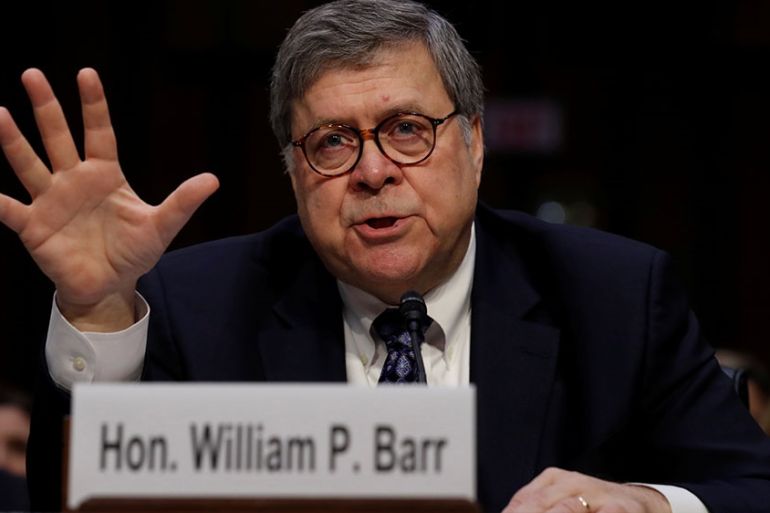
In his op-ed, Mr. Barr described the disclosure requirement as “patently unreasonable,” citing the logistical burden of reviewing millions of pages within 30 days. He praised Ms. Bondi’s leadership and accused critics — including House Democrats and a small number of Republicans — of political grandstanding.
The response from Capitol Hill was swift. Representative Robert Garcia of California called the argument “misleading at best,” noting that large-scale document reviews are routine in complex litigation and that the department had far more than 30 days if earlier statements by officials were accurate.
Legal analysts echoed that skepticism. Former federal prosecutors noted that large document productions are often released on a rolling basis, with batches published as they are cleared — an approach not meaningfully used so far in the Epstein disclosures.
Congressional Flashpoint
The issue boiled over during recent House Oversight Committee hearings, where Republicans moved to hold former President Bill Clinton and former Secretary of State Hillary Clinton in contempt over document requests related to Epstein.
Democrats accused the committee’s leadership of staging a political diversion. Several members argued that if Congress was serious about accountability, it should begin with witnesses whose ties to Epstein were more extensively documented in public reporting — including Mr. Trump himself — as well as Ghislaine Maxwell, Epstein’s longtime associate, who is currently serving a federal prison sentence.
Representative Ted Lieu of California said Republicans appeared “deeply uncomfortable” addressing the Epstein files directly, instead focusing on familiar partisan targets. “This is not oversight,” he said. “It’s avoidance.”
Trump and Epstein: A Complicated Record
Mr. Trump’s past relationship with Epstein has been documented in court records, contemporaneous reporting, and Mr. Trump’s own public statements. The two were social acquaintances in the 1990s and early 2000s, and Epstein recruited employees from Mar-a-Lago, Mr. Trump’s Palm Beach club — a fact the former president has acknowledged.
Mr. Trump has denied wrongdoing and said he cut ties with Epstein years before Epstein’s legal troubles became public. However, renewed attention has focused on previously reported materials, including emails, social correspondence, and testimony suggesting a closer association than Mr. Trump has sometimes portrayed.
Separately, Mr. Trump has been found civilly liable for sexual abuse in a New York case and has been recorded on tape making comments about sexual conduct that many critics cite as relevant to broader concerns about accountability.
Distraction Politics
As the Epstein controversy intensified, Mr. Trump shifted public attention to other issues, including renewed rhetoric about Greenland — a topic that previously drew ridicule and diplomatic concern during his first term.
Data analysts at CNN noted a sharp decline in online searches for Epstein-related terms coinciding with a surge of interest in Greenland, suggesting that the strategy may have succeeded in changing the subject, even if only temporarily. Polling, however, indicates that both issues are deeply unpopular with the public.
A Familiar Pattern
For many observers, the current episode fits a long-running pattern: allegations emerge, documents are delayed or withheld, allies attack the credibility of critics, and public attention is redirected.
What distinguishes the Epstein files, critics argue, is their scope. Epstein’s network touched politics, finance, royalty, and entertainment across multiple countries. The question, they say, is not which party might be embarrassed, but whether the rule of law applies equally to everyone.
As Representative Abigail Spanberger of Virginia put it during the hearings, “If transparency brings down Democrats, so be it. If it brings down Republicans, so be it. The law does not exist to protect reputations — it exists to protect the public.”
For now, the files remain largely sealed, the explanations contested, and the political battle lines firmly drawn. Whether the remaining documents will be released — and what they might reveal — remains one of the most consequential unanswered questions in Washington.






