For decades, the economic relationship between the United States and Canada has been defined by stability, predictability, and mutual trust. Trade disputes happened, negotiations stalled, and disagreements emerged—but the underlying assumption was always the same: the United States was a reliable partner.
That assumption is now openly being questioned.
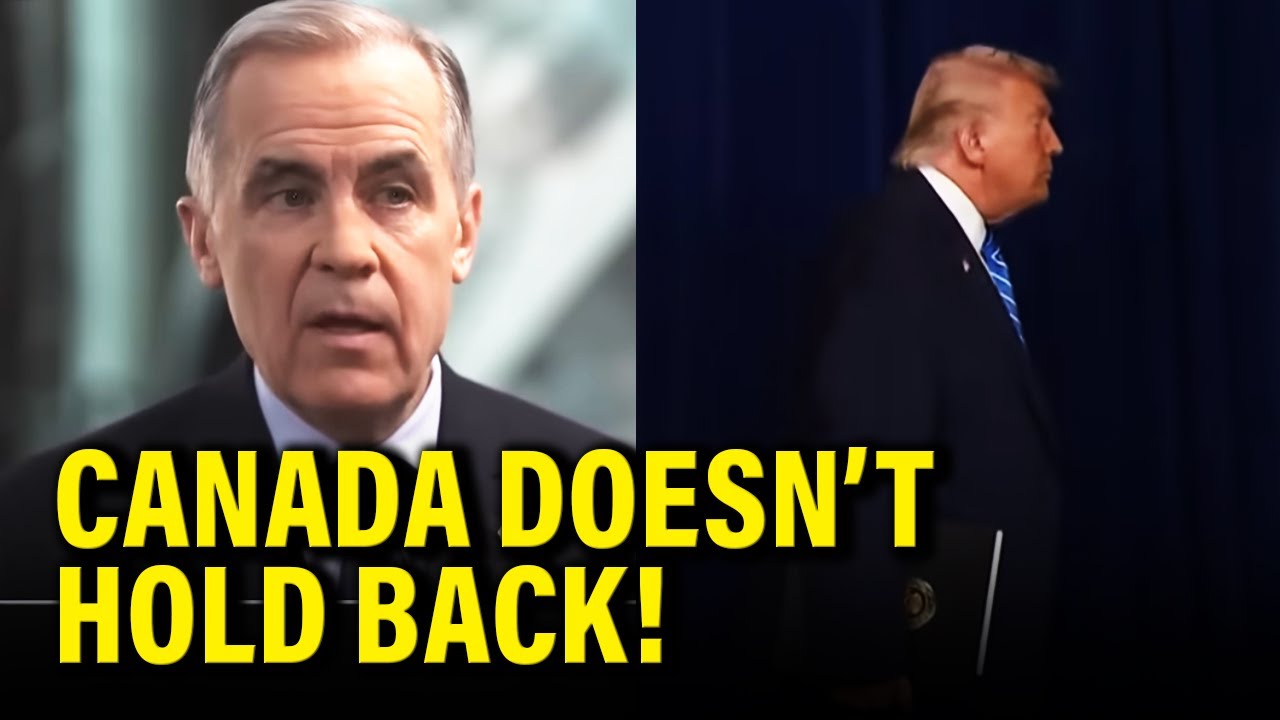
In a year-end interview that sent quiet shockwaves through diplomatic and economic circles, Canadian Prime Minister Mark Carney made a striking admission. The United States, he said, is no longer a reliable trading partner. The language was careful, measured, and diplomatic—but the meaning was unmistakable.
This was not a routine political critique. It was a fundamental reassessment of Canada’s relationship with its most important economic ally.
A Relationship Reframed by Uncertainty
Carney’s remarks were revealing not only for what he said, but for how he said it. Speaking about U.S. trade policy under Donald Trump, the prime minister emphasized that Canada could only control its own actions, not the behavior of its neighbor.
That framing matters.
It is not the language of two partners working through normal disagreements. It is the language people use when dealing with an unpredictable actor—someone whose decisions are driven by impulse rather than shared rules or expectations.
In less than a year, Trump’s aggressive tariff policies have reshaped the tone of the U.S.–Canada relationship. Canada now finds itself reacting to sudden policy shifts, abrupt negotiation breakdowns, and economic threats that arrive with little warning.
From Ottawa’s perspective, this is not how reliable partnerships function.
:max_bytes(150000):strip_icc():focal(999x0:1001x2)/donald-trump-7b59573bcb644cf9a8a9c31af364b98a.jpg)
Tariffs, Power, and the Supreme Court Question
At the heart of this tension is a deeper constitutional and economic issue within the United States itself: who should have the power to impose tariffs?
For most of modern American history, Congress has controlled trade policy precisely because tariffs affect the entire economy. Vesting that power in a collaborative body was meant to prevent chaos, protect businesses, and ensure predictability.
Trump’s approach challenges that logic.
By using emergency economic authorities to impose sweeping tariffs unilaterally, Trump has concentrated enormous economic power in the hands of one individual. The result has been instability—not just for U.S. businesses, but for trading partners around the world.
This issue is now before the Supreme Court, and the justices appear keenly aware of the stakes.
During oral arguments, Justice Sonia Sotomayor referenced a now-famous Canadian television advertisement that aired during the World Series. The ad quoted Ronald Reagan—hardly a liberal icon—warning that tariffs may appear patriotic but ultimately hurt workers, consumers, and the economy as a whole.
Trump’s response to that ad was telling. He reportedly ended negotiations outright.
For the Court, that reaction underscored exactly why Congress passed laws limiting presidential authority over tariffs in the first place. Economic policy driven by ego, retaliation, or personal grievance is not a theoretical concern—it is already happening.
Why Predictability Matters More Than Politics
Economists often emphasize one principle above all others: predictability.
Businesses can survive downturns. They can adjust to slow growth. They can plan around known risks. What they cannot manage is constant uncertainty—policy that changes overnight based on political moods or personal slights.
When tariffs can be imposed, lifted, or expanded at a moment’s notice, investment decisions freeze. Supply chains fracture. Prices rise. Jobs disappear.
Canada understands this acutely.
Carney noted that while Canada cannot control U.S. trade policy, it can control how it responds. That response has been twofold: strengthening domestic investment and aggressively diversifying trade relationships.
Budget 2025 reflects that strategy, with major investments aimed at reducing dependence on the U.S. market and building resilience at home.
The Global Consequences of Unilateral Power
The stakes extend far beyond North America.
If the Supreme Court rules in favor of Trump and affirms broad unilateral presidential power over tariffs, the implications would be global. Trade partners would be forced to view every U.S. presidential election as an economic risk event.
That would fundamentally change how the world interacts with the American economy.
The U.S. dollar’s strength, the appeal of U.S. bonds, and America’s central role in global trade are built on the assumption of institutional stability. Remove that stability, and confidence erodes.
Canada and other allies have made this concern clear. A ruling that curbs presidential tariff power would not only benefit U.S. small businesses—it would help restore faith in the United States as a predictable economic partner.
Refunds, Small Businesses, and Political Panic
Adding pressure to the situation, the U.S. Court of International Trade recently ruled that if the Supreme Court sides with small businesses, companies that paid tariffs could be entitled to refunds.
Estimates suggest American households and businesses have paid between $1.6 and $2 billion in tariffs.
That ruling may explain Trump’s sudden and short-lived proposal to send checks to Americans—a move critics saw as an attempt to preempt refunds that would directly benefit small businesses. The idea was quickly abandoned, but the timing raised eyebrows.
The broader message was clear: tariff policy has become less about economic strategy and more about political control.
Canada’s Strategic Pivot
While Washington debates, Canada is moving forward.
Carney highlighted increased defense spending, including an $80 billion investment to protect Canada’s Arctic sovereignty and equip its armed forces. Crucially, more of that spending will now remain inside Canada rather than flowing to U.S. defense contractors.
This shift reflects a broader trend: economic and strategic independence.
Canada is also deepening ties with Asian economic powers, signaling that while the U.S. remains an important partner, it is no longer the only one.
A Relationship at a Crossroads
The U.S.–Canada relationship is not broken—but it is changing.
Canada’s leadership is no longer assuming that cooperation will naturally follow. Instead, it is planning for volatility, diversifying risks, and protecting national interests in an environment shaped by unpredictability.
The Supreme Court’s pending decision may prove pivotal. A ruling that reins in unilateral tariff power could restore confidence—not just domestically, but globally.
Until then, Canada’s message is pragmatic and restrained: we will work where we can, prepare where we must, and no longer assume stability where it no longer exists.
In global economics, trust takes decades to build—and only moments to lose.






