Canada Draws a Red Line Around the Great Lakes, and Washington Is Forced to Take Notice
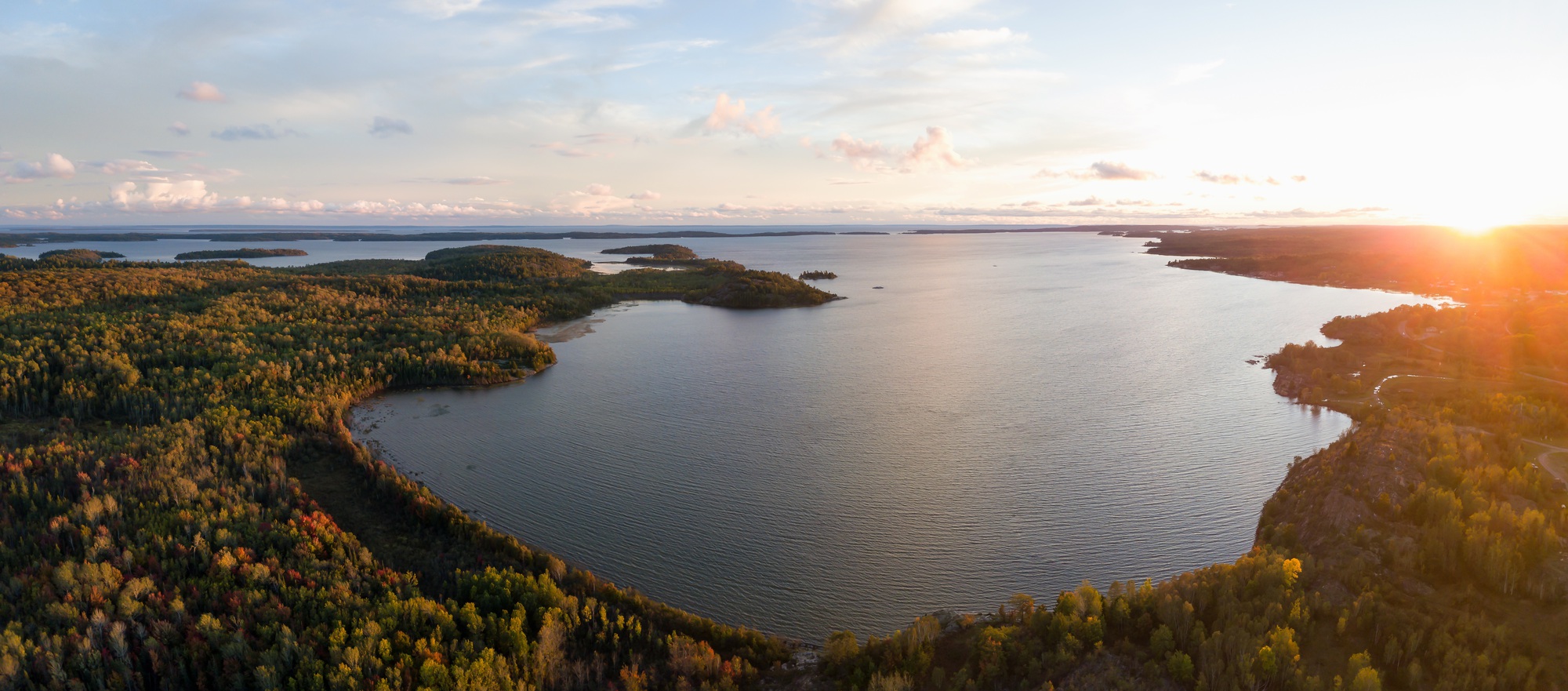
For more than a century, the Great Lakes have been treated as a quiet constant in North American life — vast, shared, and seemingly inexhaustible. They supplied drinking water to cities, cooled power plants, moved industrial goods, and sustained agriculture on both sides of the U.S.–Canada border with little controversy and even less anxiety.
That assumption is now being challenged.
Last week in Thunder Bay, Prime Minister Mark Carney signed the Great Lakes Protection Act into law, effectively banning the export of water from the Great Lakes basin without explicit federal and provincial approval. The legislation closes long-standing loopholes, restricts bottled water extraction, and blocks any future diversion of lake water outside the basin — including to water-stressed regions of the United States.
There was no bilateral announcement with Washington, no joint press conference, and no transitional framework. Canadian officials described the move as overdue and necessary. American officials, caught off guard, privately described it as “a strategic shock.”
The Great Lakes supply drinking water to more than 40 million people and underpin nearly $900 billion in annual economic activity across eight U.S. states and two Canadian provinces. Until now, the system operated largely on trust: joint management agreements, shared scientific data, and the belief that abundance made conflict unnecessary.
Climate change has begun to unravel that belief.
From Abundance to Anxiety
Scientists have long warned that rising temperatures would disrupt the delicate hydrological balance of the Great Lakes. Over the past decade, those warnings have become visible reality. Lake Michigan and Lake Huron have recorded some of their lowest levels in decades. Winter ice cover has thinned, accelerating evaporation. Rainfall patterns have become erratic, reducing natural replenishment.
At the same time, water scarcity in the American West has reached crisis levels. The Colorado River no longer reliably reaches the sea. Groundwater reserves in California’s Central Valley are being depleted faster than they can recharge. Cities such as Phoenix, Las Vegas, and Tucson face increasingly severe restrictions.
Against this backdrop, the Great Lakes have begun to appear — in some political circles — as a solution.
Over the past several years, proposals to divert water from the Great Lakes to the Southwest have circulated in policy papers, engineering studies, and state-level discussions. Though none advanced to construction, they were no longer dismissed as fantasy. The engineering was feasible. The demand was real. And the political argument — that water should be treated as a national resource — gained traction in regions facing existential shortages.
Former President Donald Trump amplified that rhetoric during his recent campaign, asserting that water flowing through U.S. territory belonged to the United States and warning that Canada could not “hoard” a resource Americans might need.
In Ottawa, those comments landed as a turning point.
Closing the Loopholes

Canada has technically restricted bulk water exports since 1999. But enforcement was uneven, and exemptions remained. Bottled water extraction continued largely unchecked. Industrial withdrawals faced limited oversight. And critically, restrictions focused on exports outside North America, leaving continental transfers in a gray zone.
The new legislation eliminates that ambiguity.
Under the Great Lakes Protection Act, any removal of water from the basin — whether by pipeline, tanker, or industrial diversion — now requires federal approval. Bottled water extraction faces strict caps. Environmental standards governing industrial use have been tightened. And proposals to move water to U.S. states outside the basin are categorically prohibited.
Canadian officials insist the law is not aimed at punishing the United States. “This is about long-term water security,” one senior official said. “For Canada first, and for the basin as a whole.”
Still, the geopolitical implications are unmistakable.
A New Kind of Leverage
Unlike oil, grain, or manufactured goods, water is not easily substituted. It cannot be rerouted overnight, stockpiled at scale, or sourced cheaply from elsewhere. Industries dependent on the Great Lakes — steelmaking, food processing, power generation, shipping — were built around assured access to fresh water.
That access now rests, at least partially, on Canadian regulatory authority.
Key control points in the Great Lakes system lie within Canadian jurisdiction, including major outflows and flow regulation infrastructure. The St. Lawrence Seaway, the primary outlet to the Atlantic, runs through Canadian territory before reaching international waters. While Canada has not threatened to restrict flows, it now holds the legal authority to impose tighter conditions on usage.
For American cities such as Chicago, Detroit, Cleveland, Milwaukee, and Buffalo, the message is subtle but clear: continued stability depends on cooperation, not assumption.
“This is not coercion,” said a former U.S. water policy official. “But it is leverage — and Washington is not used to seeing it exercised by Canada.”
Domestic Support, International Unease
Within Canada, the move has drawn strong public backing, particularly in Great Lakes communities that have long opposed large-scale water extraction by private companies. Environmental groups argue the law corrects decades of under-protection and reflects the realities of climate change.
U.S. governors in western states have reacted with frustration. Several called for negotiations, warning that unilateral action undermines continental cooperation. Others urged the federal government to respond more forcefully, though no clear legal mechanism exists to compel Canada to reverse course.
Trade retaliation, a familiar tool in U.S.–Canada disputes, appears ineffective here. Water access cannot be resolved through tariffs. Nor is military pressure remotely plausible.
“The uncomfortable truth,” said a senior U.S. analyst, “is that this is one area where the United States has no leverage.”
A Precedent for the Future
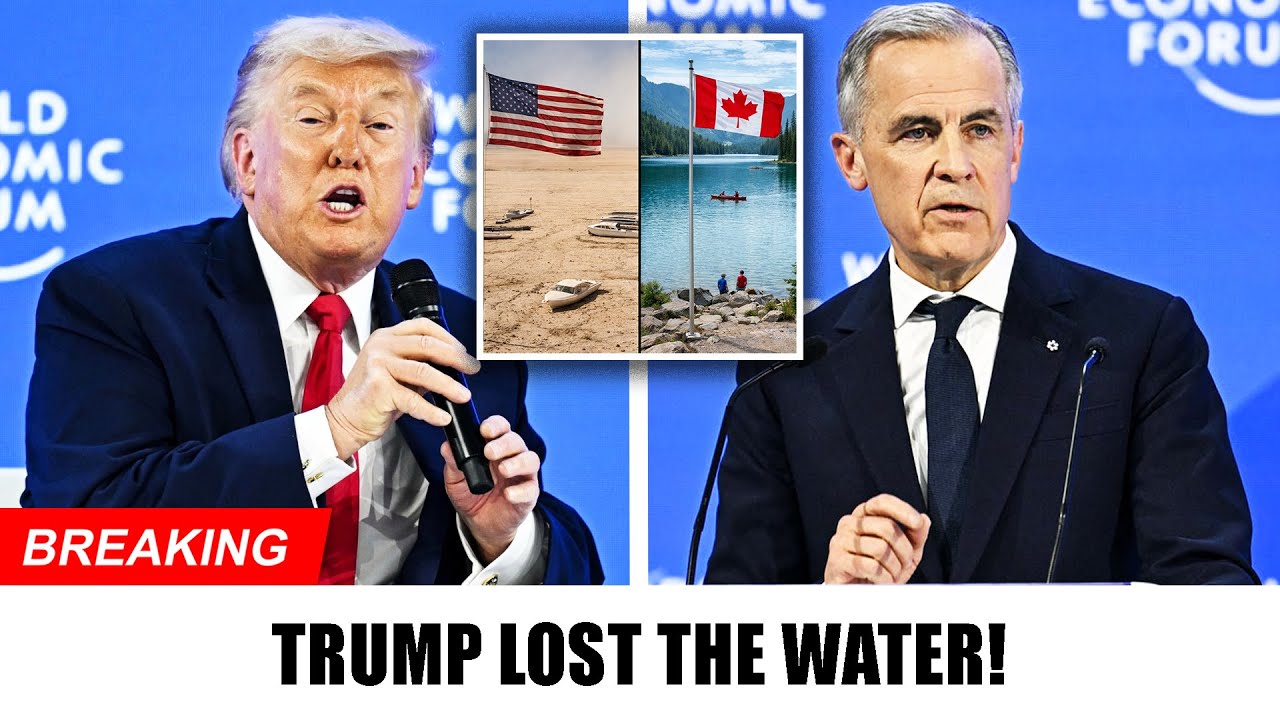
Canada’s decision may signal a broader shift in how resource-rich countries approach climate-era scarcity. As water stress intensifies globally, governments are increasingly unwilling to treat essential resources as automatically shareable.
For decades, North American integration was built on the assumption that cooperation was always cheaper than conflict. That assumption held when resources felt limitless. It is now being tested by scarcity.
Prime Minister Carney has emphasized that Canada does not intend to disrupt existing usage or cut off American cities. But he has also made clear that sovereignty over water is non-negotiable.
In Washington, officials are beginning to grasp the implications.
The Great Lakes will continue to flow. Factories will keep running. Cities will keep drinking. But something fundamental has changed. What was once taken for granted is now conditional — not on goodwill alone, but on respect, restraint, and long-term cooperation.
In an era defined by climate pressure, the world’s largest freshwater system has become more than a natural wonder. It has become a strategic reality — and Canada has decided it will no longer pretend otherwise.






