As Canada Looks East, Trump Threatens a Trade War He Once Praised
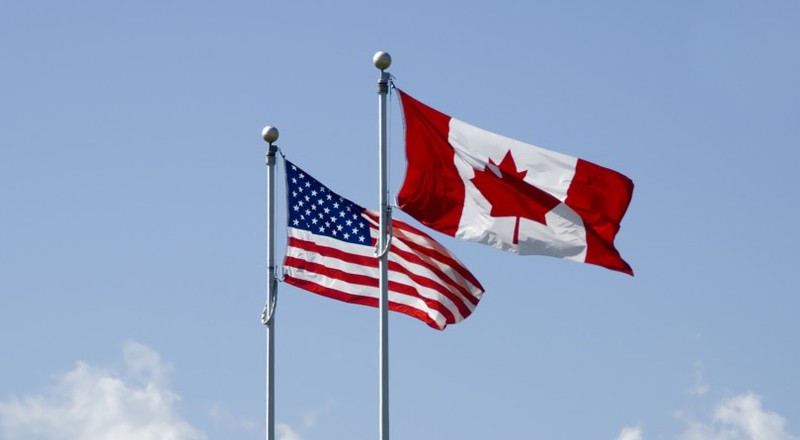
For decades, Canada’s economic relationship with the United States rested on a quiet assumption: diversification was desirable, but dependence was inevitable. Geography, infrastructure and history ensured that the vast majority of Canadian exports flowed south, binding Ottawa’s economic fortunes to Washington’s political temperament.
That assumption is now being openly challenged — and the response from Donald J. Trump has been swift, volatile and revealing.
On Saturday morning, Mr. Trump threatened to impose a 100 percent tariff on all Canadian goods entering the United States if Ottawa proceeds with a newly negotiated trade agreement with China. The warning, delivered on his Truth Social platform, framed Canada as a potential conduit for Chinese goods “flooding” the American market and warned that China would “eat Canada alive.”
The threat was striking not only for its severity, but for its suddenness. Just eight days earlier, Mr. Trump publicly praised the very same deal.
“That’s what he should be doing,” Mr. Trump told reporters at the White House after Canada’s prime minister, Mark Carney, announced the agreement following meetings in Beijing. “It’s a good thing for him to sign a trade deal. If you can get a deal with China, you should do that.”
What changed in a week was not the deal itself, but Canada’s willingness to explain what it represents.
A Deal Born of Retaliation, Not Realignment
The agreement Canada negotiated with China is narrower than Mr. Trump’s rhetoric suggests. It does not represent a wholesale shift in geopolitical allegiance, nor does it turn Canada into a staging ground for Chinese exports to the United States.
Instead, it resolves a specific trade dispute that had been devastating Canadian agriculture.
After Canada imposed 100 percent tariffs on Chinese electric vehicles in 2024 — mirroring actions taken by Washington and Brussels — Beijing retaliated. Tariffs of up to 100 percent were placed on Canadian canola oil, peas and other agricultural products, along with steep duties on pork, lobster and seafood. For farmers in Saskatchewan and fishing communities in Atlantic Canada, the impact was immediate and severe.
China had been a $4 billion annual market for Canadian canola. Exports collapsed. Pork shipments fell sharply. Lobster harvests went unsold.
Under the new agreement, Canada will allow up to 49,000 Chinese-made electric vehicles into its domestic market annually at a tariff rate of 6.1 percent — roughly the volume imported before the dispute and less than 3 percent of Canada’s auto market. In return, China will sharply reduce tariffs on Canadian agricultural exports beginning March 1, unlocking an estimated $3 billion in trade.
Provincial leaders from farm-producing regions praised the deal. So did Mr. Trump — initially.
Davos, and a Line That Landed

The reversal came after Mr. Carney’s appearance at the World Economic Forum in Davos, Switzerland, where he delivered a speech that resonated far beyond Canada.
Titled “Principled and Pragmatic: Canada’s Path,” the address argued that the postwar rules-based international order is no longer merely under strain, but in rupture. Mr. Carney warned that great powers are increasingly using tariffs, financial systems and supply chains as tools of coercion — and that middle powers must develop “strategic autonomy” to protect themselves.
He did not mention the United States by name. He did not need to.
“If you are not at the table,” Mr. Carney said, “you are on the menu.”
The speech received a rare standing ovation at Davos and was widely praised across European and Asian media. Clips circulated rapidly on X, LinkedIn and YouTube, amplified by commentary from economists, diplomats and business leaders who have grown wary of American unpredictability.
The following day, Mr. Trump spoke at Davos and struck a markedly different tone. Canada, he said, “lives because of the United States” and should remember its dependence before making public statements. The contrast was unmistakable.
When Mr. Carney later responded that “Canada thrives because we are Canadian,” the shift in Washington’s posture was complete.
From Partner to Problem
By the end of the week, the China deal Mr. Trump once called “a good thing” had become grounds for economic annihilation.
The logic of the tariff threat is difficult to sustain. The Chinese electric vehicles covered by the agreement are destined for Canadian consumers, not American ports. The deal does not alter customs enforcement or transshipment rules under the United States-Mexico-Canada Agreement, which Mr. Trump himself negotiated and signed.
A blanket 100 percent tariff on Canadian goods would violate that agreement and devastate American industries that rely on Canadian lumber, aluminum, energy and automotive parts. In 2024, Canada exported more than $350 billion in goods to the United States — exports embedded deeply in American supply chains.
But as many analysts noted across CNBC panels, Bloomberg commentary and social-media threads over the weekend, the threat was never really about trade mechanics.
It was about leverage.
The Fear Beneath the Fury
For generations, American economic power over Canada rested not on hostility, but on habit. Roughly 75 percent of Canadian exports still go to the United States. Infrastructure, logistics and business planning evolved around that reality.
Mr. Carney is attempting to change it.
Beyond China, his government has pursued energy partnerships with Qatar, expanded trade and critical-mineral coordination with the European Union, reopened diplomatic channels with India and invested in Arctic ports and rail links that bypass American territory entirely.
Each step reduces Canada’s vulnerability to sudden political pressure from Washington.
To Mr. Trump, whose approach to alliances has consistently emphasized loyalty and submission, that independence looks like defiance. The tariff threat, analysts argue, reflects panic more than policy — an attempt to reassert dominance at the very moment it is being eroded.
The reaction on American social media underscored the divide. Some commentators applauded the hard line, framing Canada as an ungrateful beneficiary of American generosity. Others, including prominent business voices and former trade officials, warned that weaponizing tariffs against the closest U.S. ally would accelerate the very decoupling Washington fears.
A Signal to the World

Whether the tariff threat is enforceable remains unclear. Permanent implementation would require congressional approval. Canada and Mexico could challenge it under USMCA dispute mechanisms. American industries would likely lobby fiercely against it.
But even as a threat, it carries consequences.
For Canadian firms considering investment, the reliability of U.S. market access now looks uncertain. For global observers, the episode reinforces a growing belief that American economic leadership under Mr. Trump is contingent, personal and volatile.
That perception, Mr. Carney argued in Davos, is precisely why middle powers must adapt.
The irony is hard to miss. In trying to punish Canada for reducing its dependence on the United States, Mr. Trump may be encouraging others to do the same.
What was once unthinkable — that American economic dominance might be optional — is now openly discussed in boardrooms, ministries and social-media feeds around the world.
The China deal did not start that conversation. But the reaction to it may have accelerated it.






