Jack Smith’s Five-Hour Testimony Leaves Republicans With Little to Use — and Much to Say

Washington — After months of anticipation and partisan buildup, the public testimony of Special Counsel Jack Smith before the House Judiciary Committee unfolded this week not as a political spectacle, but as something closer to a legal seminar — deliberate, restrained, and largely devoid of the fireworks Republicans had promised.
For more than five hours, Mr. Smith answered questions from lawmakers led by Representative Jim Jordan of Ohio, the committee’s chairman and one of former President Donald J. Trump’s most outspoken allies. The hearing marked the first time Mr. Smith appeared publicly before Congress since leading the federal prosecutions related to Mr. Trump’s efforts to overturn the 2020 election and his handling of classified documents.
Republicans had framed the hearing as a reckoning — an opportunity to expose what they have repeatedly described as the “weaponization” of the Justice Department. But by the end of the day, even some conservative commentators conceded that Mr. Smith, calm and tightly disciplined, had given them little material to work with.
A Controlled Appearance
From the outset, Mr. Smith made clear that he would not be drawn into political debate. He spoke quietly, often answering with brief “yes” or “no” responses, and declined to elaborate when questions veered toward matters that remain under judicial seal or could implicate grand jury secrecy rules.
That posture appeared intentional. Legal analysts noted that prosecutors are trained to avoid unnecessary exposition, particularly in adversarial settings. Mr. Smith rarely volunteered information, instead allowing his written record — indictments, court filings, and judicial rulings — to speak for itself.
When asked whether his investigation was politically motivated, Mr. Smith responded with a formulation he has used before: that he is not a politician, has no partisan affiliation, and would have brought the same charges against any individual, Democrat or Republican, if the evidence warranted it.
“No one should be above the law,” he said, repeating a principle that has become something of a refrain in the Justice Department’s defense of its Trump-related prosecutions.
January 6 Remains Central — But Mostly Unspoken
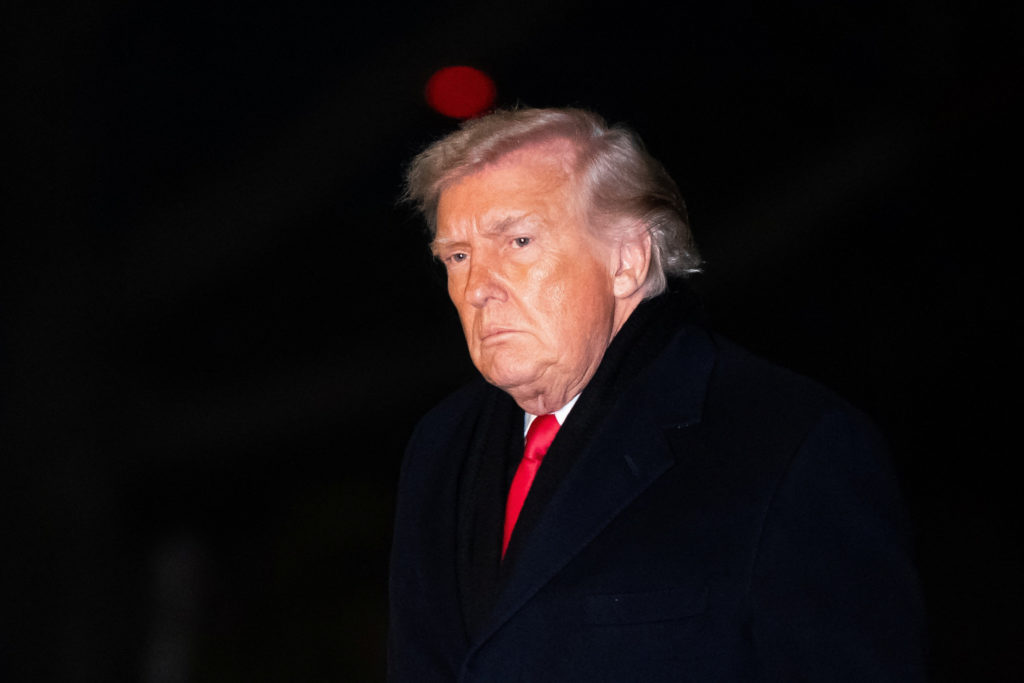
Despite the hearing’s focus on Mr. Smith’s conduct, the underlying subject — Donald Trump’s actions surrounding January 6, 2021 — loomed over the room.
Mr. Smith reiterated that prosecutors believed the former president’s actions met the standard for criminal liability and that they were confident they could have secured a conviction beyond a reasonable doubt. However, he avoided detailed discussion of evidence, witnesses, or internal deliberations.
Republicans, for their part, spent relatively little time disputing the factual narrative of January 6 itself. Instead, they focused on procedural matters — particularly the use of subpoenas to obtain phone metadata from members of Congress and the hiring of outside forensic consultants during the investigation.
On both points, legal experts have long noted that such practices are routine in complex federal investigations. Subpoenaed records, as Mr. Smith emphasized, consisted only of call logs — numbers dialed and timestamps — not the content of conversations.
“There is no wiretapping of lawmakers here,” said one former federal prosecutor, speaking separately after the hearing. “This is standard investigative practice when trying to reconstruct timelines.”
The Shadow of Judge Cannon
One reason for Mr. Smith’s careful navigation of questions was the ongoing sensitivity surrounding the classified documents case related to Mar-a-Lago. Judge Aileen M. Cannon, a Trump-appointed federal judge in Florida, has kept large portions of the special counsel’s report under seal, citing grand jury confidentiality.
Any misstep, legal observers say, could have exposed Mr. Smith to accusations — or even referrals — for violating disclosure rules. Republicans have made clear they are eager to pursue such avenues if given the opportunity.
Mr. Smith largely avoided the subject altogether.
A More Personal Risk
Perhaps the most striking moment of the hearing came when Mr. Smith was asked about the possibility that he himself could face criminal investigation under a future Trump administration.
“Yes,” Mr. Smith replied, when asked whether he believed efforts would be made to indict him. He added that such actions would be unprecedented — and unthinkable under prior administrations — but acknowledged that the threat is real.
The concern is not merely theoretical. In recent months, Mr. Trump has publicly attacked Mr. Smith on social media, calling him “deranged” and questioning his right to practice law. Such statements, legal scholars warn, risk normalizing the use of prosecutorial power as a tool of retaliation.
“Even baseless investigations carry real costs,” said Paul Krugman, the Nobel Prize–winning economist, in a recent discussion about political pressure on independent officials. “Reputational harm, legal fees, psychological stress — these are not abstract.”
Mr. Smith, a career public servant, would likely need to retain private legal counsel should such efforts move forward, an expense that could run into the hundreds of thousands of dollars.
A Hearing Without a Climax
For viewers expecting dramatic confrontations or viral moments, the hearing was anticlimactic. Democrats offered supportive questions, but Mr. Smith declined to use them as opportunities to expand on Mr. Trump’s alleged crimes. Republicans pressed aggressively, but without success in extracting contradictions or damaging admissions.
In the end, the most consequential outcome may have been what did not happen.
Mr. Smith did not lose his temper. He did not contradict prior statements. He did not disclose protected information. And he did not provide ammunition for claims that he had acted improperly.
Reinforcing, Not Rewriting, the Narrative

If the hearing changed anything, it was subtle. By refusing to engage theatrics, Mr. Smith reinforced an image of himself as a prosecutor adhering strictly to institutional norms — an image that contrasts sharply with the political rhetoric surrounding him.
For critics of Mr. Trump, the testimony served as a quiet reminder of the gravity of the charges already laid out in court filings. For Mr. Trump’s allies, it offered little relief — but also no definitive setback.
And for the country, the hearing underscored a broader reality: the legal reckoning over January 6 will not be decided in congressional hearing rooms, but in courts — and, ultimately, at the ballot box.
As Mr. Smith left the hearing room, there was no applause, no visible reaction. Just another chapter in a legal and political saga that remains far from over.






