DAVOS, Switzerland — What began as another combustible appearance by President Donald Trump at the World Economic Forum quickly escalated into a diplomatic rupture, as Britain delivered an unusually direct public rebuke that underscored how fragile the transatlantic alliance has become under his renewed leadership.
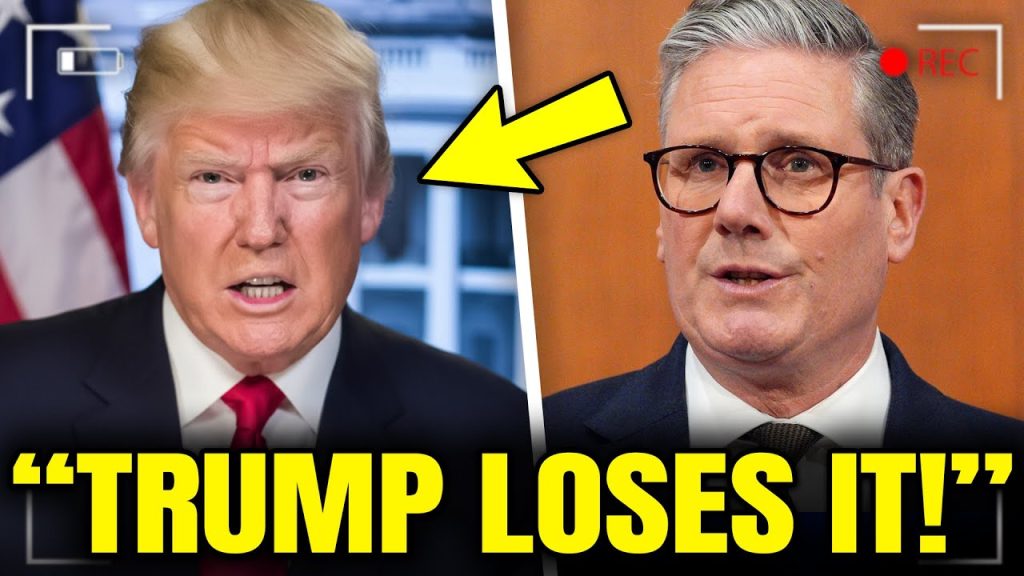
Speaking before business executives and political leaders in Davos, Mr. Trump dismissed the role of NATO allies in past conflicts, asserting that the United States had “never really needed” its partners and questioning whether they would come to America’s aid in a crisis. In a single off-the-cuff passage, he minimized European contributions to the war in Afghanistan, suggesting allied troops “stayed a little back, a little off the front lines.”
The remarks landed heavily in the United Kingdom, where memories of Afghanistan remain raw. Nearly 500 British service members were killed during two decades of fighting alongside American forces after the Sept. 11 attacks — the only time NATO has invoked its collective defense clause, Article 5, and done so in support of the United States.
Within hours, Britain responded with a combination of restraint and resolve that startled Washington officials accustomed to quieter diplomatic pushback. Prime Minister Keir Starmer issued a statement honoring the fallen and calling the president’s comments “insulting and frankly appalling,” language rarely used so directly by a close ally addressing a sitting U.S. president.
The response did not stop there. Britain’s minister for the armed forces, Luke Pollard, went further in a televised interview, grounding his criticism not in abstraction but in personal experience. A veteran of multiple deployments to Afghanistan, Mr. Pollard spoke of fighting shoulder to shoulder with American troops and of bonds “forged in blood, sweat and tears.”
“The world stood with the United States when it asked for help,” he said, noting that NATO allies answered Washington’s call after 9/11. “Anyone who doubts that should sit down with the families of those who never came home.”
For European diplomats in Davos, the exchange crystallized a growing fear: that Mr. Trump’s return to the global stage is not merely reviving old grievances but accelerating a deeper reassessment of America’s reliability as an ally. While previous flare-ups during his first term were often treated as aberrations, many officials now speak privately of contingency planning for a world in which U.S. commitments can no longer be taken for granted.
The British response was notable precisely because it broke with years of careful calibration. Traditionally, London has acted as Washington’s closest partner, often absorbing rhetorical slights to preserve the so-called “special relationship.” This time, officials concluded that silence carried its own cost — particularly with veterans’ families and a public acutely sensitive to any suggestion that their sacrifices were expendable.
The episode also reverberated across NATO. German and French officials avoided naming Mr. Trump directly but issued statements reaffirming the alliance’s collective defense principle and the shared sacrifices made in Afghanistan and elsewhere. In Eastern Europe, where governments view NATO as a bulwark against Russian aggression, the president’s remarks were met with quiet alarm. Diplomats warned that ambiguity from Washington could embolden adversaries to test the alliance’s resolve.

At the heart of the controversy lies Mr. Trump’s long-standing transactional view of alliances. At Davos, he again suggested that U.S. protection should be conditional on financial contributions, reviving arguments that NATO members are “free riders.” He also hinted at new tariffs on European goods and criticized climate policies that underpin cooperation with allies, injecting uncertainty into markets at a forum typically devoted to reassurance.
Compounding the unease were moments of apparent confusion during his speech, including repeated references to Iceland when he appeared to mean Greenland — a Danish territory that has been the subject of his past strategic musings. While aides later insisted the meaning was clear, diplomats said the misstatements added to a sense of disorder surrounding the U.S. message.
For Britain, the decision to confront the president publicly was calculated. Mr. Starmer’s statement balanced condemnation with diplomacy, avoiding personal insults while drawing a firm line around respect for allied service members. Mr. Pollard’s remarks, more visceral and personal, supplied the moral weight.
“This wasn’t about scoring points,” said one British official familiar with the response. “It was about defending the truth of what our forces did and the principle that alliances are built on shared sacrifice, not invoices.”
In Washington, the reaction was mixed. Administration allies dismissed the British criticism as overblown, arguing that the president was merely pressing allies to do more for their own defense. Critics countered that the damage lay not in policy demands but in rhetoric that erodes trust — a currency alliances depend on.
Analysts note that the timing magnified the impact. With war still raging in Ukraine and NATO reinforcing its eastern flank, allied unity has taken on renewed urgency. Any signal that the United States might waver reverberates far beyond Europe.
“There is only one thing worse than working with allies,” Mr. Pollard said in a line that quickly circulated among diplomats. “And that is working without them.”
Whether the episode marks a turning point remains to be seen. Some European leaders continue to hope they can compartmentalize Mr. Trump’s rhetoric from practical cooperation. Others argue that the Davos exchange reflects a structural shift, one in which allies must be prepared to assert themselves more openly — and, if necessary, independently.
For now, the shock from Britain’s response has achieved one immediate effect: it has made visible, in stark terms, how thin the margin for error has become in transatlantic relations. Words spoken casually on a global stage now carry consequences measured not just in headlines, but in the confidence of allies whose trust has been tested before — and may not be so easily restored again.







