Western Canada is on the brink of a seismic shift, as Alberta and Saskatchewan align their economic and political strategies in a move that could redefine their relationship with Canada. With over half of Saskatchewan’s residents considering independence, the provinces are quietly orchestrating a significant departure from federal oversight.
For years, the frustrations of Western Canada were dismissed as mere regional complaints. However, recent polling indicates a growing sentiment that these provinces receive insufficient benefits from their contributions to the nation. As dissatisfaction festers, Alberta and Saskatchewan are no longer voicing their grievances in isolation; they are now moving in sync, sharing messaging and objectives.
The implications of this alignment are profound. Alberta and Saskatchewan account for approximately three-quarters of Canada’s oil production, making their economic power undeniable. As these provinces signal a potential shift in direction, Ottawa is forced to take notice, not out of concern for regional sentiments, but due to the potential impact on national revenue.

The dynamics at play are complex. Alberta’s economic success attracts a younger workforce, while Saskatchewan’s resource wealth, including potash and uranium, positions it as a critical player in global markets. With the majority of their energy output already flowing into U.S. markets, the question arises: how long can Canada maintain its grip on these provinces?
The federal government has historically relied on Alberta and Saskatchewan as net contributors to its budget. However, as these provinces explore exit strategies, the financial implications for Ottawa could be catastrophic. The existing federal model, which thrives on Western resource contributions, might crumble if Alberta and Saskatchewan coordinate their exit.

What’s particularly striking about this moment is the methodical approach being taken by Western leaders. There is no chaos or frenzy; instead, there is a calm, operational focus on executing a plan. Discussions around statehood are emerging not as radical notions, but as practical considerations that could streamline economic processes and reduce regulatory friction.

Infrastructure plays a crucial role in this narrative. Pipelines and trade routes already favor southward integration, making the economic boundary between Western Canada and the U.S. appear increasingly artificial. As these provinces navigate their options, the structural advantages of aligning with the U.S. market become harder to ignore.
As this situation evolves, the tone in Alberta and Saskatchewan is shifting from frustration to determination. The focus is now on reducing dependence on federal policies that many view as irrelevant to their daily lives. This transition marks a significant turning point in the political landscape, as the provinces prepare for a future that may not include Canada.
In conclusion, Alberta and Saskatchewan are at a pivotal juncture, poised to redefine their relationship with Canada. As they align economically and politically, the implications for the nation are profound. The map of Canada may soon reflect the realities of a West that has already begun to act independently.
Western Provinces Have Just SECEDED — Canada Confronts a Scenario of 51st to 56th States
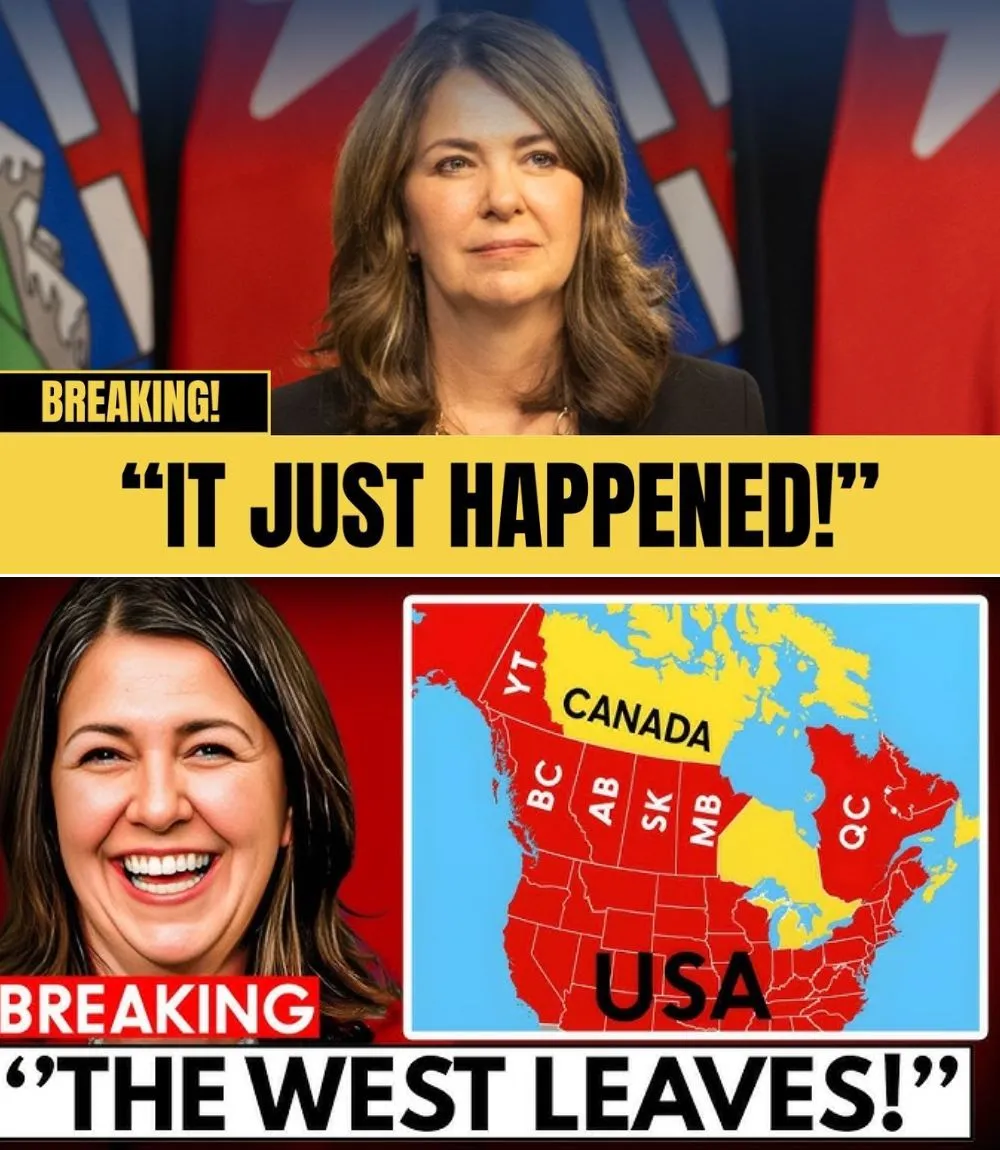
Western Canada is on the brink of a seismic shift as provinces like Alberta, Saskatchewan, and British Columbia explore the unthinkable: separation from Canada. With legal frameworks in place and citizen-driven initiatives gaining momentum, the prospect of these provinces becoming the 51st to 56th states of the U.S. is no longer a distant fantasy.
The political landscape in Canada is rapidly evolving, with a growing number of Western provinces openly questioning their allegiance to Confederation. Alberta’s recent citizen-led referendum petition, which surpassed 400,000 verified signatures, has ignited discussions about potential independence. This is not mere speculation; it’s a structured political movement that Ottawa can no longer ignore.
Premier Danielle Smith of Alberta finds herself in a precarious position. While she has championed the idea that any decision regarding separation must come from the people, the overwhelming support for the referendum puts her in a bind. Blocking the process could alienate her voter base, who are increasingly vocal about their desire for a democratic resolution to their grievances.
The frustration in Alberta stems from decades of perceived economic exploitation by the federal government. Many residents feel their wealth is being redistributed to the east while their needs are overlooked. With stalled pipeline projects and unfulfilled promises, the sentiment is that the current system is rigged against them, prompting a shift toward considering American statehood as a viable alternative.

Saskatchewan is not far behind in this movement. Premier Scott Moe has calculated the economic toll of federal policies on his province, projecting significant losses by 2035. With referendum laws now aligned with Alberta’s, Saskatchewan is poised to act swiftly should the moment arise. The coordination between these prairie provinces gives them unprecedented leverage in their negotiations with the federal government.
Manitoba’s geographical reality complicates its position. If Alberta and Saskatchewan pursue separation, Manitoba risks being isolated from the rest of Canada. With a significant portion of its trade flowing southward, the province may find itself compelled to join the conversation, driven more by pragmatism than ideology.
British Columbia adds another layer of complexity to the situation. The province is deeply divided, with coastal regions favoring federal policies while the interior grapples with economic frustrations. Premier David Eby has acknowledged the challenges of justifying federal funding arrangements, leading many to reconsider their allegiance to Canada as they seek to maximize their economic potential.

Quebec’s involvement shifts the dynamics entirely. With a long history of sovereignty movements, Quebec’s participation could destabilize Confederation further. The prospect of American statehood offers a model for cultural and linguistic preservation that resonates with many in Quebec, making the idea of leaving Canada more appealing than ever.
The territories are also watching closely. The Yukon and Nunavut are beginning to assert their independence, creating local governance structures that challenge Ottawa’s authority. The rising cost of living and a sense of neglect from the federal government are propelling these regions toward a reevaluation of their relationship with Canada.

As these discussions unfold, Ottawa faces an urgent reality check. The Supreme Court’s 1998 ruling on secession underscores that a clear majority vote on a clear question obligates the federal government to negotiate. However, the question is no longer whether the provinces can leave; it’s whether Canada can offer them a compelling reason to stay.
The Western provinces are not waiting for permission to act. They are aligning their legal frameworks, synchronizing timelines, and preparing for potential outcomes. The year 2026 looms large as a pivotal moment, with various provinces poised to make significant moves that could reshape the political landscape.
This is a critical juncture for Canada. The federal government must adapt to the changing dynamics or risk fragmentation. The West is no longer a passive participant; it is actively seeking alternatives and preparing for a future that could redefine the nation as we know it. The countdown has begun, and the implications will reverberate through Canadian history for generations to come.






