🚨 BREAKING: Trump Loses Control, Threatens 100% Tariffs as Canada Stops Listening
Donald Trump is spiraling.
After Prime Minister Mark Carney stood on the world stage in Davos and calmly dismantled Trump’s pressure politics, the U.S. president responded the only way he knows how: with threats.
This time, not subtle ones.
Trump is now openly threatening 100% tariffs on all Canadian goods, a blanket economic strike aimed not at correcting trade imbalances or protecting national security, but at reasserting dominance over a country that no longer obeys.
This is not strategy.
This is panic.
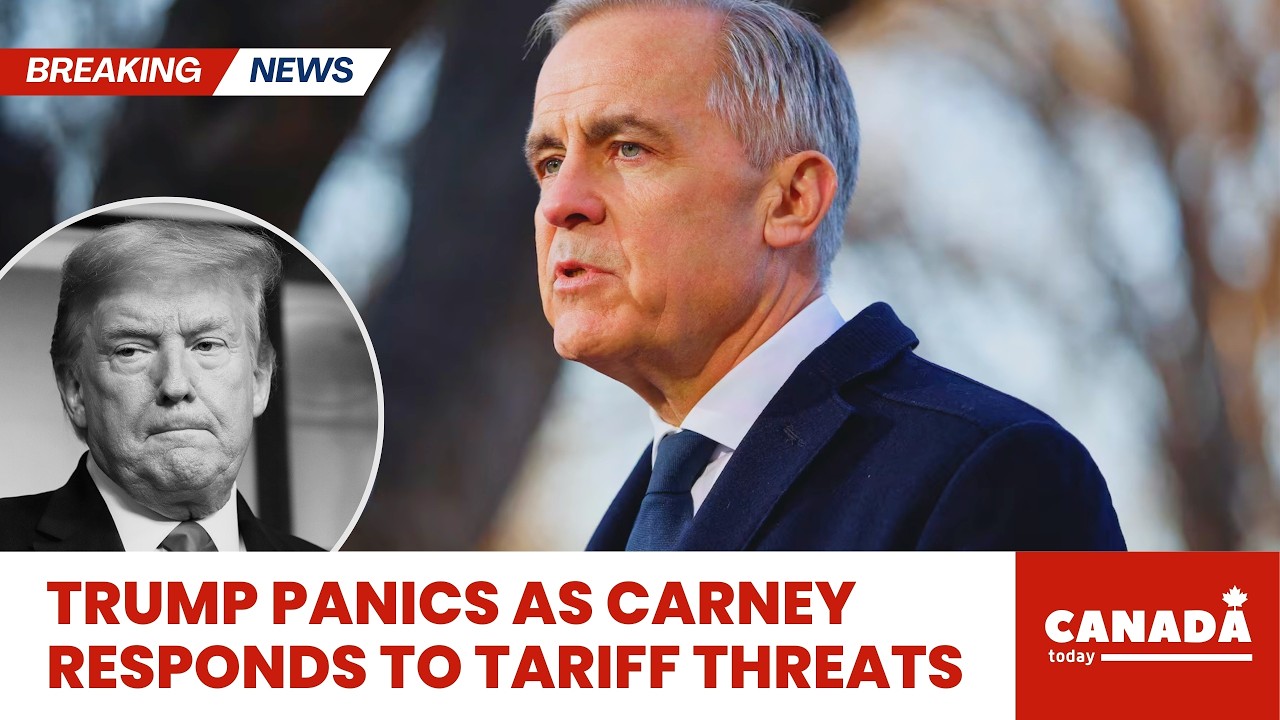
Trump’s Tariff Threat: A Public Act of Intimidation
In a late-night Truth Social post, Trump warned that if Canada proceeds with trade cooperation involving China, every Canadian product entering the United States would face a 100% tariff.
Not selective tariffs.
Not targeted retaliation.
A total economic threat.
Trump claimed Canada was becoming a “drop-off port” for Chinese goods and warned that China would “eat Canada alive.” The language wasn’t analytical. It was coercive. Designed to intimidate. Delivered publicly to send a message: fall back in line, or else.
But here’s the problem for Trump.
Canada didn’t flinch.
What Actually Triggered Trump’s Meltdown
This reaction is not really about China.
Just days earlier, Trump was asked about Canada pursuing a trade arrangement with Beijing. His response?
He called it a good thing and encouraged Canada to do it.
Nothing about the deal changed.
What changed was Mark Carney’s Davos speech.
At the World Economic Forum, Carney calmly declared that the old global order built on intimidation, dependency, and economic coercion is over. He urged middle powers to work together. He spoke about tariffs being weaponized. He didn’t shout. He didn’t insult.
And he didn’t name Trump.
He didn’t have to.
That speech landed exactly where Trump is weakest: his authority.
Canada’s China Deal: Not What Trump Claims
Despite Trump’s framing, there is no sweeping free trade agreement between Canada and China.
What exists is a limited, preliminary arrangement restoring pre-tariff conditions on select goods, including Canadian canola, while reduced tariffs remain on Chinese electric vehicles.
This is standard economic management. The United States itself recently lowered tariffs on Chinese goods in exchange for export access. Yet Trump is now pretending Canada’s actions are unprecedented or dangerous.
Even analysts are calling the response stunningly hypocritical.
Trump isn’t reacting to China.
He’s reacting to Canada acting independently.

From Policy Debate to Personal Insult
As soon as Trump realized he was losing the narrative, the tone shifted.
He stopped debating policy and started belittling Carney, referring to him publicly as “Governor Carney,” echoing the same language he once used when mocking Canada as a potential “51st state.”
This isn’t humor.
It isn’t leverage.
It’s what happens when a leader runs out of moves.
Leaders don’t downgrade titles when they’re winning.
They do it when they’re threatened.
Analysts Say the Quiet Part Out Loud
Even commentators who take Trump seriously are acknowledging the pattern.
One analyst described Trump as “a metal plate in a microwave — sparking, snapping, firing in all directions.”
Erratic reversals.
Contradictory statements.
Public threats followed by walk-backs.
Approval ratings slipping.
Allies pushing back.
Markets increasingly skeptical.
This tariff threat isn’t calculated.
It’s reactive.
Why Trump’s Tariff Threat Collapses on Contact
Trump believes tariffs work because countries are dependent on the U.S. market.
That assumption no longer holds.
Canada has spent the last year diversifying trade, building alternatives, and reducing exposure to U.S. pressure. And Trump just confirmed how much that scares him by telegraphing his discomfort so loudly.
Threats only work when there’s nowhere else to turn.
Canada now has options.
Carney’s Response: No Panic, Just Construction
Within hours of Trump’s threat, Mark Carney released a short video.
No press conference.
No rebuttal.
No escalation.
Just one message:
Canada will choose Canada.
Buy Canadian.
Build Canadian.
Invest in Canadian workers, materials, and technology.
“We can’t control what other nations do,” Carney said calmly.
“But we can be our own best customer.”
That timing mattered.
This wasn’t defiance for show.
It was strategy.
Buy Canadian: How Canada Neutralizes Tariffs Without Retaliation
By investing at home, strengthening domestic supply chains, and prioritizing Canadian materials, Canada reduces its vulnerability to foreign pressure.
Tariffs hurt exports.
Domestic demand protects economies.
By building homes, infrastructure, and defense capabilities with Canadian steel, aluminum, lumber, and technology, Ottawa makes external threats less effective.
That’s how you neutralize economic coercion:
Not with fear.
With resilience.
Trump Threatened Control — and Lost It
Trump threatened 100% tariffs to reassert dominance.
Instead, he exposed anxiety.
Mark Carney didn’t blink.
He didn’t backtrack.
He didn’t beg.
He reminded Canadians — and the world — of something Trump doesn’t want acknowledged:
Canada doesn’t need permission to thrive.
When intimidation stops producing compliance, it stops working altogether.
And that’s exactly what just happened.
Final Takeaway: This Is Bigger Than Tariffs
This moment isn’t just about trade.
It’s about a shifting global order where threats matter less and alternatives matter more. Trump is reacting to that shift, not controlling it.
Canada is building resilience.
Trump is issuing ultimatums.
Only one of those approaches scales.
And the more Trump threatens, the clearer it becomes:
the leverage he thought he had is already slipping away.






