A Hashtag, a President, and a Punchline: How “Fire Colbert” Became a Case Study in Modern Media Power
In May 2017, a late-night monologue on CBS set off a familiar American cycle: a political figure denounces a comedian, social media transforms outrage into a campaign, advertisers are pressured, and a federal regulator is pulled into the drama. What made the episode enduring was not the vulgarity of the joke—though it was widely debated—but how clearly it previewed the media environment that now defines U.S. politics: an ecosystem where a president can try to discipline culture with a post, and where a comedian can respond by turning the demand itself into content.
The trigger was a monologue by Stephen Colbert, then still relatively new as host of The Late Show. In a rapid-fire roast of President Donald Trump, Colbert delivered a censored remark that included a crude reference to Russian President Vladimir Putin—language critics described as offensive and homophobic in implication. The backlash hit immediately, and a hashtag appeared on Twitter: #FireColbert.
For Trump’s allies, it was a rare opportunity: not just to complain about liberal Hollywood, but to apply direct economic pressure. Some posts urged a boycott of advertisers. Conservative media amplified the outrage. And the controversy expanded beyond taste and comedy into an argument about standards, decency, and whether broadcast television had crossed a line.
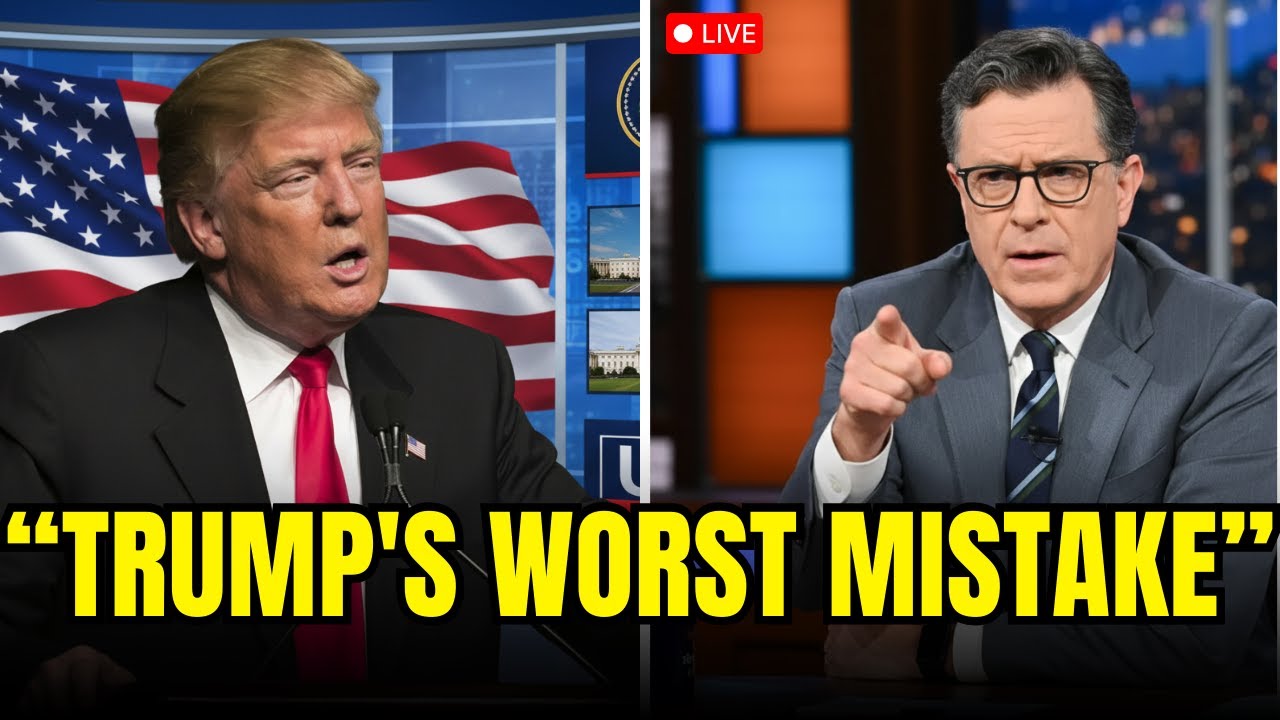
The Escalation: From Outrage to Institutional Pressure
The outrage campaign carried a familiar logic. In the age of viral politics, the goal is often not simply to criticize, but to create a perception of inevitability: the sense that sponsors will flee, networks will panic, and institutions will fold.
In Colbert’s case, the threat felt more plausible because the show aired on broadcast television—still regulated by the Federal Communications Commission. Within days, FCC Chairman Ajit Pai said the agency would review complaints about Colbert’s remarks.
That alone was enough to intensify the pressure on CBS. The FCC’s indecency framework does not operate like a censor in real time, but the mere act of a federal review—paired with political noise—can fuel corporate anxiety. A controversy that might have remained a short-lived social media flare-up now had the sheen of official scrutiny.
What Actually Happened Next
The popular retelling of the episode—especially in highly partisan online videos—often insists Colbert was “fired,” or that network executives “went silent,” or that the FCC threatened punitive consequences. Those claims make for a clean narrative arc. But the historical record is more mundane, and more instructive.
Colbert was not fired. CBS did not cancel the show. The FCC did not fine him.
Instead, Colbert returned to the air and addressed the backlash directly. He acknowledged that he had used “a few words” that were “cruder than they needed to be,” while maintaining he would do the monologue again—an approach that avoided full retreat without pretending the criticism was imaginary.
On May 23, 2017, the FCC announced it would take no action, saying there was “nothing actionable” under its rules, particularly since the offending statement had been censored on air.
That resolution matters because it undercuts the simplest myth: that an online outrage campaign, backed by presidential attention, can reliably force a network’s hand. In this case, the institutional endpoint—after the noise—was a bureaucratic shrug.
Why the Episode Still Matters
If the episode ended with “no action,” why does it still get recycled in 2025 and 2026 as an emblem of Trump-era media conflict?
Because it illustrates the modern mechanism of pressure—how political actors can turn cultural conflict into a loyalty test for corporations, and how the mere suggestion of regulatory scrutiny can become a weapon even when no fine is issued.
It also illustrates a counter-mechanism: the way late-night television can convert intimidation into a storyline that favors the performer. In the attention economy, public attacks often function as involuntary promotion. Reuters noted at the time that the monologue triggered both attacks and support, and that the hashtag campaign quickly became a national conversation.
Colbert’s response—calm, amused, and direct—was not simply bravado. It was a strategy suited to the medium. Comedy wins when it seems unafraid, and loses when it appears to beg for permission.

A Second Act: The 2025–2026 Colbert Controversy
The 2017 episode has acquired new relevance because Colbert has again become a political flashpoint—this time amid far more serious corporate and regulatory crosscurrents.
In mid-2025, CBS announced that The Late Show with Stephen Colbert would end in May 2026, citing financial pressures and denying political motivation. But the timing sparked immediate suspicion among politicians and media observers, particularly because the announcement followed Colbert’s criticism of a settlement involving Paramount (CBS’s parent company) and Trump.
Trump publicly celebrated the cancellation, presenting it as proof of Colbert’s irrelevance—a familiar move in his long-running feud with late-night hosts. The episode drew reactions from lawmakers and other entertainers, many of whom framed the cancellation as part of a broader struggle over whether media companies will resist political pressure or preemptively accommodate it.
This is the key difference between 2017 and now: the earlier controversy was largely about speech and taste, with the FCC ultimately declining to act. The newer controversy sits inside an industry already in economic retreat, where fewer late-night shows exist, advertising is fragmented, and corporate consolidation makes networks more vulnerable to pressure from both markets and politicians.
The Real Lesson of “Fire Colbert”
The viral version of the story says Trump demanded Colbert’s termination, and Colbert “won” by refusing to apologize. Reality is more complicated—and more revealing.
What 2017 demonstrated was not that presidential pressure always succeeds, but that it can reshape incentives. It can make advertisers nervous. It can push executives into risk calculations. It can generate regulatory theater. And it can teach politicians that attacking comedians is an easy way to energize supporters without passing a bill.
What it also demonstrated is that late-night comedy—when it stays disciplined—can treat that pressure as material rather than intimidation. In Colbert’s case, the attempt to shame him became a storyline that kept the spotlight on Trump’s sensitivities about ridicule.
In the current era, that contest has widened. It is no longer only a question of whether a comedian can survive outrage. It is whether broadcast institutions—already weakened by economics—will choose to avoid risk altogether, and whether the regulatory ecosystem around television can be mobilized, even indirectly, to narrow the space for dissenting humor.
The 2017 hashtag did not end Colbert’s career. It did something more subtle: it previewed a world in which political power does not need to censor speech outright to make it costly—and in which comedy, if it wants to remain free, must keep finding ways to laugh louder than the threats.






