A Late-Night Television Moment, and What Stephen Colbert and Robert De Niro Revealed About the Fragility of Power
In an American political culture increasingly shaped by image, emotion, and instant reaction, late-night television — long dismissed as mere entertainment — has occasionally emerged as an unlikely stage for moments of genuine political clarity. On Tuesday night, The Late Show with Stephen Colbert offered one such moment, as Colbert and actor Robert De Niro appeared together not to promote a film, but to place Donald Trump under a sustained and unusually public examination.

Colbert opened the segment in a familiar register: calm, controlled, and precise. Rather than attacking outright, he methodically replayed a series of Trump’s recent statements, repeating them verbatim and allowing their contradictions to surface on their own. It is a technique Colbert has refined over years — letting language, when presented without embellishment, expose its own instability.
When De Niro entered the conversation, the tone shifted. The exchange moved beyond comedy into something closer to moral indictment. De Niro did not offer new revelations. Instead, he articulated concerns that have echoed through American political discourse for nearly a decade: the corrosion of norms, the weaponization of grievance, and the transformation of politics into perpetual performance.
What distinguished De Niro’s remarks was not their novelty, but their delivery. There was no theatrical outrage, no attempt to provoke applause. His voice carried the fatigue of someone who has watched the same patterns repeat themselves, year after year, with diminishing consequences. The effect was disarming. Laughter in the studio gave way, at moments, to an unusual stillness — a rarity in late-night television, where momentum is carefully engineered never to slow.
The audience reaction reflected something deeper than amusement. It suggested recognition. Viewers appeared to understand that this was not merely satire, but a collective release of frustration long held in check. Jokes landed, but so did silences.
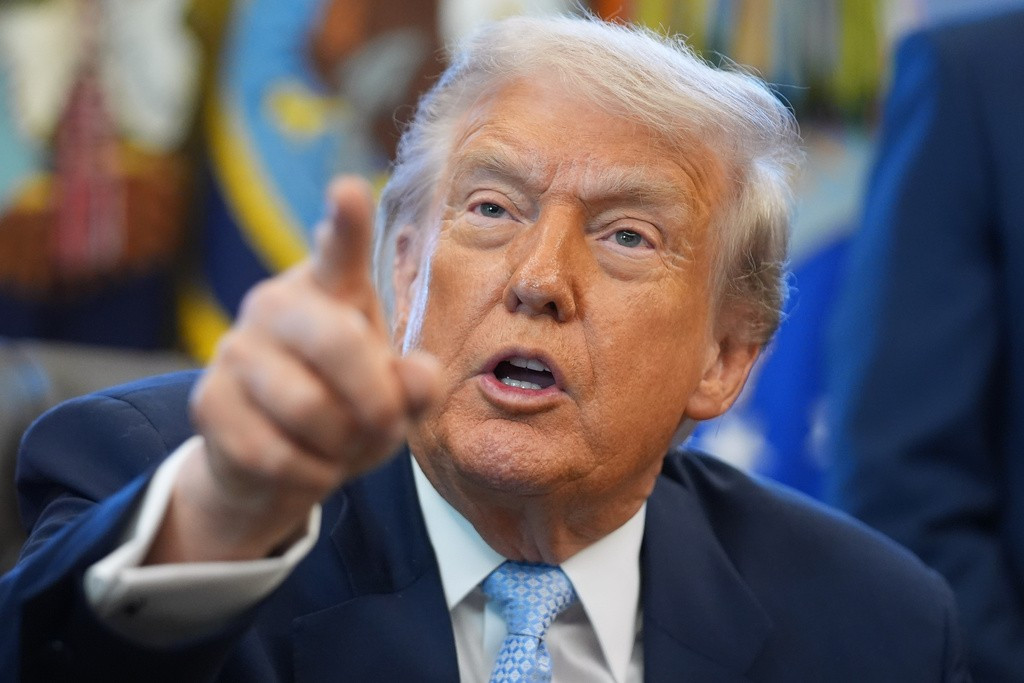
According to individuals familiar with the situation, Trump was watching the broadcast as it aired — and reacted swiftly and angrily. Those close to him described a familiar scene: pacing, raised voices, denunciations of media bias, and demands that aides track online reaction in real time. For Trump, television has never been a passive medium. It is a battlefield, a scoreboard, and a mirror of power all at once.
The significance of the episode lies not in Trump’s reported anger — such reactions have become almost routine — but in why a late-night comedy segment could provoke such intensity. The answer lies in credibility and persistence. Colbert represents a form of political satire built slowly, through repetition and restraint. De Niro, meanwhile, brings the cultural authority of an artist who has long rejected neutrality where Trump is concerned.

Within hours, clips of the segment spread rapidly across social media platforms, amassing millions of views. Supporters praised the exchange as a rare instance of public figures speaking with clarity and resolve. Critics accused the show of abandoning comedy for outright confrontation. Yet the polarization itself underscored the episode’s impact: it struck a nerve that remains exposed in American public life.
The segment did not alter policy, pass legislation, or decide an election. But it illuminated a quieter truth about modern power. Authority built heavily on spectacle and personal validation is uniquely vulnerable to disciplined ridicule — not because it is loud, but because it is precise.
In an era when traditional political institutions often struggle to articulate moral consequence, late-night television has sometimes stepped into the vacuum. Not to govern, but to reflect. And for a political figure so deeply invested in dominance over narrative and image, there may be no greater provocation than being calmly, collectively, and unmistakably seen.






