Trump’s 100% Tariff Threat Against Canada Reveals More Weakness Than Power

When President Donald Trump threatened to impose a 100 percent tariff on all Canadian goods entering the United States, the message was intended to be unmistakable: defy Washington, and pay an unbearable price. Instead, the threat has landed very differently. Among economists, trade experts, and even American industry leaders, it has come to be seen less as a credible policy proposal than as a revealing display of political frustration — and a reminder of how deeply the United States depends on its northern neighbor.
Trump’s warning, delivered via social media and amplified by conservative media outlets, was triggered by Canada’s decision to modestly re-engage with China through what officials in Ottawa have described as a limited tariff relief arrangement. Trump framed the move as a sweeping trade deal that would allegedly turn Canada into a “drop-off port” for Chinese goods bound for the U.S. market. But trade lawyers and policy analysts across the political spectrum have been quick to note that the characterization is misleading.
“This is not a comprehensive trade agreement, and it certainly isn’t a violation of U.S. trade law,” said one former U.S. Trade Representative official in a televised interview. “It’s a narrow normalization of certain tariffs that never should have been imposed in the first place.”
What appears to have unsettled Trump far more than the substance of Canada’s China engagement was the optics. Prime Minister Mark Carney’s recent appearance at the World Economic Forum in Davos — where he defended Canada’s right to diversify trade relationships and drew sustained international praise — came just days before Trump’s abrupt reversal. Only a week earlier, Trump had publicly stated that it was “a good thing” for Canada to pursue trade deals with China. The whiplash has been hard to ignore.
For many observers, the episode fits a familiar pattern. Trump has long responded aggressively to public challenges, particularly from allies he assumes should fall in line quietly. When those challenges are delivered calmly, and on a global stage, the response often escalates.
Yet the substance of the tariff threat has exposed a fundamental constraint. A 100 percent tariff on Canadian imports would not merely punish Canada — it would severely damage the American economy.

Canada is not a peripheral trading partner. It is the United States’ largest source of imported energy, supplying roughly 40 percent of the oil consumed by Americans. That oil is not interchangeable. Refineries in the Midwest and Great Plains are specifically designed to process Canadian heavy crude. Disrupting that flow would cause gasoline prices to spike within days, according to multiple analyses shared by U.S. energy economists on social media and cable news.
Beyond energy, the two economies are fused through what trade experts often describe as a “shared production system.” Auto parts, steel, aluminum, fertilizers, lumber, and critical minerals routinely cross the U.S.-Canada border multiple times before a finished product reaches consumers. A blanket tariff would compound costs at every stage, squeezing automakers, homebuilders, farmers, and defense contractors alike.
“This isn’t trade in the old mercantilist sense,” a senior economist at a U.S. investment bank wrote on X. “It’s an integrated supply chain. A 100% tariff would amount to economic self-harm.”
Food prices would rise as well. Canada is a major supplier of wheat, canola, beef, and agricultural inputs essential to American farming. Grocery inflation — already politically sensitive — would accelerate quickly. Governors, farm-state lawmakers, and business lobbies would likely revolt long before Ottawa felt existential pressure.
Trump appears to understand this reality, which is why few believe the threat will ever be carried out. Instead, analysts see it as a pressure tactic designed to reassert control as negotiations over the future of the U.S.-Mexico-Canada Agreement approach.
The message from Washington, implicit but unmistakable, is this: stay inside the American trade perimeter, or face retaliation.
That posture reflects a deeper anxiety. As global supply chains shift and geopolitical risk rises, Canada and Mexico have begun exploring ways to reduce overdependence on a single market. For the United States, that diversification represents a loss of leverage. Trump’s brand of trade politics depends on asymmetry — on the assumption that allies need the U.S. more than the U.S. needs them. Canada’s recent moves challenge that assumption.
The hypocrisy embedded in Trump’s response has not gone unnoticed. Just months ago, he finalized his own tariff easing arrangement with Beijing, declaring victory in the trade war he launched. He has since spoken openly about visiting China again, and about the deals that typically accompany such meetings. When Washington restores trade ties with Beijing, it is called pragmatism. When Ottawa takes a far more limited step in the same direction, it is framed as betrayal.
“This double standard is striking,” one former Canadian diplomat said in a radio interview. “The U.S. can engage China on its terms, but Canada is expected to ask permission.”
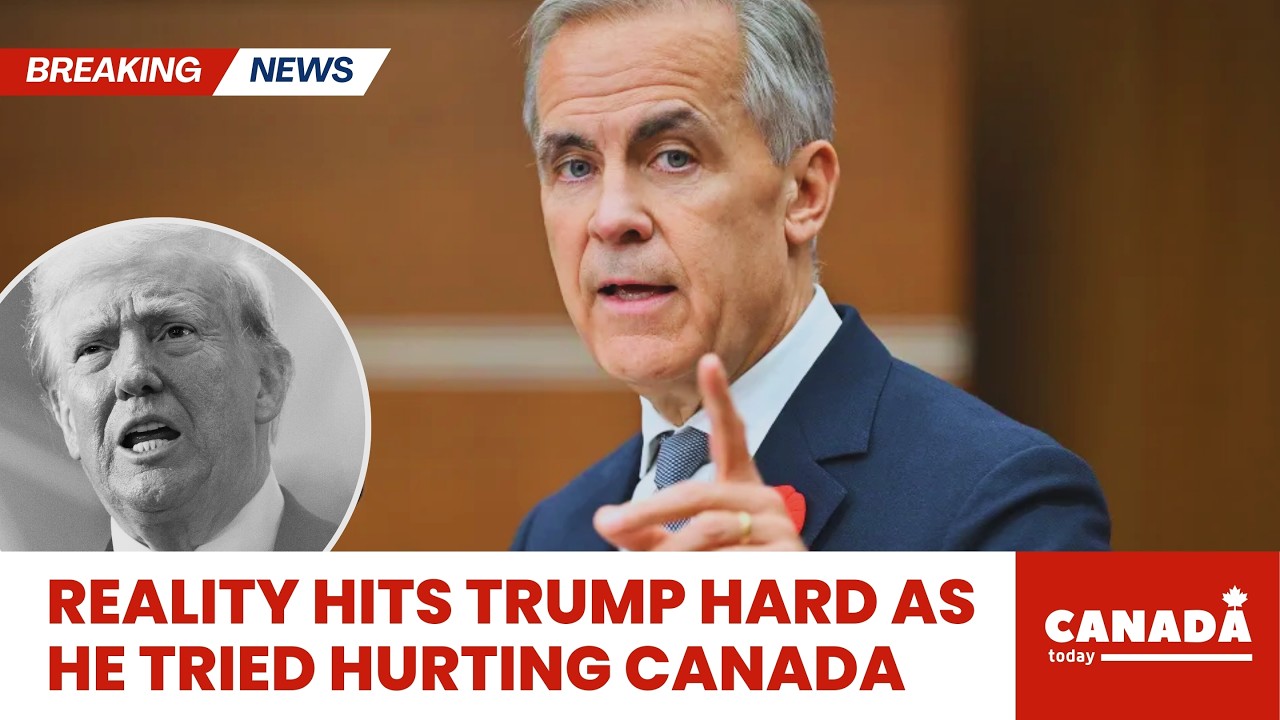
Ultimately, the episode may say less about Canada’s vulnerability than about America’s. Trump’s threat was meant to project dominance. Instead, it highlighted dependence — on Canadian energy, Canadian materials, Canadian stability. If Canada were truly expendable, there would be no need to threaten it so loudly.
Pressure politics only work when the other side has no alternatives. Canada, increasingly, does.
Whether Trump’s bluff fades quietly or escalates rhetorically as election season intensifies remains to be seen. But the lesson from this moment is already clear to markets, policymakers, and allies watching closely: economic intimidation is a weak substitute for strategy, and the integrated North American economy cannot be coerced without consequences — most of all for the United States itself.






