Canada Reconsiders the F-35, and Washington Feels the Shock
By any recent standard, Canada’s fighter jet decision should have been settled.
In January 2023, Ottawa confirmed it would purchase 88 F-35A Lightning II aircraft from Lockheed Martin, ending a procurement debate that had dragged on for more than a decade. The Pentagon welcomed the move as a reaffirmation of North American defense unity. Lockheed Martin hailed it as proof that the F-35 remained the backbone of allied air power.
Two years later, that certainty has evaporated.
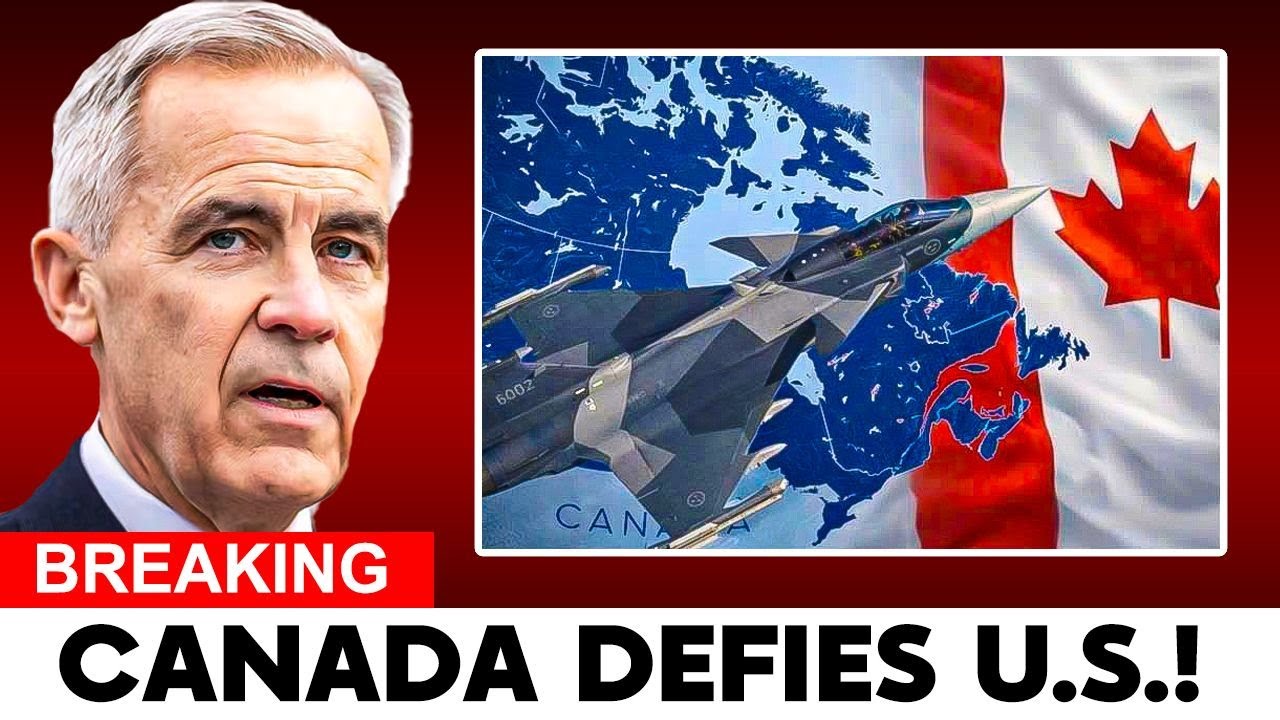
Canada’s government is now conducting a formal review of the F-35 program, placing 72 undelivered aircraft in question and reopening consideration of an alternative that had once been dismissed: Sweden’s Gripen E, produced by Saab. What began as a procurement reassessment has evolved into something far more consequential—a test of alliance structure, industrial dependence, and American control over the architecture of Western military power.
At the center of the controversy is not simply which jet Canada flies, but who ultimately controls the systems that defend the continent.
A Costly Promise Under Scrutiny
The F-35 program was sold to Canada as a future-proof solution: a fifth-generation aircraft offering stealth, sensor fusion, and seamless integration with U.S. and NATO forces. The original approved cost for Canada’s fleet was roughly 19 billion Canadian dollars.
But in early 2024, Canada’s auditor general released a report that quietly upended that narrative. The projected lifetime cost had risen to approximately 27.7 billion Canadian dollars—an increase of nearly 46 percent. Delivery schedules were slipping by an average of 238 days per aircraft. Meanwhile, publicly available U.S. Department of Defense data showed the F-35’s mission-capable rate hovering near 36 percent, a figure that alarmed Canadian defense planners tasked with patrolling vast Arctic airspace.
These numbers circulated quickly through defense circles and political media in both countries. On U.S. cable news and on X, formerly Twitter, analysts debated whether the F-35 had become “too big to fail” or simply too complex to sustain affordably for mid-sized allies.
For Canada, the issue was not theoretical. Operating costs for the F-35 range between $33,000 and $47,000 per flight hour, depending on configuration. Over a 30-year service life, those costs could dwarf the original purchase price.
Politics Enters the Cockpit
The reassessment might have remained a technical matter if not for a sharp shift in the political climate.

Donald Trump’s return to the White House in November 2024 reintroduced a familiar strain into U.S.–Canada relations. Proposed tariffs on Canadian goods, combined with repeated public remarks questioning Canada’s sovereignty, triggered backlash across the Canadian political spectrum. Polling showed a rapid decline in public support for deep defense dependence on the United States.
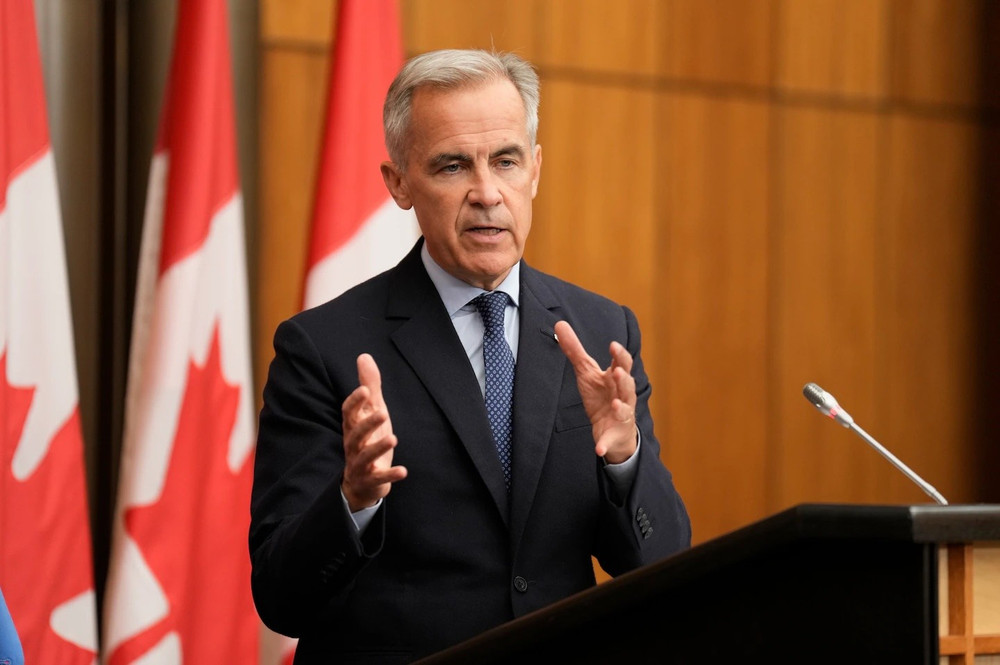
Prime Minister Mark Carney responded with an unusually direct statement: Canada, he said, needed to reduce its reliance on American defense systems where possible.
By March 2025, Ottawa announced a formal review of the F-35 program. Almost immediately, Saab’s Gripen E reentered serious contention.
Why the Gripen Matters
On paper, the Gripen E lacks some of the F-35’s headline features. It is not a stealth aircraft in the same category, nor does it claim fifth-generation status. But its design philosophy is fundamentally different.
The Gripen was built for countries that prioritize autonomy. Saab has offered Canada full access to the aircraft’s software source code, allowing Canadian engineers to modify systems, integrate weapons, and conduct upgrades without foreign approval. The F-35, by contrast, operates within a tightly controlled ecosystem managed by Lockheed Martin and overseen by the U.S. government. Software updates, mission data, and logistics flow through American-controlled servers. Ownership does not confer independence.
This distinction has resonated strongly in Canadian policy debates and among defense commentators in the United States. On platforms like Defense News and Foreign Policy, analysts have described the F-35 less as a plane than as a “membership system”—one that grants capability at the cost of sovereignty.
Saab’s industrial offer has added weight to the argument. The company has proposed transferring full production of the Gripen E to Canada in partnership with Bombardier, creating an estimated 10,000 to 12,000 manufacturing and research jobs. Unlike the F-35 supply chain, where Canadian firms participate at the discretion of the prime contractor, the Gripen plan would make Canada the primary producer and potential exporter.
NORAD and the Question of Control
The Pentagon’s unease goes far beyond lost sales.
For 65 years, NORAD has functioned on the principle of total integration. Shared aircraft, shared data, shared command structures. The F-35 was designed to fit perfectly into that system, feeding real-time data into U.S. satellites, radar networks, and command centers.
A mixed fleet introduces friction. The Gripen E meets NATO standards, but it does not integrate natively into the F-35’s proprietary combat network. That means parallel logistics, separate training pipelines, and—most concerning to Washington—less centralized control over data.
Nowhere is this more sensitive than the Arctic.
Canada controls roughly 40 percent of the Arctic coastline, a region rapidly becoming a focal point of global competition. Russia has expanded military deployments there. China has declared itself a “near-Arctic state.” For the United States, Arctic surveillance is essential to early warning against missile threats.
Under the current system, Canadian F-35 patrols feed directly into U.S. defense infrastructure. A switch to the Gripen would introduce Swedish-designed radar, electronic warfare systems, and battle management software into those operations. Some data would inevitably flow beyond Washington’s exclusive oversight.
A Signal Heard Around NATO
The broader implications are impossible to ignore.
Fifteen NATO countries have committed to the F-35. Several others are reconsidering. Poland has evaluated South Korea’s FA-50. Spain has yet to finalize its choice. Greece continues talks with France over the Rafale.
Canada is not just another customer. It is a founding NORAD partner and one of America’s closest allies. A public step away from the F-35 would provide political cover for others to diversify, fragmenting a market—and an alliance structure—that has long reinforced U.S. dominance.
As one widely shared comment from a former Pentagon official put it on social media: “This isn’t about losing a contract. It’s about losing the center of gravity.”
A Choice Larger Than a Jet
At its core, Canada’s decision reflects a question facing many U.S. allies: whether security in the 21st century requires deeper integration—or greater independence.
The F-35 offers unmatched connectivity, but on American terms. The Gripen offers fewer constraints, but less centralization. One path reinforces an existing hierarchy. The other quietly challenges it.
For decades, such choices were made behind closed doors. This one is unfolding in public, watched closely in Washington, Stockholm, and capitals across NATO.
Whatever Canada decides, the era of unquestioned alignment appears to be ending. And in its place is a more complicated, more contested vision of what alliance truly means.






