On social media this week, a slickly produced video titled “Trump Challenges Obama on TV — Ends Up Embarrassed by One Sentence!” raced across platforms, racking up views and reactions at a pace familiar to the modern political internet. The clip presents a fictional televised confrontation between Donald Trump and Barack Obama, dramatized as a high-stakes showdown in which bravado collapses under the weight of a single, devastating line.
The video is not real. Its scenario is invented, its dialogue scripted, and its climactic moment designed for maximum shock. Yet its popularity says something real about the political moment — and about the kind of power audiences now find persuasive.
A Familiar Setup, Carefully Engineered
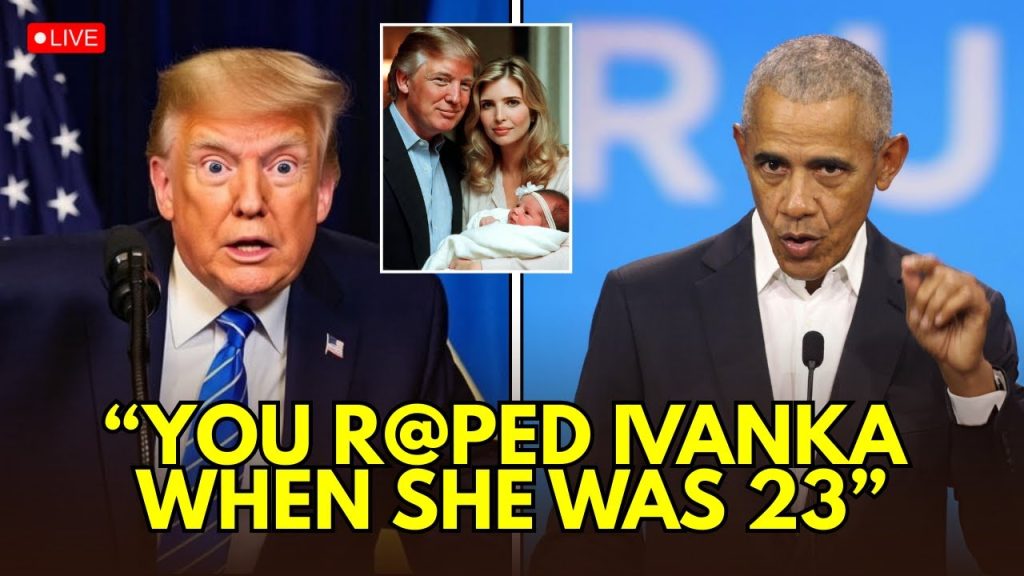
The opening minutes follow a recognizable formula. Trump is depicted as the aggressor, entering a live television setting with confidence and a rehearsed sense of dominance. The framing leans heavily on his public persona: combative, self-assured, and dismissive of restraint. The audience is primed for escalation.
Obama, by contrast, is cast in a different register. He listens. He waits. He says little. This contrast is intentional and immediate. The script leans into a well-worn archetype: volume versus composure, force versus control.
In traditional televised debates, these dynamics often play out over minutes or even hours. The fictional clip compresses them into seconds, mirroring the attention economy of platforms where patience is scarce and reversals must be immediate.
The Moment of Reversal
The turning point arrives with what the video frames as a single sentence delivered calmly by Obama. The line is constructed not to argue policy or rebut a claim, but to reframe the entire interaction. The effect is instantaneous: Trump is shown faltering, the room falling silent, the balance of power shifting.
Crucially, the video relies on implication rather than debate. It suggests that moral authority, not rhetorical dominance, ends the exchange. The fictional Obama does not raise his voice or expand on the statement. He lets silence do the work.
This is the central fantasy the clip sells: that one perfectly timed sentence, spoken without anger, can neutralize spectacle itself.
Why Fiction Like This Resonates
The appeal of the video lies less in its specifics than in its structure. Viewers are not drawn to the accuracy of the exchange, but to its emotional efficiency. In a media environment saturated with noise, the idea that clarity can instantly overpower chaos is deeply attractive.
The clip also reflects fatigue. Years of political coverage dominated by confrontation have conditioned audiences to expect endless back-and-forth. This fictional reversal offers something else: an ending. Not a victory by attrition, but a clean stop.
That desire — for finality, for moral punctuation — explains why the video travels so easily.
The Power of Restraint as Narrative
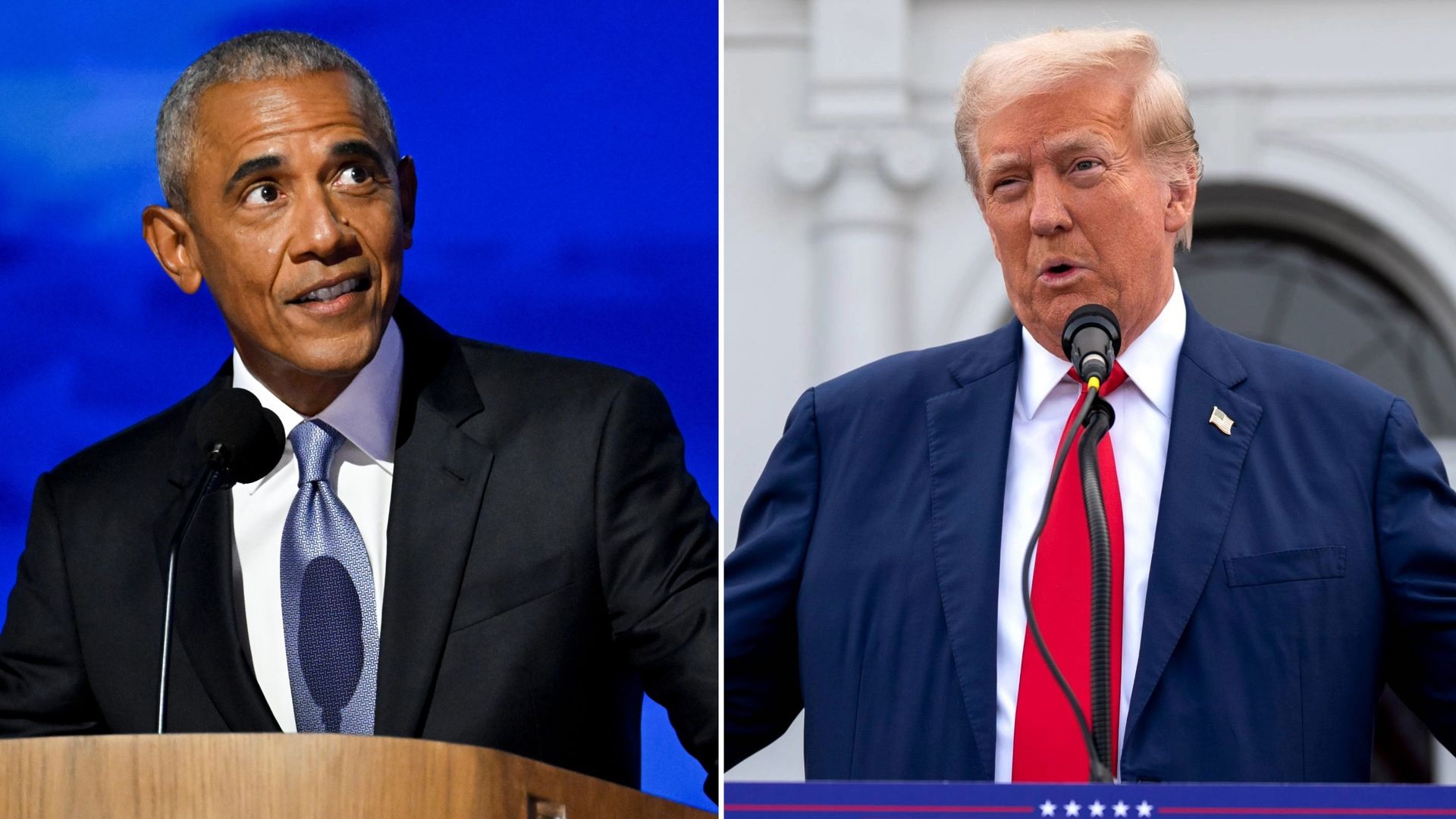
What the video celebrates is not Obama as a historical figure, but a symbolic version of restraint. The fictional portrayal strips away policy complexity and replaces it with a single message: authority does not need to shout.
This is a notable shift from earlier viral political content, which often rewarded aggression with virality. Here, composure is framed as the ultimate weapon. Silence becomes dominance. Brevity becomes power.
It is a narrative well-suited to short-form platforms, where the fastest emotional payoff wins.
The Risks of Hyper-Compressed Drama
Yet the same qualities that make the video compelling also reveal its limitations. By resolving a complex confrontation with one line, the clip bypasses accountability, verification, and nuance. It offers catharsis without consequence.
In doing so, it blurs an important line between symbolic truth and factual reality. The emotional logic feels satisfying, even righteous, but it is not journalism. It is storytelling — effective, intentional, and designed to provoke reaction rather than understanding.
That distinction matters, particularly when fictionalized political content circulates alongside real reporting.
A Mirror of the Moment
Ultimately, the video functions as a mirror. It reflects what many viewers want politics to feel like: decisive, morally legible, and free of endless argument. It also reflects how far political discourse has drifted from deliberation toward performance.
The popularity of the clip suggests that audiences are less interested in who “wins” a debate on points, and more interested in who appears to end it.
One Sentence, Many Meanings

In the end, the viral success of “Trump Challenges Obama” is not about either man. It is about the fantasy that chaos can be stopped cleanly, that bluster can be undone without spectacle, and that control can reassert itself in a single moment of clarity.
That fantasy may be fictional. But the appetite for it is not.
And in today’s media landscape, that distinction is increasingly easy to miss.






