When Jack Smith appeared before the House Judiciary Committee in late January, the hearing was not expected to rewrite the political landscape. The federal cases he once led against Donald Trump had already been dismissed. Trump was back in office. The Justice Department had moved on.
And yet, Smith’s testimony landed with unusual force.
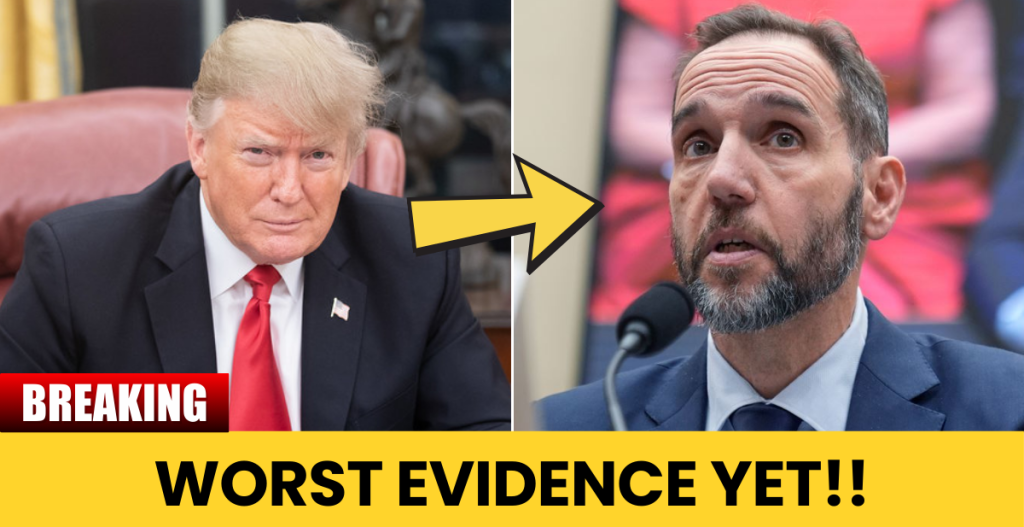
Speaking under oath, the former special counsel did something rare for a prosecutor whose cases never reached trial: he placed his conclusions squarely on the public record. His message was direct. The investigation, he said, had uncovered evidence sufficient to prove criminal responsibility “beyond a reasonable doubt” for Trump’s role in the events surrounding January 6 United States Capitol attack.
That phrase — beyond a reasonable doubt — carries a specific meaning in American law. It is not rhetorical flourish. It is the standard required to secure a criminal conviction.
What Smith Said — and What He Did Not
Smith did not announce new charges. He did not call for renewed prosecution. He did not speculate about Trump’s future. Instead, he described what his office had already concluded before the cases were shut down: that Trump, after losing the 2020 election and exhausting lawful avenues of challenge, engaged in a coordinated effort to retain power.
According to Smith’s testimony and prior filings, that effort included knowingly false claims of election fraud, pressure on state officials, the promotion of fraudulent elector certificates, and attempts to coerce Vice President Mike Pence to block the certification of electoral votes — authority Pence did not possess.
Smith also pointed to Trump’s inaction during the violence at the Capitol, despite his capacity to intervene, as part of the same scheme. In Smith’s telling, these were not isolated actions but elements of a single, coherent plan to obstruct the peaceful transfer of power.
The clarity of the statement mattered. Prosecutors are typically cautious in public, especially when cases are dismissed before trial. Smith was not vague. He did not hedge. He said the evidence met the criminal standard.
Why the Cases Ended
The testimony also underscored a reality that many Americans understand abstractly but rarely see laid out so plainly: federal prosecutions of a sitting president cannot proceed if the executive branch declines to pursue them.
Trump’s election in 2024 changed the institutional landscape overnight. Upon taking office in January 2026, he gained authority over the Justice Department. Within days, his administration moved to dismiss the special counsel cases. Trump also issued broad pardons to individuals convicted of crimes related to January 6.
Smith emphasized that the cases did not collapse because of weak evidence or failed legal theories. They ended because the defendant became president.
That distinction is central to the testimony’s impact. Smith was not defending a loss in court. He was documenting an interruption.
The Pardon Question
One of the most pointed moments of the hearing involved Trump’s pardons of individuals convicted of assaulting law enforcement officers during the Capitol attack. Smith did not accuse Trump of issuing the pardons for improper reasons. But he questioned their logic.
Why, Smith asked, would an innocent president pardon people who attacked police officers in connection with an event he claimed not to have caused?
In legal terms, the question hovered rather than landed. Smith did not draw a conclusion. But the implication was unmistakable: actions taken after January 6 were relevant to understanding intent.
A Political Record, Not a Verdict
Smith’s testimony immediately became political ammunition. Democrats cited it as confirmation that Trump had evaded accountability through power rather than innocence. Republicans dismissed it as partisan grievance from a prosecutor whose cases never reached a jury.
Both reactions were predictable.
What is harder to dismiss is the procedural weight of sworn testimony. Smith was not commenting as a cable news analyst or political advocate. He was reporting the outcome of a formal investigation that cost approximately $35 million, relied on subpoenas, witness interviews, and documentary evidence, and followed standard prosecutorial practices.
Lying to Congress would itself be a crime. Smith’s credibility rests not on public opinion, but on the institutional norms of federal prosecution.
The Broader Implication
Beyond Trump himself, the testimony raised a deeper constitutional question: what happens when the legal system concludes that a president engaged in criminal conduct, but the political system renders that conclusion unenforceable?
The Constitution provides mechanisms for impeachment, prosecution, and pardon. It also allows a president to control the Justice Department. Smith’s testimony exposed the tension between those structures without attempting to resolve it.
The evidence, he said, did not vanish. The conclusions did not change. Only the forum disappeared.
Why This Will Not Fade
Even if no further legal action follows, Smith’s words now exist as part of the official congressional record. They will be cited in future debates, campaigns, and historical accounts of the Trump presidency.
They also complicate efforts to move past January 6. For Republicans seeking to shift focus, Smith’s testimony reasserts the event not as a closed chapter, but as an unresolved question of accountability.
For Democrats, it provides a concise framing: that a federal investigation reached a criminal conclusion but was halted by political power.
A Narrow, Lasting Statement
Jack Smith did not shout. He did not moralize. He did not speculate about what should happen next. He did something more restrained and, in some ways, more consequential: he placed his findings on the record and stepped back.
In the end, the testimony was not a verdict. It was a ledger entry — a statement of what investigators found, why they believed it mattered, and why the public should understand how the case ended.

In American politics, many things disappear quickly. This one is unlikely to.






