A Late-Night Segment, and a Familiar Test of Power
It began, as these moments often do, with a casual transition on live television. A panel discussion drifted toward satire, the studio lights stayed warm, and the audience settled in for what appeared to be a routine exchange. Then Desi Lydic and Ana Navarro sharpened their focus, and the conversation turned unmistakably toward President Donald Trump.
Within minutes, the segment had slipped from humor into something more pointed — an extended critique that blended comedy, political analysis and a distinctly modern media tactic: turning ridicule into narrative. The exchange ricocheted across social media almost instantly, clipped and reposted by accounts that specialize in viral political moments. By the end of the night, it was being framed less as entertainment than as another chapter in the long-running collision between Trump and the culture that surrounds him.
Lydic, a comedian with a practiced deadpan, used irony to dismantle familiar presidential claims, pairing exaggerated praise with carefully selected contradictions. Navarro followed with a sharper tone, grounding the humor in policy disputes and past statements, pressing the argument that what was being mocked had tangible consequences. The audience laughed, but the laughter carried an edge. This was not parody floating above politics; it was comedy insisting on relevance.

For Trump, who has long treated television as both battlefield and megaphone, the segment struck a sensitive nerve. According to people familiar with the president’s viewing habits, he was watching as the exchange unfolded. What followed, aides say, was a familiar pattern: anger at the messengers, suspicion of the networks, and a conviction that the ridicule was not incidental but coordinated. Calls were placed. Complaints were aired. The performance, from the White House perspective, was not merely offensive — it was threatening.
That reaction, too, has become part of the story. Trump’s presidency has been defined as much by his responses to criticism as by the criticism itself. Late-night television, once a peripheral irritant, has become a recurring antagonist in his political narrative. Hosts and commentators occupy a peculiar role: unelected, unaccountable, but capable of shaping public perception in ways that traditional political opponents often cannot.
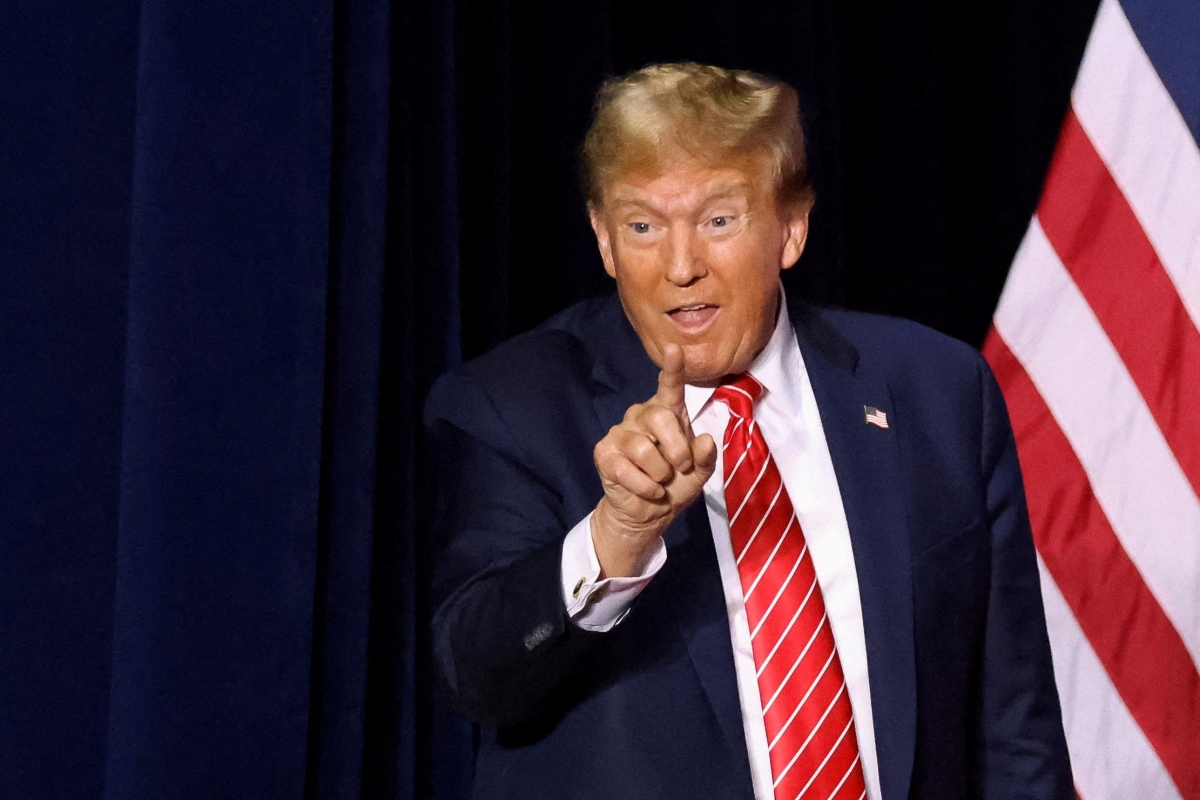
The Lydic–Navarro segment resonated because it tapped into that dynamic. It was not just funny, in the conventional sense. It suggested that Trump’s most enduring vulnerabilities are rhetorical rather than legal or legislative — moments where bravado meets contradiction, and where repetition amplifies doubt instead of certainty. In mocking those moments, the segment invited viewers to see familiarity as fatigue.
Online, reaction split predictably along partisan lines. Supporters of the president denounced the exchange as disrespectful, evidence of what they see as a media ecosystem hostile to Trump from the outset. Critics celebrated it as overdue candor, arguing that satire remains one of the few tools capable of puncturing the president’s media dominance. Both sides shared the clips, ensuring their reach expanded far beyond the original broadcast.
Political analysts noted that the episode illustrates a broader shift in how power is contested in the Trump era. Traditional opposition — congressional speeches, formal statements, even policy critiques — often struggles to gain traction against a president who thrives on spectacle. Satire, by contrast, operates on the same terrain: attention, emotion and repetition. It does not aim to persuade in the classical sense; it aims to frame.
Whether that framing has lasting impact is harder to measure. History suggests that Trump’s base is largely unmoved by mockery, sometimes even energized by it. Yet the audience for late-night television extends beyond partisan loyalists. It reaches voters who are disengaged, fatigued or undecided — viewers for whom humor may serve as an accessible entry point into political judgment.
By the next morning, the segment had become another data point in the ongoing contest between the presidency and popular culture. It did not alter policy. It did not shift markets or move legislation. But it dominated conversation, if only briefly, and reminded both allies and adversaries of a truth that has followed Trump for years: in an age of omnipresent media, power is not only exercised — it is performed, challenged and, occasionally, laughed at.
In that sense, the night was less an anomaly than a continuation. A president who rose to prominence through television found himself, once again, defined by it — not on his own terms, but through the lens of those who know how to use the medium against him.






