Europe’s Quiet Power Shift Just Pulled Canada Out of America’s Orbit
For decades, Canada’s global identity was tied to one relationship above all others: the United States. But behind the scenes, something extraordinary is unfolding — and even longtime geopolitical observers are stunned by how fast it’s happening.

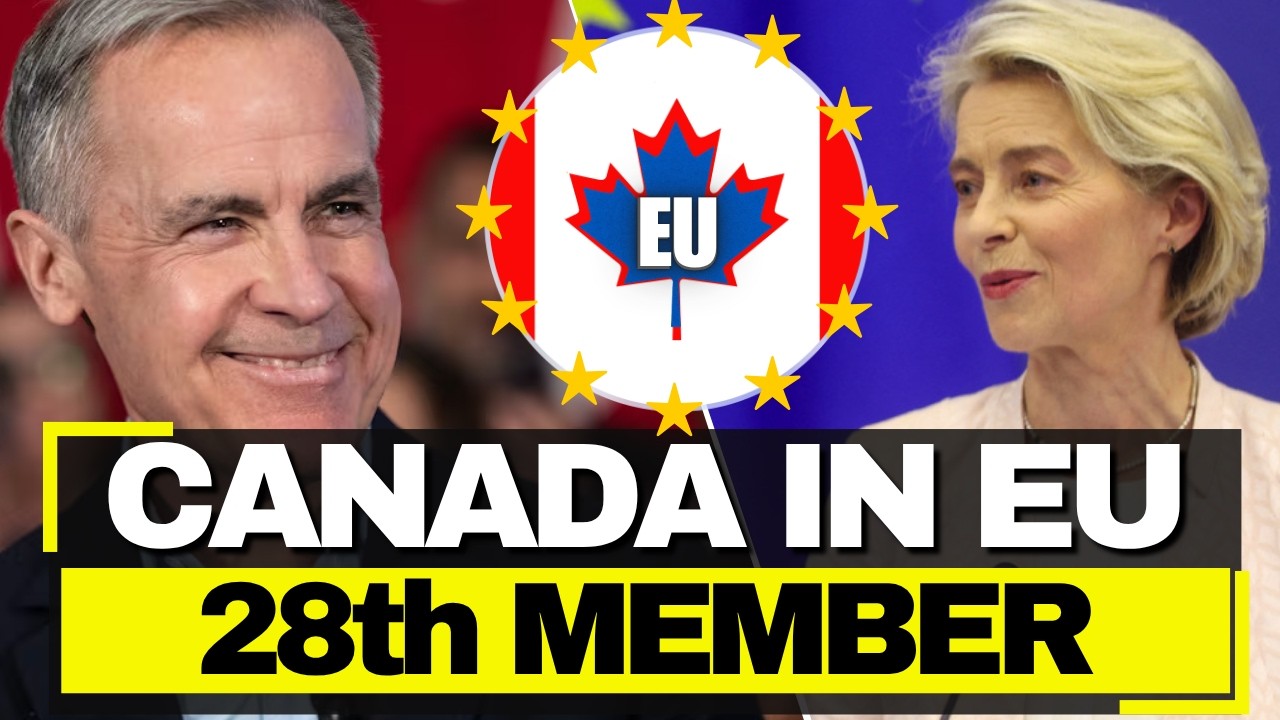
This week, Bloomberg published a headline that would have sounded absurd just two years ago: Canada is increasingly behaving like the European Union’s 28th member state.
And the evidence is no longer symbolic. It’s institutional, financial, military, and strategic.
The turning point came on May 2, when Canadian Prime Minister Mark Carney arrived in Yerevan, Armenia, for the eighth European Political Community Summit. The EPC, launched in 2022, gathers more than 40 European heads of state to coordinate on security, energy, trade, and democratic stability. Until now, no non-European leader had ever been invited.
Canada became the first.
That single invitation sent shockwaves through diplomatic circles. While Washington grows increasingly unpredictable, Europe rolled out the red carpet for Ottawa. Carney wasn’t treated like an observer or honorary guest. He sat shoulder-to-shoulder with leaders including Emmanuel Macron, Giorgia Meloni, Donald Tusk, Pedro Sánchez, Volodymyr Zelenskyy, and Ursula von der Leyen.
The symbolism mattered. But the deals mattered more.
Over the past year, Canada and the EU have accelerated cooperation at a pace few expected. In June 2025, both sides signed the EU-Canada Strategic Partnership of the Future, a sweeping framework covering defense, trade, technology, and energy coordination. Alongside it came a dedicated security and defense partnership focused on military-industrial cooperation.
Then came the real bombshell.
In February 2026, Canada became the first non-European country to join SAFE — the EU’s Security Action for Europe initiative, a core pillar of Europe’s massive €800 billion Readiness 2030 defense plan. That move gives Canadian firms access to European military procurement markets worth billions of dollars.
At the exact same time, Europe has been quietly reducing reliance on American defense contractors.
Germany, for example, now directs only a tiny share of planned military procurement toward U.S. companies. Canadian firms, meanwhile, are suddenly being welcomed into Europe’s expanding defense ecosystem almost as equals.
This is not diplomatic theater. It’s structural realignment.
Economically, the numbers are equally staggering. The EU is already Canada’s second-largest trading partner, with bilateral trade reaching nearly $179 billion in 2025. European investment in Canada sits around $193 billion, while Canadian investment flowing into Europe is even higher.
The foundation for this partnership has existed since the Canada-EU free trade agreement known as CETA entered provisional application in 2017. But under Carney, that framework is transforming into something much bigger: a strategic alternative to dependence on Washington.
And Carney is openly saying it.

In late April, he unveiled the Canada Strong Fund, Canada’s first national sovereign wealth fund, backed by an initial federal contribution of $25 billion every three years. The fund targets energy, defense manufacturing, critical minerals, agriculture, and advanced technology — sectors considered essential for long-term economic independence.
The message could not have been clearer.
“The United States is changing and we must adapt,” Carney declared.
Those words would once have been political suicide in Canada. Now they are becoming national policy.
The geopolitical timing is impossible to ignore. As the Trump administration pressures allies over military alignment and Middle East conflicts, Canada has increasingly positioned itself closer to European priorities. Ottawa refused to participate in the Iran conflict, restricted parts of its airspace for U.S. military operations, and simultaneously expanded military aid to Ukraine in coordination with NATO and European partners.
At the Yerevan summit, Carney told European leaders that the future international order could be rebuilt from Europe itself.
That statement may end up defining the next decade.
Because this is no longer about trade agreements or symbolic diplomacy. Canada is plugging directly into the political, military, and economic architecture Europe is building to reduce reliance on the United States.
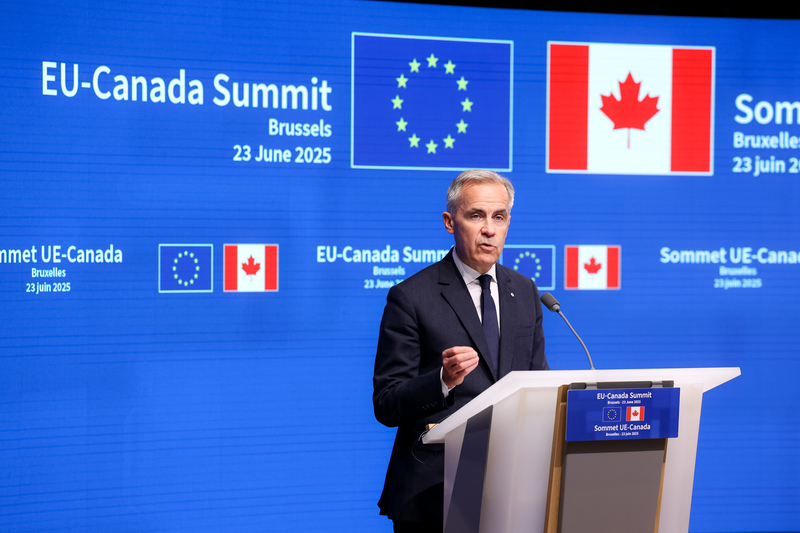
And Europe appears more than willing to pull Canada into the fold.
If current trends continue through 2026 and 2027, Canada could become one of the most strategically connected countries in the Western world — tied deeply to Europe, the UK, the Pacific Rim, and other G7 economies simultaneously.
Which means Bloomberg’s headline may not stay provocative for long.
“Europe’s 28th member state” is starting to sound less like a metaphor — and more like a preview of the post-American world now taking shape behind closed doors.






