A war thousands of miles away just exposed a terrifying weakness in the global economy — and Canada may be sitting on the solution the world is desperate for.

One element buried beneath the plains of Saskatchewan suddenly became more valuable than ever after Iran’s regional conflict helped choke off nearly a third of the planet’s helium supply overnight.
For most people, helium means party balloons. In reality, it is one of the most strategically important elements on Earth. Without it, MRI machines fail. Semiconductor factories slow down. Rockets cannot launch. Cancer research stalls. And now, a geopolitical crisis in the Middle East has triggered a global scramble for supply.
The shockwave began when Iran’s military actions struck infrastructure tied to Qatar’s Ras Laffan Industrial City, the world’s largest liquefied natural gas hub. Qatar produces roughly one-third of the world’s helium through that operation. The disruption forced QatarEnergy to declare force majeure, sending immediate panic through global supply chains.
Hospitals in Saskatchewan have already been warned their liquid helium allocations could be slashed by 50%. Air Liquide, Canada’s largest helium distributor, has warned customers about shortages and rising prices. At the exact moment the world needs stable supply more than ever, one of the largest producers on Earth has been partially knocked offline.
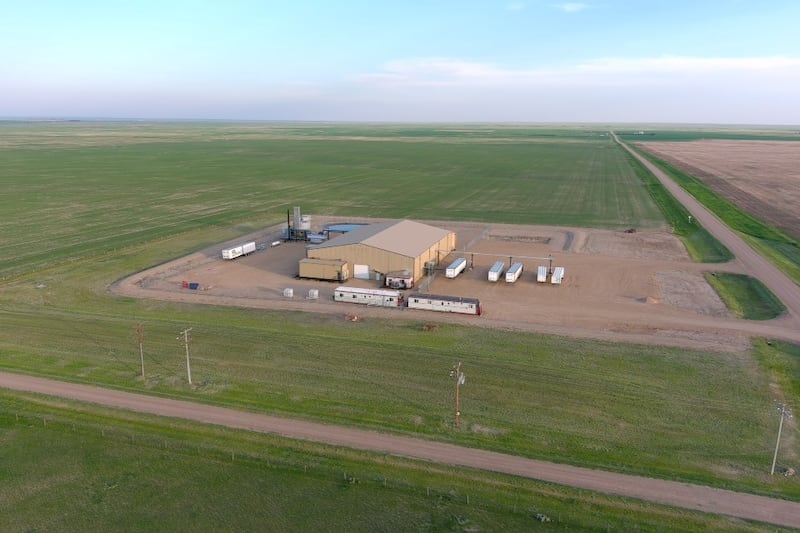
And sitting quietly beneath Canada’s prairies is one of the world’s largest untapped helium treasures.
Saskatchewan holds the fifth-largest helium reserves on the planet, yet Canada currently produces only about 3% of global supply. That number suddenly looks absurdly small.
Helium is not optional in advanced technology. MRI machines rely on liquid helium cooled to nearly absolute zero to maintain superconducting magnets. If hospitals run out, machines can suffer catastrophic “quenches” that permanently damage equipment worth millions.
Chip manufacturers use helium to cool semiconductor fabrication processes and prevent contamination while building the processors powering smartphones, artificial intelligence, electric vehicles, and military systems. Space agencies depend on helium for rocket fuel pressurization and cooling systems. Nuclear research, fiber optic manufacturing, and advanced laboratories all rely on it.
And there is no true replacement.
Prices had already surged more than 160% since 2017. The Middle East conflict may push them dramatically higher.
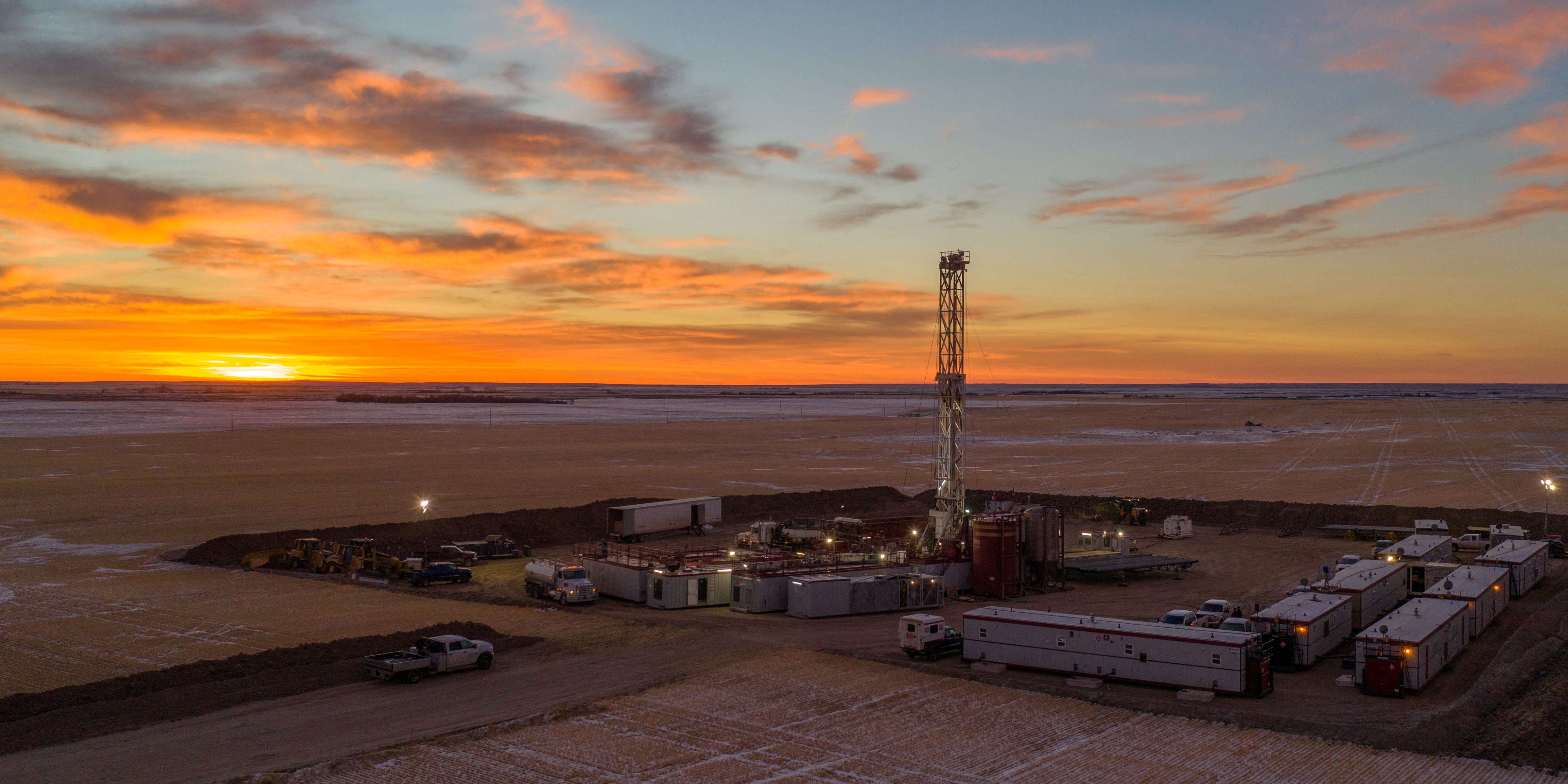
What makes Canada’s position even more remarkable is how Saskatchewan’s helium is produced. Unlike Qatar or Russia, where helium extraction is tied to natural gas production and higher emissions, Saskatchewan’s helium is found in nitrogen-rich reservoirs. That means it can be extracted with a significantly lower carbon footprint.
In a world increasingly obsessed with clean supply chains, Saskatchewan’s helium has become one of the rare strategic resources that is both geopolitically stable and environmentally attractive.
Countries are paying attention. Japan and South Korea have reportedly approached Canadian producers seeking long-term supply agreements. Europe is searching for alternatives. American manufacturers are desperate to secure stable sources as their own reserves decline.
So why is Canada still barely participating in this market?
The answer comes down to two glaring weaknesses: tax policy and infrastructure.
Canada officially recognizes helium as a critical mineral. Yet incredibly, it remains the only critical mineral in the country excluded from flow-through shares — a tax mechanism that allows exploration companies to attract investment by passing deductions to shareholders.
For decades, flow-through shares helped build Canada’s mining sector. Gold, uranium, silver, and other critical minerals benefit from the policy. Helium does not.

Industry leaders say this single omission is slowing investment at the worst possible moment. Saskatchewan Energy Minister Chris Boudreau recently traveled to Ottawa pushing for reform, arguing helium should be treated the same as every other critical mineral. He believes changes may arrive in the fall federal budget, but for now, the policy gap remains.
Then comes the second problem — and it may be even more dangerous.
Canada does not have a domestic helium liquefaction facility.
Every Canadian helium producer currently ships raw helium to the United States for processing before it can be sold globally. That means Canada owns the resource but still depends on American infrastructure to monetize it.
The vulnerability is massive. If tariffs, trade disputes, or disruptions hit U.S. processing capacity, Canadian helium exports could be trapped instantly.
It is a situation eerily similar to Canada’s long-running oil pipeline problem: enormous resources, but limited ability to process and export independently.
Now the stakes are far bigger than economics alone.
Washington has reportedly been pushing for deeper access to Canadian critical minerals during ongoing North American trade discussions. Helium sits high on America’s strategic priority list as U.S. reserves continue declining.
If Canada builds its own liquefaction infrastructure and unlocks investment through tax reform, the balance of power changes overnight. Canada would no longer simply feed American processors. It could become a direct supplier to Asia, Europe, and even the United States itself.
Meanwhile, foreign investors are already moving aggressively. American companies have quietly acquired helium exploration licenses across Saskatchewan while Ottawa continues debating policy.
The pattern feels painfully familiar to many Canadians: the country discovers a globally critical resource, hesitates, and watches foreign capital move faster.
The world’s helium crisis is no longer theoretical. MRI machines, semiconductor fabs, cancer research labs, and aerospace programs are already feeling the squeeze. The global supply shock created by war exposed just how fragile the system really is.
And beneath Saskatchewan’s soil lies one of the few realistic solutions.
The opportunity is massive. The demand is exploding. The world is watching.
The question now is whether Canada will finally move fast enough before someone else captures the value first.






