Trump Threatens 100% Tariff on Canada, Pushing Ottawa Toward Economic Decoupling
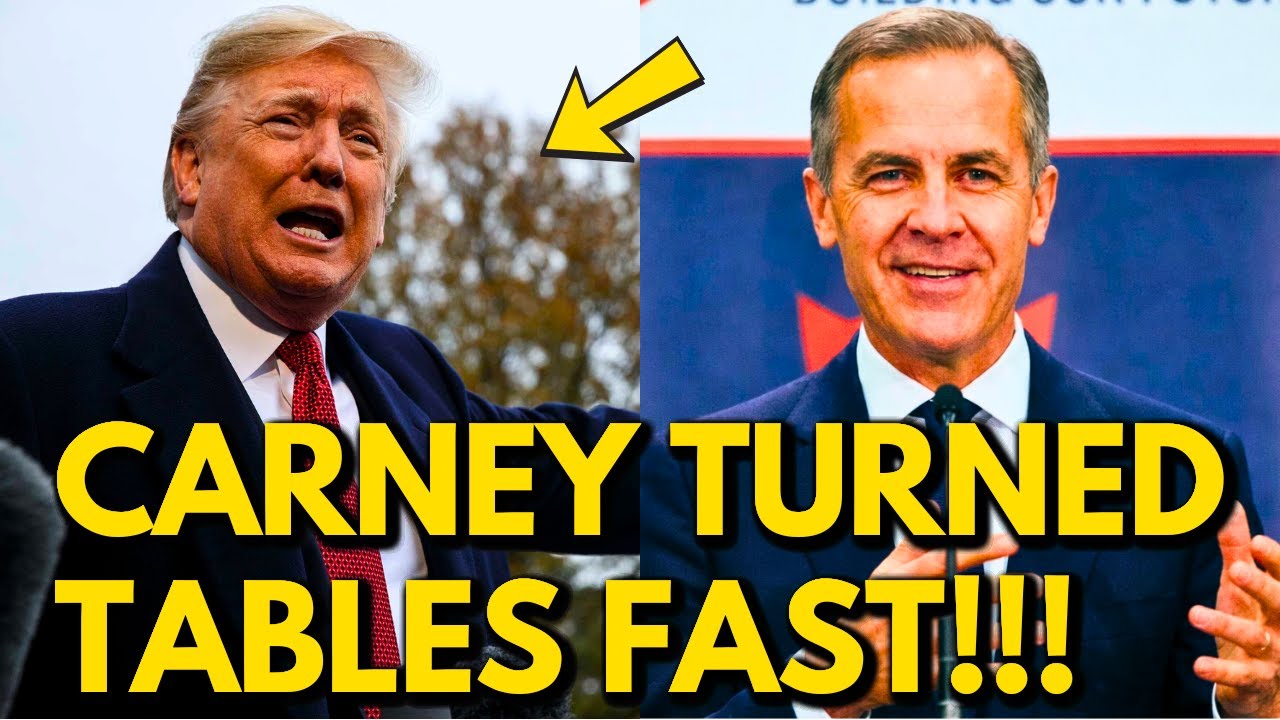
Early 2026 may mark a turning point in North American history. Before U.S. markets even opened on a Saturday morning, President Donald Trump issued a threat that shook the foundations of the world’s most integrated trading relationship: a 100% tariff on all Canadian goods entering the United States. The trigger was not a trade dispute with Washington, but a strategic agreement Canada had just signed with Beijing.
In a single post, Trump reframed decades of partnership into a weapon. He accused Canada of becoming a “drop-off port” for Chinese goods and repeatedly referred to Prime Minister Mark Carney as “Governor Carney,” implying that Canada was less a sovereign nation than an American dependency. The message was blunt: economic integration would now be used as leverage, not cooperation.
A Calm Response to an Existential Threat
Instead of panic or negotiation, Carney responded with a pre-recorded national address that sounded less like diplomacy and more like a declaration of independence. There were no concessions, no apologies, and no appeals to Washington. The defining line was simple: “We can be our own best customer.”
Carney announced a sweeping Buy Canadian strategy, committing the federal government to prioritize Canadian steel, aluminum, lumber, technology, and labor in public spending. The policy was framed not as retaliation, but as resilience. Canada, he argued, cannot control the actions of other nations—but it can control how it builds, invests, and protects its own economy.
This response fundamentally altered the dynamic. Trump fired the shot. Canada activated a shield.
Why the Tariff Threat Happened
The tariff threat did not emerge in a vacuum. It followed a Canada–China trade agreement that lowered Canadian tariffs on a limited number of Chinese electric vehicles while dramatically reducing Chinese tariffs on Canadian agricultural exports such as canola, seafood, peas, and lobster. The deal complied with the rules of the USMCA—an agreement Trump himself negotiated.
Ironically, Trump initially praised the deal, calling it beneficial for farmers. That changed after Carney’s speech at the World Economic Forum in Davos, where he warned that global powers were increasingly weaponizing trade and supply chains. He described the current moment as a rupture, not a transition, and cautioned that middle powers must choose between shaping the system or being consumed by it.
The speech received a standing ovation in Switzerland. In Mar-a-Lago, it triggered fury.
From Partnership to Coercion
For decades, Washington operated on a simple assumption: Canada would always align with U.S. interests because it had no alternative. Nearly 75% of Canadian exports go to the United States. Automotive manufacturing, energy, defense, and supply chains are deeply intertwined. That asymmetry created leverage—and Trump was explicit about it.
“We have all the cards,” he said, openly acknowledging America’s economic power over Canada.
What changed was not the math, but the mindset. By diversifying trade and signaling independence, Canada challenged the assumption of automatic alignment. To Trump, diversification looked like defiance.
The $70 Billion Firewall
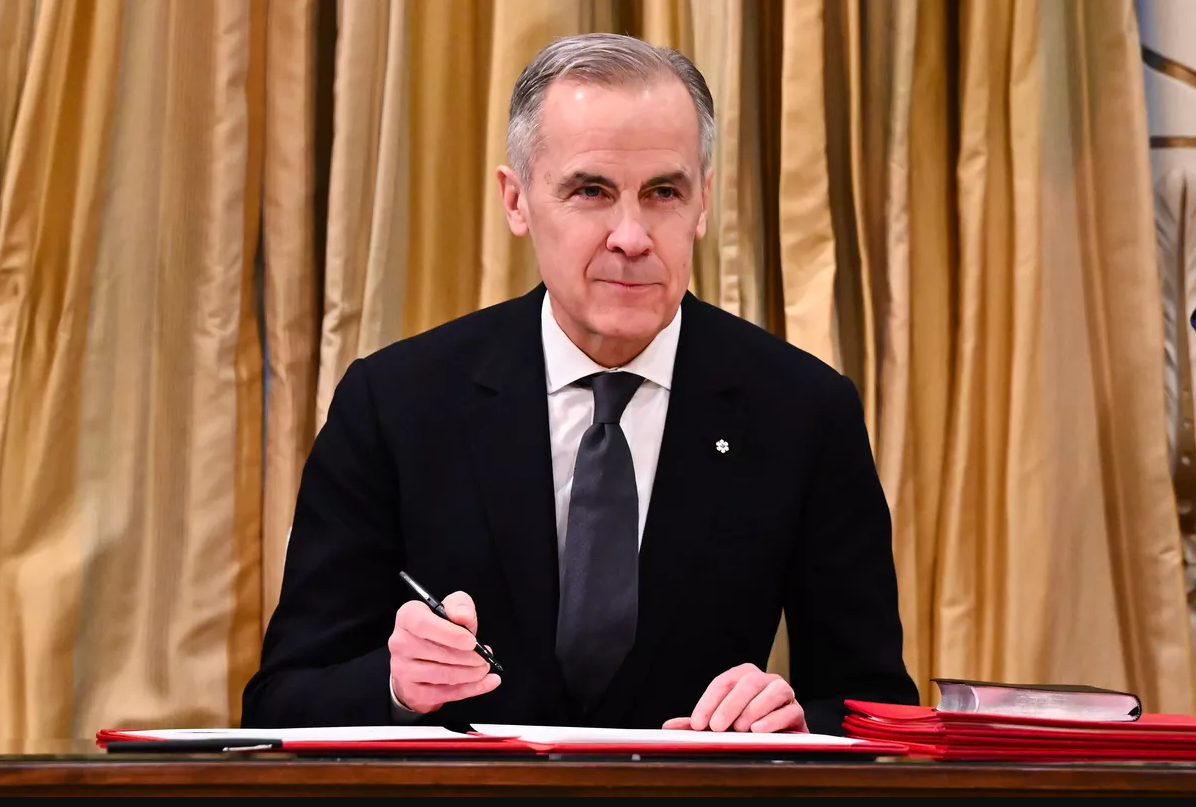
Carney’s response accelerated a strategy already under development. Ottawa redirected $70 billion in federal procurement toward domestic suppliers, imposing Canadian-content requirements on major government contracts. By spring, those requirements would apply to even smaller projects, pulling thousands of Canadian firms into the supply chain.
The objective is structural: to prevent the Canadian economy from collapsing the moment Washington applies pressure.
Critics argue the policy contains loopholes that allow foreign multinationals to qualify through Canadian subsidiaries. In response, the government launched a $79.9 million small and medium enterprise program reserved exclusively for majority Canadian-owned businesses, aimed at building domestic capacity over time.
The Economic Risks Are Real
Behind the political messaging, the numbers are sobering. Economic models estimate that a full tariff war could cut 4.2% from Canada’s GDP and eliminate up to 700,000 jobs, with Ontario and Quebec bearing the heaviest losses due to their deep integration with U.S. manufacturing supply chains.
These are not abstract figures. They translate into factory closures, lost mortgages, and disrupted lives—particularly in automotive hubs like Windsor and Oshawa.
Some economists warn that retaliation alone may not be enough. If integration becomes a weapon, decoupling becomes a shield—even if that means redirecting critical minerals, aluminum, uranium, and energy exports to Europe or Asia. Such a move would raise the cost of coercion but risks escalation beyond anyone’s control.
Beyond Procurement: Sovereignty Infrastructure
The most ambitious part of Carney’s strategy extends far beyond tariffs. Ottawa plans $300 billion over five years in what officials describe as sovereignty infrastructure. This includes:
-
$81 billion in defense spending to build a domestic defense industrial base independent of U.S. approval.
-
$51 billion in public infrastructure, from hospitals to universities, with mandatory Canadian content.
-
$25 billion in housing, aiming to double construction using Canadian materials and labor.
The goal is not isolation, but resilience—the ability to say no without collapse.
The Fragile National Consensus

Provincial support has been stronger than expected, with leaders in British Columbia and Manitoba backing diversification. Ontario has remained cautious but not oppositional. The biggest fault line lies in Alberta, where oil and gas exports remain heavily dependent on U.S. pipelines that cannot be redirected quickly.
This exposes the central tension of decoupling: some sectors can diversify rapidly; others cannot. If energy exports are disrupted, regional unity could fracture, turning economic strategy into a national political crisis.
What This Moment Really Means
This confrontation is not just about tariffs. It is about whether economic integration guarantees stability—or creates vulnerability. The post–World War II bargain assumed that trade produced trust. Under Trump, trade has become leverage.
Carney’s wager is that sovereignty is worth the cost, even if the transition is painful. Trump’s wager is that dependence will force compliance.
Which strategy prevails will define not just Canada–U.S. relations, but the future of middle powers in an era where economics and geopolitics are inseparable.
Canada does not exist because of the United States. It exists beside it. For the first time in decades, it is acting on that distinction.






