Australia’s welfare debate is heating up again after Shadow Immigration Minister Jonno Duniam defended the Coalition’s controversial proposal to restrict welfare payments to Australian citizens only. The statement, made during a high-profile appearance on ABC’s 7.30 with Sarah Ferguson, has ignited fierce discussion across the country about fairness, migration, citizenship, and the future of Australia’s social safety net.
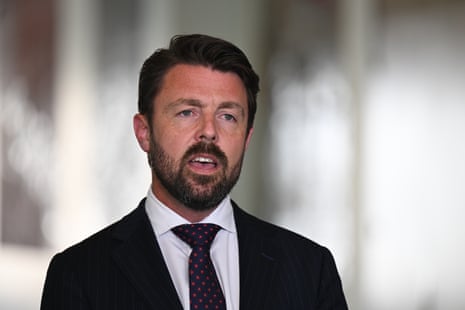
Speaking with characteristic directness, Duniam rejected claims that the policy would “punish” permanent residents who pay taxes in Australia. Instead, he described the plan as a “pro-migration policy” designed to encourage migrants to take the final step and become full Australian citizens. His comments have drawn both strong support and sharp criticism, highlighting the deep divisions in Australian politics on issues of identity, entitlement, and national responsibility.
The proposal was originally announced by Opposition Leader Angus Taylor during his budget reply speech. It aims to limit access to certain welfare payments, including JobSeeker, parenting payments, and other income support, to those who hold Australian citizenship. The policy has already sparked major political debate, with critics accusing the Coalition of playing politics with vulnerable communities while supporters argue it restores fairness to a system they believe has become overstretched.
When pressed by Sarah Ferguson on how cutting welfare access for permanent residents would appeal to skilled migrants Australia desperately needs, Duniam remained firm. He argued that many migrants already wait years before accessing support under the current system.
“But they’ll still have to wait under the visa system a number of years, in almost all cases, to receive the kinds of welfare benefits that you are talking about,” he said.
Duniam added that under Labor’s current system, some migrants already face waiting periods of between four and ten years for certain support payments. He insisted the Coalition remains strongly supportive of migration, especially given Australia’s ageing population and growing workforce pressures.
However, he emphasized that the Coalition wants tighter control over both migration numbers and infrastructure planning. Australia must ensure there are enough homes, schools, hospitals, and public services available before significantly increasing migration levels, he argued.
“We want to ensure that we have houses for them to live in,” Duniam stated clearly.
He also framed the policy as protecting services for future Australian citizens while encouraging migrants to complete the pathway to citizenship. “That’s a pretty pro-migration policy, if ever I’ve seen one,” he concluded.

The comments come as migration, housing affordability, welfare access, and cost-of-living pressures continue dominating political debate ahead of the next federal election. With many Australians feeling the strain of high rents, inflation, and stretched public services, the Coalition’s proposal has tapped into deep-seated concerns about fairness and resource allocation in a country experiencing rapid demographic change.
Critics from Labor and various advocacy groups have condemned the policy as divisive and potentially discriminatory. They argue that permanent residents contribute taxes, work in essential services, and deserve access to the social safety net they help fund. Some have accused the Coalition of using welfare reform as a wedge issue to appeal to voters worried about immigration levels and cultural change.
Supporters, however, point to the principle of citizenship as central to national identity. They argue that becoming an Australian citizen should carry meaningful benefits and responsibilities. Encouraging migrants to fully commit to Australia through citizenship, they say, strengthens social cohesion and ensures that limited welfare resources are directed toward those with the deepest stake in the nation’s future.
This latest welfare debate reflects broader tensions in Australian society. Rapid population growth, particularly in major cities, has placed enormous pressure on housing, infrastructure, and public services. Many voters feel that migration policy has outpaced the country’s ability to provide adequate support, leading to overcrowding, higher rents, and longer wait times for healthcare and education.
The Coalition’s proposal is part of a wider platform that includes tighter migration controls, accelerated infrastructure development, and a renewed focus on encouraging skilled migration while managing overall numbers. Angus Taylor and Jonno Duniam have positioned the policy as responsible governance rather than anti-migration sentiment.
Yet the optics remain challenging. In a multicultural nation built on immigration, any policy that differentiates between citizens and permanent residents risks being portrayed as exclusionary. The government has been quick to highlight its own record on migration and welfare, arguing that Labor’s approach has been more balanced and compassionate.
Public opinion appears split along familiar lines. Polling suggests strong support for the idea among voters in regional areas and outer suburbs, while urban professionals and migrant communities tend to view it more negatively. This divide mirrors larger cultural and economic fault lines that will likely shape the next federal election.
Economists have offered mixed assessments of the proposal. Some argue that restricting welfare access could encourage faster integration and citizenship uptake, potentially reducing long-term fiscal pressure. Others warn that it might discourage skilled migrants from choosing Australia, harming the economy at a time when workforce shortages are acute in healthcare, construction, and technology sectors.
The debate also raises important questions about the social contract in modern Australia. What obligations do newcomers have to their adopted country, and what responsibilities does the nation have toward those who contribute through work and taxes? These philosophical questions sit at the heart of the current controversy.
As the election cycle intensifies, both major parties are under pressure to articulate clear visions for migration, welfare, and national identity. The Coalition’s bold stance on welfare reform has forced Labor to defend its record while trying to avoid being painted as soft on border control or fiscal responsibility.
Jonno Duniam’s appearance on 7.30 has become a focal point in this larger conversation. His calm but firm defense of the policy has energized the Coalition base while providing opponents with fresh ammunition to criticize what they see as a return to divisive politics.
The coming months will test whether this welfare proposal strengthens the Coalition’s electoral prospects or becomes a liability. With cost-of-living pressures dominating voter concerns, any policy perceived as targeting vulnerable groups risks significant backlash.
Yet for many Australians frustrated with rapid demographic change and strained public services, the idea of prioritizing citizens in welfare distribution resonates strongly. The debate is no longer just about economics — it has become a proxy for deeper questions about Australian identity in the 21st century.
Whatever the final outcome, this controversy has succeeded in putting welfare reform, citizenship, and migration policy front and center in the national conversation. As Australians head toward the next federal election, these issues will likely play a decisive role in determining which party earns their trust to govern.
The welfare debate is far from over. It reflects the complex challenges facing a prosperous but rapidly changing nation trying to balance compassion, fairness, and sustainability in an increasingly competitive world.






