Canada’s anti-Trump travel boycott may now be spreading far beyond North America — and the economic consequences are starting to attract serious global attention.

New reports are raising concerns after several major U.S. host cities preparing for the upcoming FIFA World Cup recorded hotel bookings weaker than many analysts originally predicted. Expectations for the tournament were enormous, with forecasts suggesting the event could generate billions of dollars for the American economy through tourism, hospitality, transportation, restaurants, entertainment, and international travel spending.
But despite the excitement surrounding the World Cup, some tourism analysts are now warning that political instability and growing international tensions may be affecting global travel behavior more than expected.
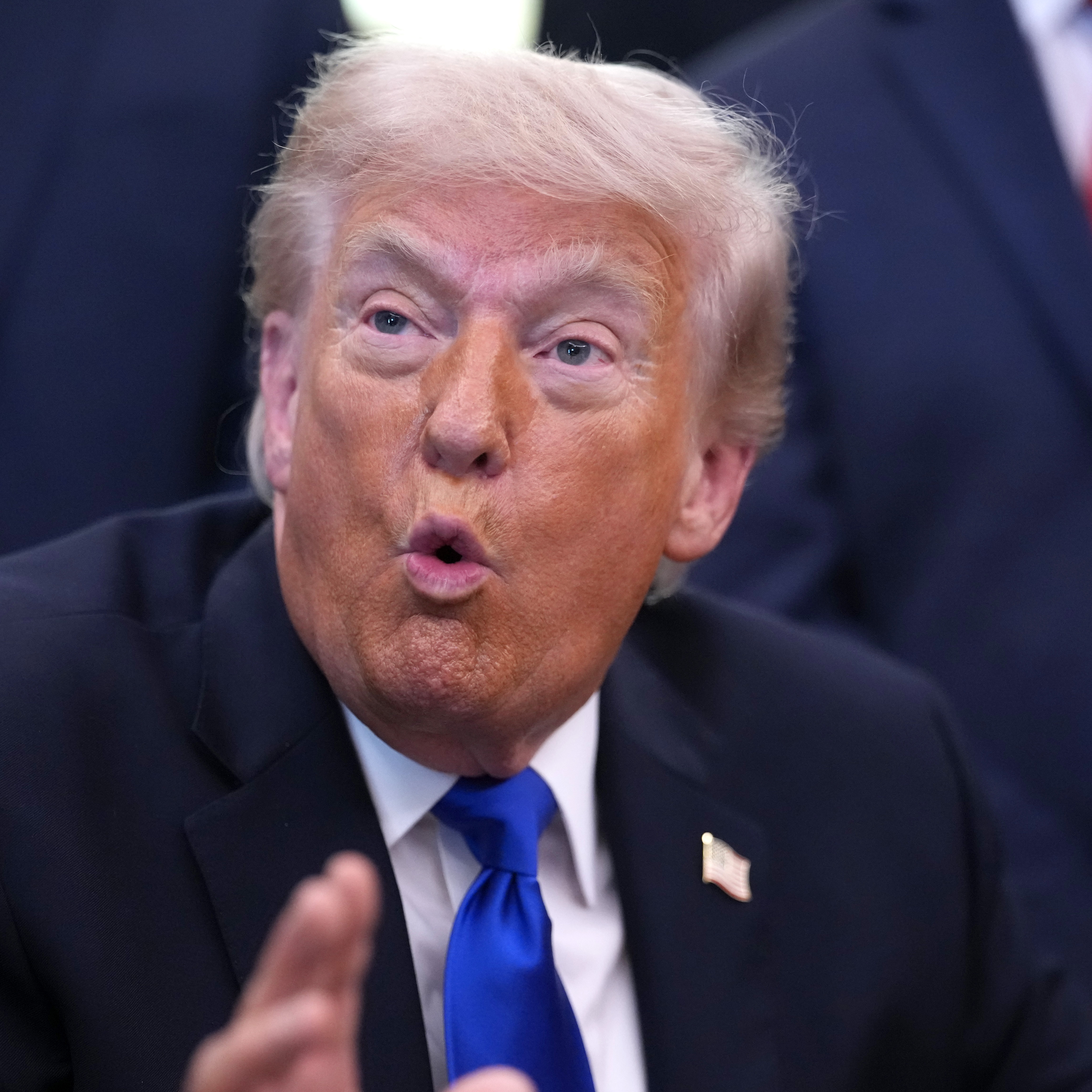
At the center of the debate is Donald Trump.
Critics argue that years of political polarization, trade disputes, aggressive rhetoric, and uncertainty surrounding Trump’s leadership style have gradually damaged America’s international image among certain foreign travelers. While the United States remains one of the world’s largest tourism destinations, some international visitors now appear increasingly hesitant about travel plans tied to political tension and social instability.
And Canada may be becoming the clearest example yet of that shift.
According to recent reports, Canadian travel to the United States has reportedly declined for 15 consecutive months, a trend that is now beginning to worry tourism operators, airlines, hotels, and businesses that traditionally relied heavily on Canadian visitors.
For decades, Canadians represented one of the most reliable tourism markets for the United States. Millions crossed the border every year for vacations, shopping, sporting events, entertainment, and business travel. In many northern American states, Canadian visitors became essential to local economies.
But that pattern now appears to be changing.
Instead of traveling south, increasing numbers of Canadians are reportedly choosing Europe, Asia, Mexico, and domestic Canadian destinations instead. Airlines and travel agencies have also noticed stronger interest in international diversification as travelers explore alternatives outside the United States.
Some observers describe it as more than just a tourism trend.
They see it as part of a broader political and psychological shift taking place between Canada and the United States.
Under Prime Minister Mark Carney, Canada has increasingly emphasized economic independence, diversified partnerships, and reducing long-term dependence on the American market. That strategy originally focused heavily on trade, critical minerals, energy exports, and global investment relationships.
But now some analysts believe the mindset may also be influencing consumer behavior and travel choices among ordinary Canadians themselves.
The reasoning is partly economic and partly emotional.
After years of tariffs, political pressure, trade conflicts, and increasingly hostile rhetoric between Washington and Ottawa, many Canadians reportedly feel less enthusiasm about spending tourism dollars in the United States. Some openly describe their choices as political. Others simply say they feel more comfortable traveling elsewhere during periods of heightened tension.
The growing popularity of Europe and Asia among Canadian travelers is especially significant because it reflects how quickly global mobility patterns can shift once habits change.
Tourism industries often rely heavily on repeat behavior.
Once travelers discover new destinations, airlines, hotels, and vacation patterns outside their traditional routes, those habits sometimes become permanent even after political tensions cool down.

That possibility is now creating anxiety inside parts of the American tourism sector.
The FIFA World Cup was expected to showcase American cities to millions of international visitors while generating massive economic activity nationwide. Host cities invested heavily in infrastructure, transportation upgrades, hotels, entertainment districts, and event preparation anticipating enormous tourism demand.
That is why weaker-than-expected booking reports are attracting so much attention.
To be clear, the World Cup is still expected to bring huge crowds overall. The tournament remains one of the largest sporting events on Earth, and millions of visitors are still projected to attend matches and related events.
But analysts say expectations may have originally assumed a stronger international tourism surge than current numbers are showing in some areas.
Political perception may now be playing a larger role than organizers anticipated.
Critics of Trump argue this reflects a deeper global image problem.
They claim years of confrontational politics, trade wars, unpredictable diplomacy, and aggressive rhetoric have gradually weakened international confidence in the United States as a stable and welcoming destination.
Supporters of Trump reject that argument completely.
They point out that America remains one of the most visited countries in the world and argue tourism fluctuations are influenced by inflation, airline costs, currency exchange rates, and broader global economic conditions rather than politics alone.
Those counterarguments are important.
Tourism patterns are extremely complex and often shaped by multiple factors simultaneously. Exchange rates, fuel prices, economic slowdowns, visa rules, and travel costs all influence international tourism behavior heavily.
But perception still matters enormously.
And globally, perception increasingly shapes economic behavior faster than governments can respond.
That is partly why Canada’s current strategy under Carney is drawing growing international attention.
Rather than positioning Canada purely as an extension of the American economy, Ottawa has increasingly promoted the country as an independent middle power with its own global partnerships, diplomatic identity, and economic direction.
Supporters believe that approach is strengthening Canada’s long-term resilience.
They argue Canada is benefiting from appearing calmer, more stable, and more predictable internationally during a period where global politics often feels increasingly chaotic.
Critics, however, warn Canada still depends heavily on American trade and economic integration despite growing diversification efforts.
That reality remains true.
The U.S. and Canadian economies are still deeply interconnected through energy, manufacturing, finance, agriculture, transportation, and supply chains built over generations.
But the psychological relationship between the two countries may still be evolving.
And tourism often becomes one of the first visible signals of changing public sentiment because travel decisions are deeply personal. They reflect not only economics, but emotions, perceptions, comfort, identity, and trust.
That is why the decline in Canadian travel to the United States is being watched so carefully now.
If the trend continues long term, the economic consequences could spread far beyond airlines and hotels. Retail sectors, restaurants, entertainment venues, border communities, and tourism-dependent businesses across America could all eventually feel the impact.
Meanwhile, Canada appears increasingly comfortable encouraging broader international engagement beyond North America alone.
For supporters of Carney’s strategy, that shift represents exactly the kind of economic flexibility Canada needs in a rapidly changing world.
For critics, it risks slowly weakening one of the closest international relationships in modern history.
What makes the situation even more interesting is how quickly international perception can influence economic behavior in ways governments cannot easily control. A country does not officially need to announce a “boycott” for tourism patterns to shift dramatically. Sometimes people simply begin changing habits quietly, one vacation decision at a time, until the numbers suddenly become impossible to ignore.
That possibility is exactly why some tourism analysts are now paying close attention to Canada’s changing travel patterns. Canadians have traditionally been among the most loyal and economically valuable visitor groups for the United States because of proximity, spending power, and long-standing cultural ties between the two countries. In many border states and tourism-heavy cities, Canadian travelers became deeply integrated into local economies over decades.
But when political tension begins influencing public sentiment, even subtly, those habits can change faster than expected. Families choosing Europe over Florida, business conferences moving to Asia instead of American cities, or younger travelers exploring alternative destinations may seem small individually, but collectively those choices can reshape entire tourism markets over time.
Some observers also believe social media is accelerating this trend. Viral political clips, trade disputes, tariff threats, and heated diplomatic moments now spread globally within minutes, shaping international perception far more aggressively than in previous decades. Countries are no longer judged only by official policy, but by online narratives, political tone, and global reputation in real time.
Meanwhile, Canada’s positioning under Mark Carney appears increasingly deliberate. Ottawa is not simply trying to diversify trade relationships anymore. It is also presenting Canada internationally as stable, predictable, globally connected, and less politically chaotic during a period where many countries are struggling with polarization and uncertainty.
Whether that strategy delivers long-term economic advantages remains uncertain. But one thing is becoming harder to dismiss: global image now affects everything from tourism and investment to diplomacy and consumer confidence. And in an interconnected world, perception itself can become a form of economic power.






