For a brief moment, it looked like Donald Trump had pulled off another dramatic international victory.
Cameras flashed. Headlines exploded. Supporters celebrated what was presented as a major breakthrough in U.S.-China trade relations after Trump’s high-profile return from Beijing. Officials pointed to one number above all others — $17 billion in new trade commitments and purchases tied to renewed economic negotiations with China.
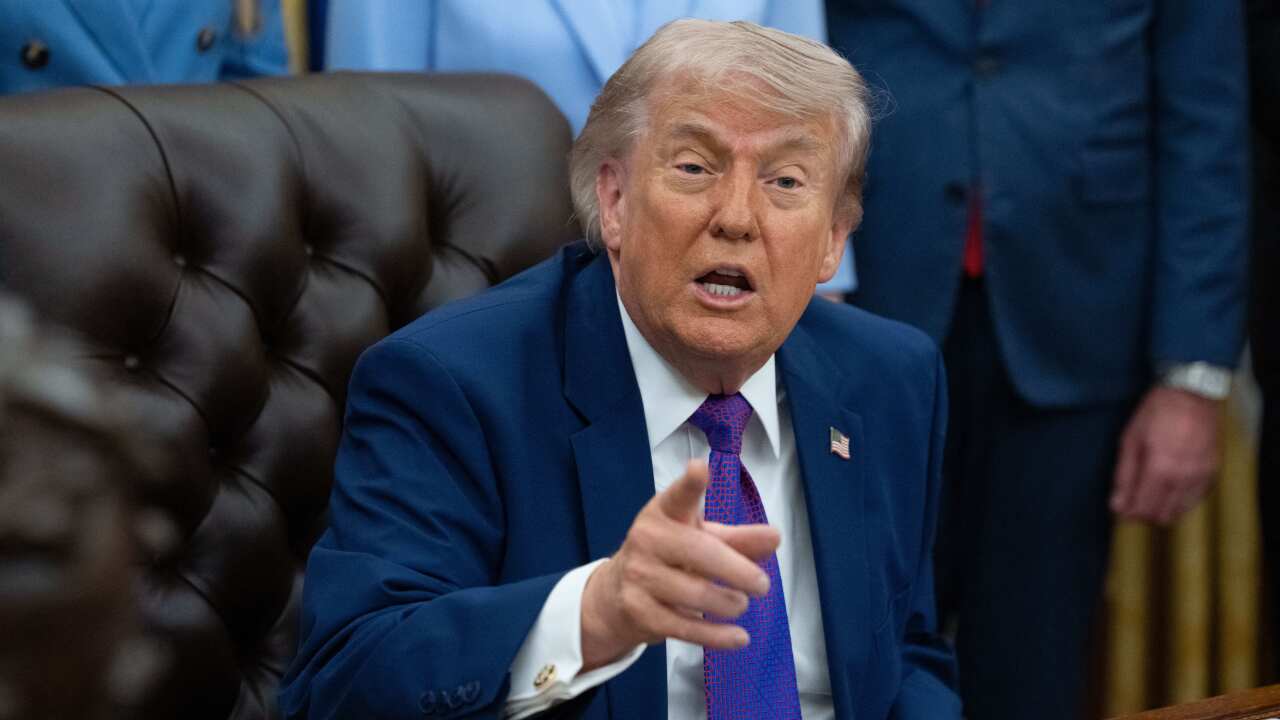
But behind the applause, inside financial institutions and trade ministries across the world, a very different conversation had already begun.
And according to several analysts watching the situation unfold, the real winner of the summit may not have been the United States at all.
Because while Washington celebrated optics, another country was quietly positioning itself at the center of the next global economic shift: Canada.
The silence began almost immediately after the Beijing meetings ended.
Behind closed doors, institutional investors reportedly started reviewing supply-chain exposure models tied to the growing instability between the United States and China. Major agricultural firms, mineral traders, manufacturing groups, and energy strategists were all asking the same uncomfortable question:
What if the U.S.-China relationship had become too unpredictable to depend on long term?
That question alone was enough to trigger concern across markets already exhausted by years of tariffs, sanctions, retaliatory measures, and geopolitical uncertainty.
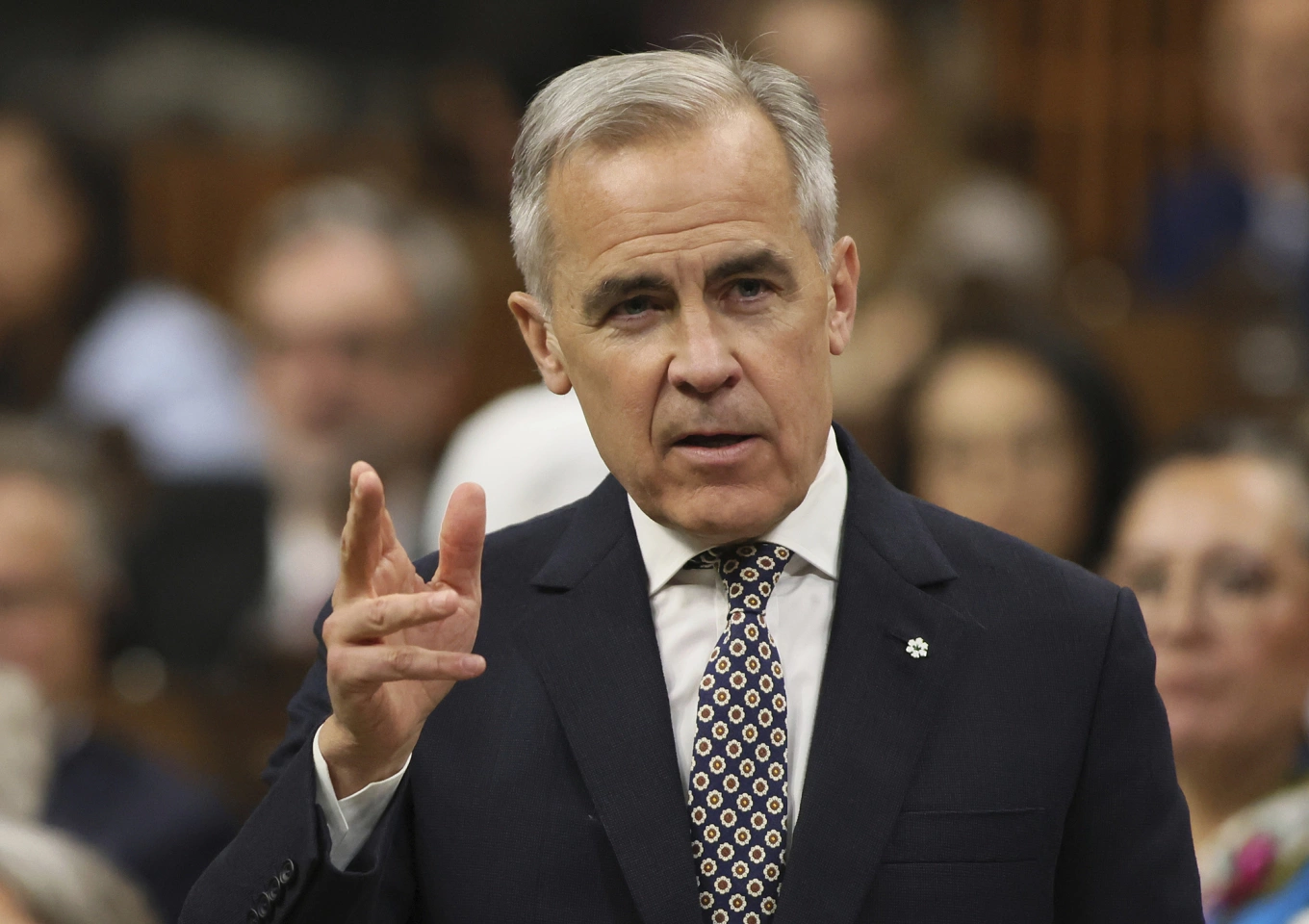
Publicly, Trump framed the Beijing talks as proof that his pressure strategy was finally forcing China to cooperate economically again.
But economists noticed something important that most television coverage barely mentioned.
China had actually purchased significantly more American goods years earlier before tensions escalated.
In other words, the widely celebrated $17 billion figure was not a historic expansion.
It looked far more like partial recovery from damage that had already been created by the trade war itself.
That distinction changed everything.

Because once analysts removed the political messaging from the numbers, the bigger reality became impossible to ignore:
China was no longer building its future economic strategy around dependence on the United States.
Instead, Beijing appeared increasingly focused on diversification.
And that is where Canada entered the story.
While political attention remained fixed on Trump and China, Canada had spent years quietly strengthening sectors that suddenly became critically important in the new global economy.
Critical minerals.
Rare earth supply chains.
Hydroelectric power.
Agriculture.
Liquefied natural gas.
Advanced manufacturing.
Artificial intelligence infrastructure.
Battery production.
And unlike many countries caught between Washington and Beijing, Canada offered something global investors were becoming desperate to find:
Stability.
Prime Minister Mark Carney reportedly understood earlier than most leaders that the trade war was not simply about tariffs.
It was about trust.
Global corporations no longer feared one specific policy announcement. They feared unpredictability itself.
For multinational companies managing trillion-dollar supply systems, uncertainty is often more dangerous than bad policy.
And as tensions between China and the United States intensified yet again, executives began searching for countries capable of offering long-term reliability without constant geopolitical drama.
Canada suddenly looked extremely attractive.
According to multiple trade observers, Chinese buyers had already started increasing conversations around alternative agricultural sourcing, mineral partnerships, and energy investments outside traditional American channels.
None of these shifts happened dramatically overnight.
That was what made the situation so politically dangerous for Washington.
There was no market panic.
No immediate collapse.
No dramatic headlines warning of catastrophe.
Instead, there were quiet adjustments.
Investment reallocations.
New memorandums.
Long-term infrastructure agreements.
Shipping revisions.
Strategic procurement diversification.
The kind of slow structural movement that often matters far more than short-term political victories.
Meanwhile, Canadian officials remained publicly disciplined.
There were no triumphalist speeches celebrating American weakness.
No direct attacks against Washington.
Instead, Ottawa continued emphasizing economic resilience, international partnerships, and domestic industrial expansion.
But inside policy circles, many analysts believed Canada understood exactly what was happening.
The world economy was entering a phase where countries rich in energy, food security, critical minerals, and political stability would gain enormous leverage.
And Canada possessed all four.
That realization became even more important as Western governments accelerated investment into electric vehicles, defense manufacturing, renewable energy systems, and semiconductor production.
All of those industries require massive amounts of critical minerals — lithium, nickel, cobalt, copper, and rare earth materials.
Canada controls significant portions of those supply chains.
For years, many global markets treated those resources as background assets rather than strategic geopolitical tools.
That assumption is now changing rapidly.
Several institutional reports released after the Beijing summit reportedly highlighted growing concern that the United States may have unintentionally accelerated China’s motivation to reduce long-term dependence on American suppliers altogether.
If true, the consequences could reshape global trade for decades.
Because once nations begin restructuring supply relationships for strategic reasons, those systems rarely return to their previous form completely.
That is what made the $17 billion celebration look increasingly complicated to analysts.
On the surface, it sounded enormous.
But compared to the broader economic transformation quietly unfolding underneath, some experts argued the number was politically symbolic more than structurally decisive.
And while television networks focused on speeches and headlines, financial institutions were watching logistics maps.
Shipping corridors.
Port expansions.
Mineral access agreements.
Energy partnerships.
Agricultural diversification routes.
The deeper concern emerging in some American economic circles was not simply competition with China anymore.
It was the possibility that middle powers like Canada were becoming the preferred alternative in a fragmented global economy.
That shift carries major consequences.
For decades, the United States benefited enormously from being viewed as the automatic center of global trade stability.
But trade wars, tariff volatility, sanctions uncertainty, and political polarization have gradually weakened that perception among some international investors.
Canada, by contrast, increasingly presents itself as calm, rules-based, resource-rich, and diplomatically predictable.
That combination matters more than many politicians realize.
One European analyst reportedly summarized the situation bluntly:
“In unstable periods, capital does not chase excitement. It chases reliability.”
And reliability is becoming one of Canada’s strongest economic assets.
The irony is that Trump’s strategy was originally designed to strengthen American leverage over China.
Instead, some analysts now believe it may have accelerated a much broader global diversification movement that ultimately reduced dependence on the United States itself.
Not immediately.
Not dramatically.
But gradually.
Structurally.
Quietly.
That is often how major economic transformations begin.
Not with crashes.
Not with explosions.
But with slow changes in confidence.
By the time political systems recognize those changes fully, the financial world has usually already moved ahead.
Inside Washington, officials continue insisting that aggressive negotiation tactics remain necessary to confront China’s economic ambitions.
And many supporters argue Trump’s pressure campaign forced Beijing into concessions that previous administrations failed to achieve.
But critics increasingly counter that economic warfare creates unintended consequences when allies and partners begin searching for ways to avoid becoming trapped between competing superpowers.
That is precisely why Canada’s growing role matters so much.
It represents an emerging alternative model:
stable democracy,
resource security,
strategic neutrality,
and long-term investment predictability.
As tensions between major powers continue rising, those qualities become more valuable every year.
By the end of the week following the Beijing summit, one thing had become increasingly clear inside global financial circles:
The real story was never just about Trump.
Or China.
Or even the $17 billion headline itself.
It was about the silent restructuring of global economic trust.
And while political leaders argued publicly over trade victories and negotiation tactics, the world’s investors were already looking further ahead — toward the countries they believed would remain stable when the next wave of geopolitical turbulence arrives.
Right now, many of them appear to believe Canada may be one of those countries.






