Polish Parliament Erupts as Zbigniew Bogucki Accuses Government of Undermining Rule of Law
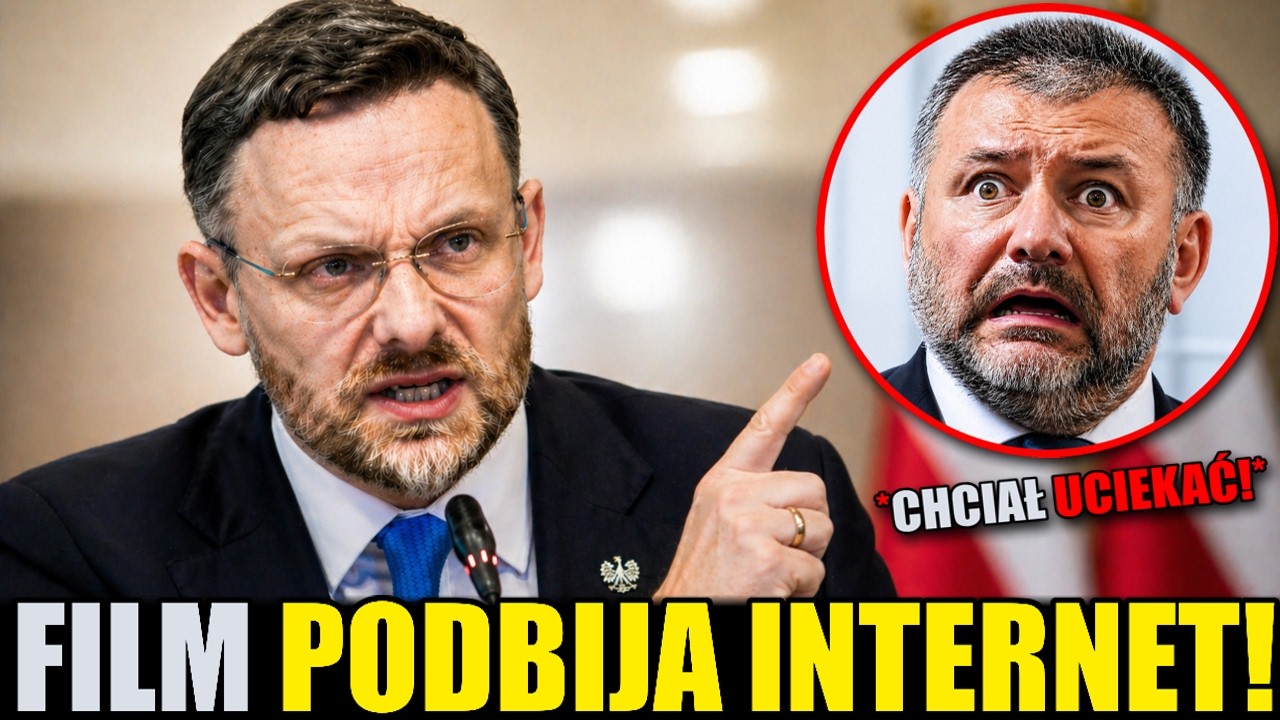
A heated parliamentary speech by Zbigniew Bogucki has intensified Poland’s already volatile debate over judicial reform, constitutional authority, and the relationship between the government and the presidency.
Speaking during a tense session of the Polish parliament, Bogucki delivered a forceful criticism of the ruling coalition, accusing the government of attempting to bypass constitutional procedures while deepening political conflict over the country’s justice system.
The speech focused heavily on ongoing disputes surrounding the National Council of the Judiciary, known in Poland as the KRS. The institution has remained at the center of years-long political and legal battles involving judicial appointments, constitutional legitimacy, and the independence of the courts.
Bogucki argued that the current law governing the KRS remains fully valid within Poland’s legal system because it passed through the complete legislative process, including approval by parliament, the Senate, and the president before being formally enacted.
According to him, the constitutional validity of the law has never been overturned. He also pointed out that parliamentary procedures regarding new appointments to the KRS had already been initiated under the existing legal framework, arguing that the government itself had implicitly recognized the law’s legitimacy.
During the address, Bogucki accused the ruling coalition of attempting to govern through parliamentary resolutions rather than formal legislation. He argued that such resolutions do not possess the same legal authority as laws passed through constitutionally required legislative procedures.
Citing Article 87 of the Polish Constitution, Bogucki emphasized that the recognized sources of binding law in Poland are the constitution itself, parliamentary statutes, ratified international agreements, and executive regulations. Parliamentary resolutions, he argued, are not listed among those legally binding sources.
According to Bogucki, any attempt to fundamentally reshape judicial institutions through non-binding parliamentary declarations would therefore lack legal force.
The speech repeatedly targeted Justice Minister Waldemar Żurek, whom Bogucki accused of promoting reforms that he described as unconstitutional and politically motivated.
At one point, Bogucki challenged government officials to identify a specific legal provision authorizing court presidents to organize what he referred to as “electoral assemblies” related to judicial appointments. He argued that no such legal basis exists within Polish law.
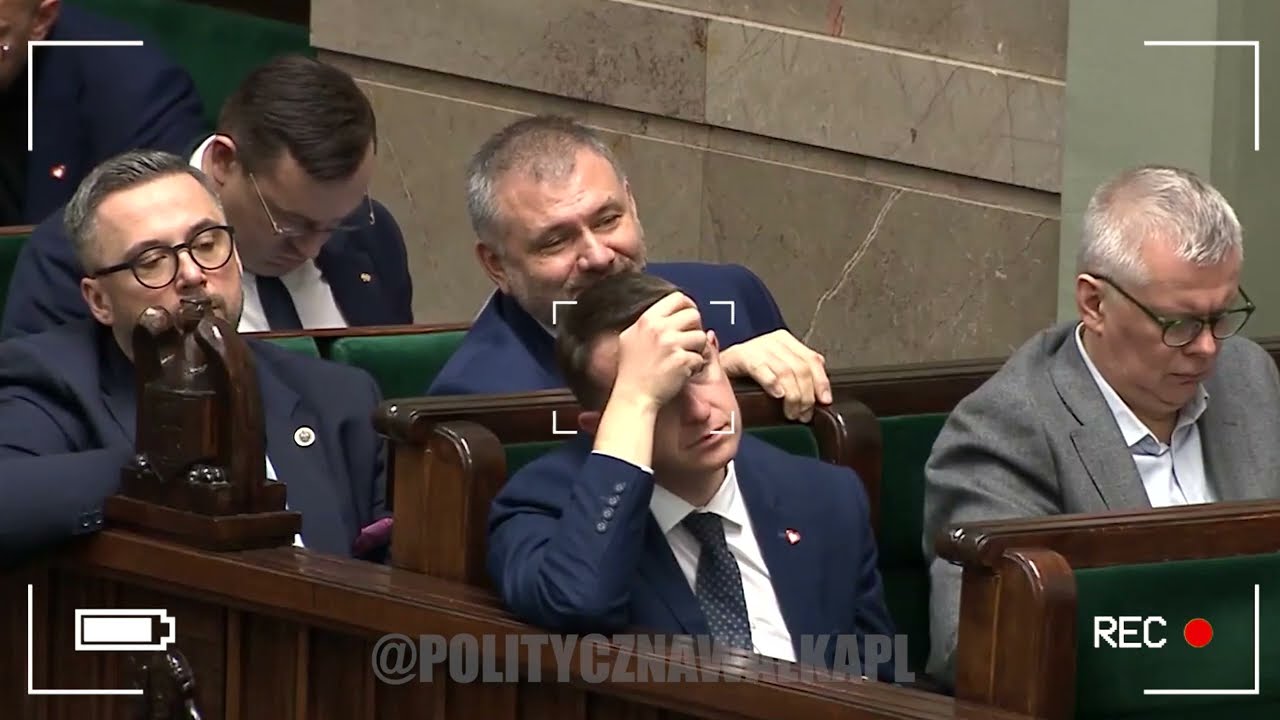
The parliamentary chamber reacted several times with loud applause from opposition lawmakers as Bogucki intensified his criticism of the government’s handling of judicial reforms.
The speech also broadened beyond court reform to include accusations regarding the treatment of border defenders and members of the military. Bogucki criticized prosecutors for pursuing legal action against individuals associated with defending Poland’s borders while allegedly showing leniency in other politically sensitive cases.
He referenced a military officer facing legal proceedings and accused authorities of refusing to withdraw accusations despite internal recommendations reportedly supporting such action.
According to Bogucki, these examples demonstrate what he sees as selective justice and politically motivated prosecution within the current legal system.
The address then shifted toward broader political tensions between the government and the presidency. Bogucki argued that the ruling coalition has struggled to accept the results of the presidential election won by Karol Nawrocki.
In one of the speech’s most striking moments, Bogucki suggested that parts of the government still behave as though opposition figure Rafał Trzaskowski had won the election instead.
He argued that legislation prepared under the assumption of a different presidential outcome is now colliding with political reality, particularly when proposals reach the president’s desk for approval.
Bogucki defended President Nawrocki’s decision to veto proposed judicial legislation, arguing that opposition to the reforms came not only from the presidency but also from several legal and institutional authorities.
He cited criticism allegedly expressed by the Supreme Court, the KRS itself, Senate legislative experts, the National Electoral Commission, and the Supreme Administrative Court.
According to Bogucki, these institutions viewed the proposed reforms as legally flawed or unconstitutional, reinforcing the president’s decision to block the legislation.
The speech also referenced remarks made by Foreign Minister Radosław Sikorski during parliamentary debates the previous day.
Bogucki quoted Sikorski’s statement about accepting the will of the majority and argued that the ruling coalition itself should apply that principle by respecting the outcome of democratic presidential elections.
He accused the government of failing to cooperate constructively with the president and instead escalating institutional conflict.
One of the central themes running throughout the address was the idea that Poland’s institutions are becoming increasingly politicized. Bogucki claimed some judges have abandoned impartial legal work in favor of political activism, spending more time attacking colleagues and participating in political disputes than focusing on judicial responsibilities.
According to him, this trend contributes to growing dysfunction within the court system, including delays affecting ordinary citizens waiting for legal decisions.
The speech culminated in a broader appeal for institutional cooperation and constitutional restraint. Bogucki argued that Poland should not be treated as the property of any single political faction or government majority.
Instead, he described the country as a shared national good belonging to all citizens, requiring cooperation between political institutions rather than permanent confrontation.
He called for respect toward the presidency and urged the government to focus on genuine judicial reform instead of what he characterized as symbolic or legally ineffective political maneuvers.
The speech drew strong reactions both inside parliament and across Polish political media. Supporters praised Bogucki for forcefully defending constitutional order and resisting what they view as politically driven judicial restructuring.
Critics, however, argue that opposition figures are themselves defending controversial judicial reforms introduced by previous governments, reforms that triggered years of domestic protests and disputes with European Union institutions over judicial independence and democratic standards.
Poland’s judicial system has remained one of the country’s most divisive political issues for nearly a decade. Successive governments and opposition parties have accused one another of undermining democracy, politicizing courts, and weakening constitutional checks and balances.
The dispute has also become an international issue, particularly within the European Union, where concerns about judicial independence in Poland have repeatedly generated tensions between Warsaw and Brussels.
Supporters of reform argue that changes to the judiciary are necessary to improve efficiency, accountability, and democratic oversight. Opponents claim that political interference threatens the independence of judges and weakens the separation of powers.
Bogucki’s speech reflects how deeply entrenched these conflicts have become within Polish political life. What began years ago as a legal and constitutional dispute has increasingly evolved into a broader struggle over national identity, democratic legitimacy, and the balance of institutional power.
The intensity of the parliamentary debate also highlights the increasingly confrontational nature of Polish politics, where disputes involving courts, elections, and constitutional authority now regularly dominate national discussion.
As tensions continue between the presidency and the ruling coalition, further clashes over judicial reform appear highly likely in the months ahead.
For many observers, the deeper concern is no longer simply the content of individual reforms but whether Poland’s major political institutions can still function cooperatively amid growing polarization.
Bogucki’s speech captured that broader anxiety directly. By framing the conflict as a battle over the foundations of the Polish state itself, he transformed a technical legal dispute into a much larger argument about democracy, legitimacy, and the future direction of the country.






