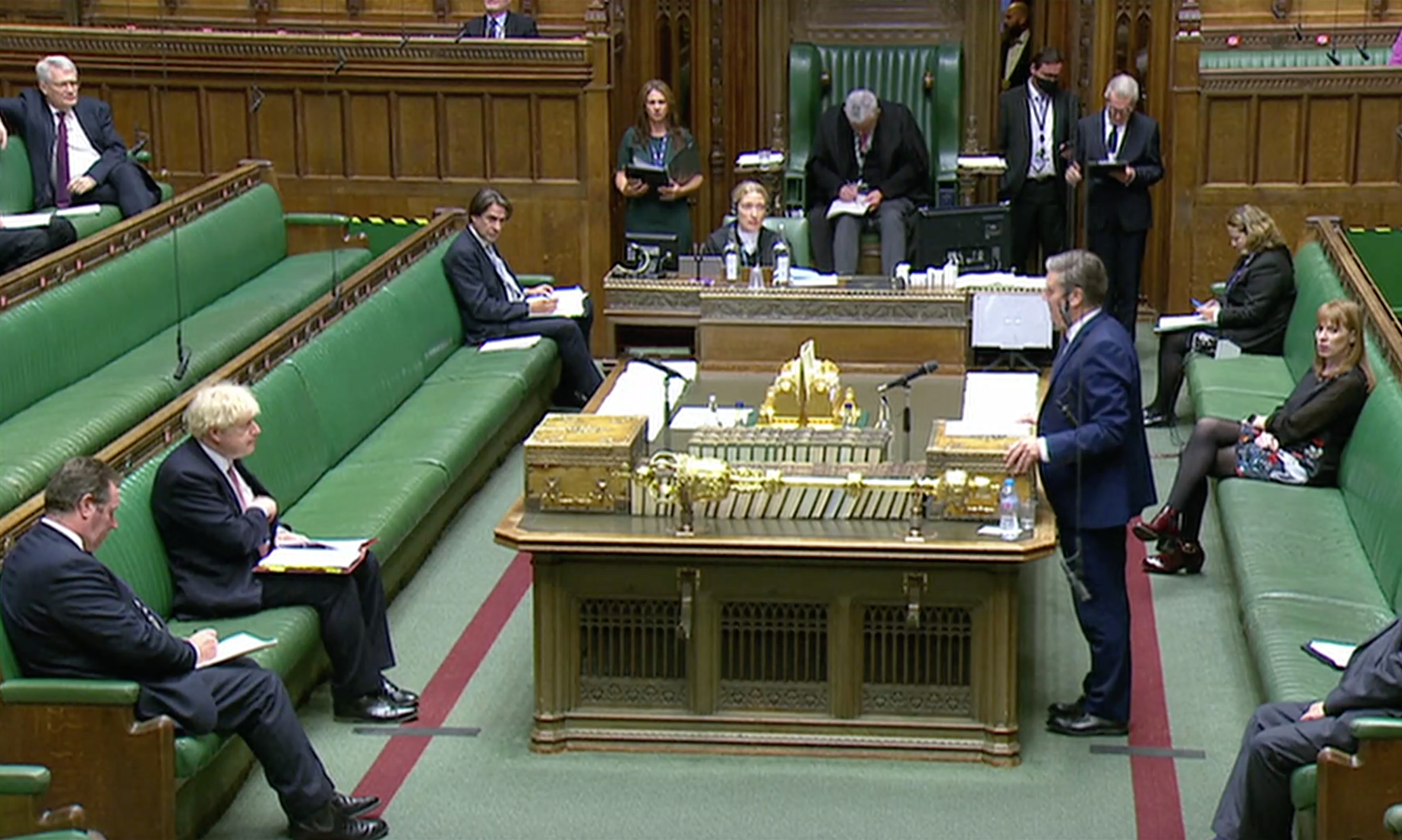
A sharp constitutional and political friction has erupted within Westminster following an explosive parliamentary session that exposed deep ideological divides over national infrastructure. House of Commons Speaker Sir Lindsay Hoyle launched a scathing reprimand against the Treasury, accusing ministers of systematically disrespecting traditional parliamentary protocols.
The Speaker’s ire was triggered by the strategic drip-feeding of a major fiscal policy announcement to national media outlets before it was officially presented to elected lawmakers. Hoyle emphasized that the ministerial code mandates that crucial economic shifts must be disclosed first to the legislative benches, not on digital platforms.

The unfolding controversy centers on a dramatic fiscal U-turn by Chancellor Rachel Reeves, who announced a comprehensive freeze on fuel duty rates. The sudden policy shift followed months of intense public pressure and grassroots pushback from motorists, logistical operators, and independent business owners across the country.
„The government’s own ministerial code makes it clear that important policy announcements should be made in the first instance to this house.” — Sir Lindsay Hoyle, Speaker
Opposition lawmakers immediately seized on the announcement, characterizing the Chancellor’s policy reversal as a weak, politically motivated capitulation rather than strategic governance. The Shadow Chancellor argued that the administration had spend months stubbornly defending the planned tax hikes during a prolonged domestic energy crisis.
Traditionalist critics contend that the government’s sudden generosity is directly linked to recent local election defeats and an upcoming, high-stakes parliamentary by-election. They argue that the ruling party is attempting to manipulate fiscal policy to rescue its declining popularity among working-class voters in industrial regions.
Further economic scrutiny has focused on how the multi-million-pound fuel duty freeze will be funded without exacerbating the nation’s severe fiscal deficit. The opposition demanded immediate clarity on whether the Treasury would rely on aggressive new tax measures or resort to extensive international borrowing.
The Chancellor vigorously defended her fiscal trajectory, pointing to recent upgraded International Monetary Fund growth forecasts as evidence of underlying economic resilience. Reeves asserted that domestic inflation had fallen significantly, making the United Kingdom the fastest-growing economy within the G7 during the first quarter.
However, independent financial analysts remain deeply skeptical of the government’s highly optimistic economic narrative, pointing to historic national debt levels instead. Critics emphasize that public borrowing has escalated significantly compared to inherited fiscal baselines, leaving the country vulnerable to global market volatility.
The parliamentary debate also highlighted a fundamental disagreement regarding the long-term exploitation of the United Kingdom’s substantial domestic natural resources. Traditionalist commentators argue that the state’s reluctance to fully utilize North Sea oil and gas reserves severely undermines national energy security.
The decision to restrict domestic fossil fuel extraction has forced the country to import expensive energy alternatives from volatile foreign markets. This policy approach has drawn sharp criticism from alternative political movements, who advocate for a complete return to domestic resource independence and security.
While the Chancellor mentioned recent regulatory changes designed to facilitate specific oil and gas tiebacks, her primary focus remains green subsidies. The Treasury’s commitment to expanding floating offshore wind, solar infrastructure, and small modular nuclear reactors continues to face intense structural criticism.
Skeptics argue that relying predominantly on renewable energy infrastructure is a flawed strategy that cannot sustain the nation’s heavy industrial requirements. They contend that green energy mandates artificially inflate utility bills for ordinary working families while failing to provide consistent baseline power.
The public mood outside Westminster has grown increasingly hostile, as evidenced by recent viral confrontations involving high-ranking cabinet ministers nationwide. An incident at a suburban petrol station, where a citizen directly challenged the Chancellor’s economic record, reflects a broadening societal alienation.
Traditionalists suggest that the political class remains entirely decoupled from the daily economic realities endured by the native British population. They argue that parliamentary debates have degenerated into performative exercises focused on partisan point-scoring rather than implementing genuine structural reforms.
The introduction of state-funded initiatives, such as free unlimited bus travel for children, has also faced intense scrutiny regarding long-term affordability. Critics frequently ask the fundamental economic question of who will ultimately bear the financial burden of these expansive social programs.
The prevailing sentiment among populist commentators is that socialist economic policies inevitably deplete national reserves, leaving future generations with unsustainable debts. They advocate for a radical reduction in government spending, an overhaul of the welfare system, and substantial tax cuts.
The ongoing friction between the executive branch and backbench lawmakers indicates a structural decline in traditional constitutional checks and balances. When major policy shifts are treated as media commodities rather than legislative duties, the foundational integrity of Parliament is compromised.
Furthermore, the Chancellor’s vague assertions regarding reduction percentages failed to satisfy technical observers demanding exact, transparent monetary figures. The perceived arrogance of frontbench responses has further intensified public distrust in the state’s willingness to provide honest fiscal accountability.
As independent media platforms continue to dismantle official government statistics, alternative political manifestos are gaining significant traction among voters. Organizations promoting comprehensive economic sovereignty are offering refreshing alternatives to the rigid orthodoxy practiced by the dominant Westminster parties.
The strategic timing of the fiscal announcement suggests that the administration is operating in a permanent state of crisis management. By continually reactive to political pressure rather than executing a cohesive strategy, the government appears increasingly weak and structurally unstable.
The economic challenges facing high streets and small businesses require more than minor adjustments to mileage allowances or business rates. Decades of systemic inflation and regulatory overreach have hollowed out local commercial sectors, requiring a complete transformation of national economic policy.
The defense of the nation’s economic sovereignty has become an existential issue for communities left behind by globalist industrial shifts. For these citizens, the preservation of domestic industries and traditional liberties is paramount to ensuring long-term stability and regional prosperity.
The international financial community continues to monitor the United Kingdom’s fiscal performance with a mixture of caution and growing concern. Any further escalation in public borrowing could trigger a negative reaction from sovereign credit agencies, increasing the cost of national debt.
The internal divisions within the ruling party regarding the pace of the green transition are becoming impossible to conceal publicly. Moderate factions are quietly urging a more pragmatic approach to fossil fuels to prevent further industrial decline and widespread electoral backlash.

The role of the independent Office for Budget Responsibility will be crucial in the coming months as final audits are prepared. Their objective assessments will determine whether the Chancellor’s optimistic projections match the structural realities of a heavily indebted national economy.
Whether the government can successfully navigate the upcoming by-election without facing a severe democratic rebuke remains to be seen. The growing coordination among alternative political factions poses a significant challenge to the established order across traditional working-class strongholds.
The ongoing debate over energy dependency highlights the broader, systemic crisis of leadership currently affecting the entire Western world. The failure to prioritize national self-sufficiency has left major economies exposed to geopolitical conflicts over which they exercise no direct control.
In conclusion, the fiery exchange within the House of Commons serves as a stark reminder of the deep-seated structural issues facing Britain. The struggle over taxation, energy, and parliamentary supremacy will ultimately shape the nation’s political and economic destiny for generations.
As the public demands absolute transparency, the old political narratives are losing their efficacy against independent, digital analysis. The demand for a government that serves the people rather than partisan interests remains a non-negotiable prerequisite for national recovery.






