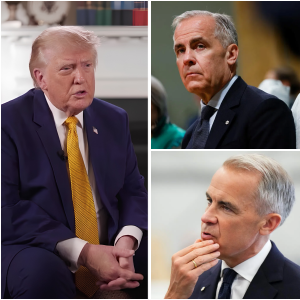
OTTAWA — The diplomatic air between Ottawa and Washington turned frigid this week following a rare public rebuke by the U.S. Ambassador. Pete Hoekstra twice expressed “great disappointment” that Canada lacked enthusiasm for a “bigger deal” encompassing critical minerals and energy, suggesting Canadians had grown cold toward their neighbor.
Ambassador Hoekstra’s lamentation, delivered to two separate audiences, portrayed a relationship in decline. He argued that while the business community remains passionate about North American integration, ordinary Canadians have retreated into an “anti-American” stance. He claimed Washington had hoped for a grand bargain beyond the existing USMCA framework.
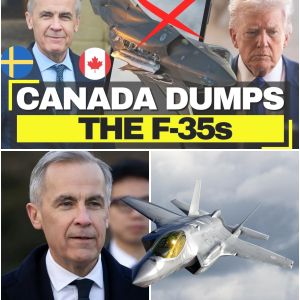
Prime Minister Mark Carney’s response was swift, surgical, and devoid of traditional diplomatic fluff. Refusing to be lectured, Carney clarified that Canada already possesses the world’s most effective trading relationship with the U.S. He signaled that any “improvements” would happen only on Canadian terms, prioritizing national sovereignty over American priorities.
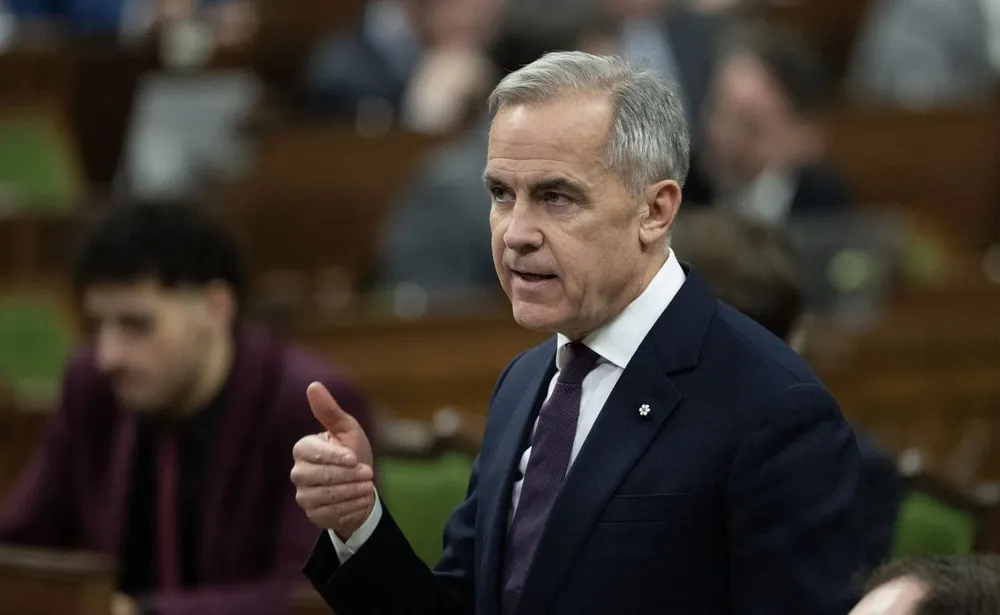
The exchange marks a fundamental shift in the continental power dynamic. For decades, Canada was viewed as the conciliatory partner, often yielding to Washington’s gravitational pull. However, under Carney, Ottawa has adopted a posture of “assertive independence,” reflecting a public that is increasingly weary of American political volatility.
Hoekstra’s comments about a “lack of passion” struck a nerve in a country that has endured years of tariff threats and rhetoric. Many observers in Ottawa viewed the Ambassador’s disappointment as a misplaced attempt to shift blame. They argue that the “coldness” is a direct result of Washington’s own protectionist policies.
Carney’s strategy is built on the reality of 2026: Canada is no longer a captive market. While the U.S. remains a vital partner, Carney has aggressively diversified Canada’s economic portfolio. By strengthening ties with Mexico, Europe, and the Gulf, he has ensured that Canada enters every room with multiple options.
The Prime Minister’s “three-point” rebuttal emphasized that a “grand bargain” is currently not a priority for his government. He insisted that Canada’s existing trade frameworks are stable and effective. He will not rush into symbolic agreements designed to provide quick political wins for the Trump administration in Washington.
Furthermore, Carney underscored that protection of Canadian jobs and strategic industries is non-negotiable. This is not merely campaign rhetoric; it is a practical shield against the “America First” doctrine. Canada is signaling that it will no longer sacrifice its long-term industrial health for the sake of short-term bilateral peace.
The contrast in leadership styles has become a focal point of the dispute. While Hoekstra and the White House rely on public pressure and media-driven confrontation, Carney has maintained a calm, technical composure. This “quiet strength” appears to be more unsettling to American officials than traditional retaliatory shouting.
Voters across Canada have largely rallied behind this firmer stance. Recent polling suggests that nearly 68 percent of Canadians have a diminished view of American reliability. Carney’s refusal to “bend the knee” resonates with an electorate that feels Canada’s national dignity has been repeatedly tested by southern rhetoric.
The “51st state” comments and the labeling of the Prime Minister as a “governor” by Donald Trump have left deep scars. These perceived slights toward Canadian sovereignty have unified the country in a way few domestic policies could. Carney is effectively channeling this national sentiment into a new foreign policy.
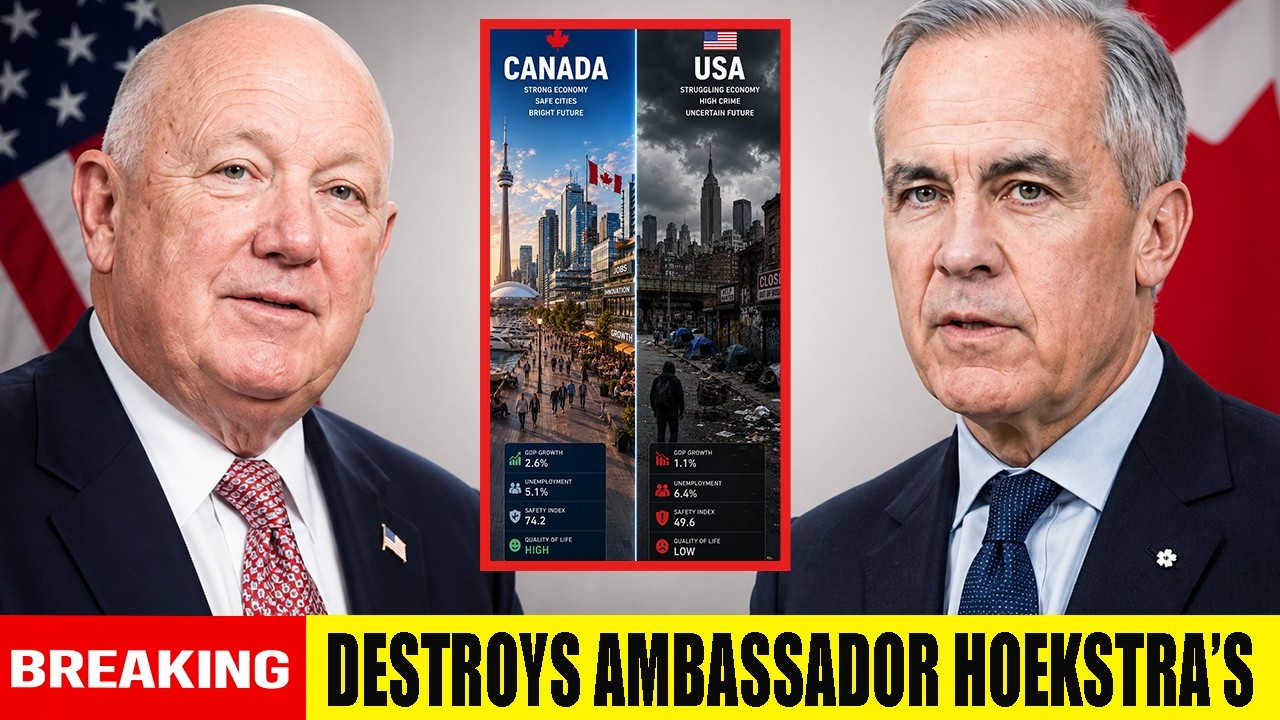
Hoekstra’s disappointment regarding critical minerals is particularly telling. Washington desires guaranteed access to Canada’s vast deposits of lithium and nickel. However, Carney recognizes these as “generational leverage.” He is unwilling to sign them away in a lopsided deal that benefits American manufacturers over Canadian miners.
The “bigger deal” Hoekstra envisions would integrate steel, nuclear, and energy sectors deeper into the American orbit. From Ottawa’s perspective, this looks less like a partnership and more like annexation by another name. Carney is holding the line, insisting that integration must be balanced by mutual, enforceable respect.
By stating that a deal must work for “both sides,” Carney is reminding Washington that Canada is an equal G7 partner. He is leveraging Canada’s stability against America’s unpredictability. In a world of shifting alliances, Canada’s reputation as a reliable, rule-following democracy has become its most valuable global currency.
This diplomatic friction is also a signal to global markets. Investors see a Canada that is willing to defend its interests even against its largest trading partner. This perceived strength attracts capital from nations seeking a stable alternative to the increasingly protectionist and erratic environment found within the United States.
The Prime Minister’s refusal to raise his voice has proven effective. He has avoided the trap of an emotional dispute, focusing instead on the “meat” of economic reality. Canada’s message is clear: the era of the United States viewing its northern neighbor as an easily pressured subordinate is over.
Hoekstra’s claim that Canadians are “anti-American” misinterprets a desire for autonomy as hostility. Canadians continue to value the deep cultural and familial ties across the border. However, they are no longer willing to let those ties serve as a pretext for economic bullying or the erosion of sovereignty.
The 2026 landscape shows a Canada that is more self-reliant in energy and agriculture than ever before. This self-reliance provides the “ability to say no” without fear of immediate collapse. Carney’s government has built the necessary buffers to withstand the periodic storms coming from the White House.
As consultations for the USMCA review begin, Ottawa is entering from a position of documented success. Canada has fulfilled its obligations while the U.S. has frequently challenged the spirit of the agreement. Carney is prepared to use this record to demand better treatment and fairer trade terms.
The Ambassador’s frustration reflects a broader American realization: the old tactics of division and pressure are losing their potency. Canada today is more diversified and less reliant on the U.S. than at any point in modern history. This diversification is the true foundation of Carney’s political power.
Moreover, the “Canada Strong Fund” and other domestic initiatives have created a sovereign pool of capital. This reduces the need for American investment that often comes with political strings attached. Canada is effectively buying its own independence, one strategic infrastructure project at a time in 2026.
Critics of the U.S. stance argue that Washington is acting like a jilted partner. Having spent years threatening to “rip up” trade deals, the U.S. now seems surprised that Canada has taken those threats seriously and found other friends. Carney is simply following the logical path of diversification.

The “passionate” business community Hoekstra mentioned is indeed concerned about trade. However, they are also increasingly supportive of a government that provides a stable, predictable domestic environment. They recognize that a “bigger deal” with a volatile partner might carry more risk than reward at this moment.
Carney’s calm demeanor serves as a reassurance to the Canadian public. He has demonstrated that he understands the lessons of past imbalanced agreements. He has no intention of repeating mistakes that led to the hollowing out of Canadian manufacturing or the loss of national control.
The message to Washington is unambiguous: do not mistake goodwill for weakness. Canada remains a willing collaborator but only as an equal sovereign entity. If the U.S. wants a “bigger deal,” it must offer terms that reflect the reality of Canada’s new, multi-partner global standing.
Hoekstra’s attempt to portray Canadians as ungrateful has largely backfired, serving only to bolster Carney’s domestic approval. It has framed the debate as one of national pride versus foreign pressure. In this narrative, Carney is seen as the steady hand protecting the nation’s future and honor.
Ultimately, this confrontation reflects a deeper shift in the global order. Middle powers are no longer content to exist solely within the spheres of influence of superpowers. Canada is leading the way in showing how a mid-sized nation can navigate the complexities of a multipolar world with dignity.
The revolution in Ottawa is one of substance over style. While the tweets fly from Washington, the policy shifts proceed quietly in Canada. The goal is a balanced relationship based on mutual benefit rather than political subservience. Carney’s firm “no” has become his most powerful diplomatic tool.
As the week ends, the stalemate remains. Washington is disappointed, and Ottawa is resolute. The “enthusiasm” Hoekstra seeks cannot be manufactured through pressure; it must be earned through fair dealing. Until then, Canada will continue to walk its own path, secure in its new-found independence.
The bottom line is simple: Canada has moved on. The relationship with the United States will always be vital, but it is no longer the only game in town. By prioritizing the interests of Canadians above all else, Mark Carney has redefined what it means to be America’s neighbor.