Speaker Johnson Walks a Narrow Line on Election Claims, as Trump’s Shadow Looms
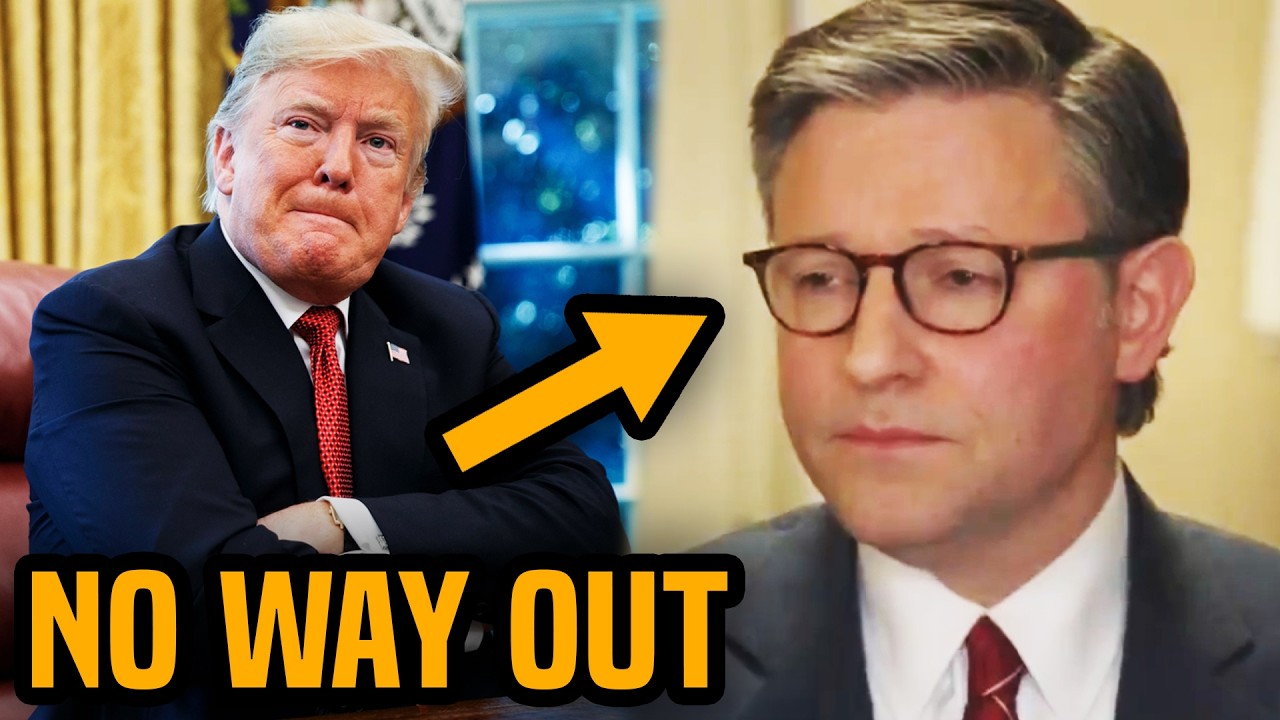
WASHINGTON — For Mike Johnson, loyalty to Donald Trump has become both a political necessity and a growing liability. In recent television appearances and interviews, Mr. Johnson has echoed familiar Republican grievances about election administration in Democratic-led states, suggesting that results appearing to shift after Election Day “look on their face to be fraudulent.” He has also conceded, in the same breath, that he cannot prove any wrongdoing.
That tension — asserting suspicion without evidence — captures a defining dilemma for Trump-aligned Republicans in the post-2020 era. They are expected to validate Mr. Trump’s claims of systemic election fraud, while navigating a political environment in which courts, investigators, and election officials have repeatedly found those claims baseless.
For Mr. Johnson, the speaker of the House and one of Mr. Trump’s most reliable allies in Congress, the stakes are unusually high. He holds one of the most powerful institutional positions in Washington, but his authority rests on a coalition deeply shaped by Trumpism — a movement that demands rhetorical loyalty even as its central claims continue to erode under scrutiny.
The speaker’s careful language
In a recent exchange with reporters, Mr. Johnson criticized states like California for allowing ballots to be counted days or weeks after Election Day, arguing that Republican candidates who initially led races later lost as additional votes were tallied. “It just looks on its face to be fraudulent,” he said, before acknowledging that he could not substantiate the allegation.
Election experts say the phenomenon Mr. Johnson described is neither new nor mysterious. Mail-in ballots, provisional ballots, and votes from densely populated urban areas — which tend to favor Democrats — are often counted later in the process. That dynamic has been documented for decades and was particularly visible during the pandemic-era elections of 2020 and 2022.
“Counting ballots after Election Day is not evidence of fraud,” said Rick Hasen, a law professor at the University of California, Los Angeles, and an expert on election law. “It’s evidence of how election administration works in many states.”
Still, Mr. Johnson’s remarks place him squarely within a broader Republican messaging strategy that casts doubt on election outcomes without making claims that can be tested — or refuted — in court.

A familiar Trump pattern
The approach reflects a pattern that has defined Mr. Trump’s influence over the Republican Party since his defeat in 2020. Allies are encouraged, implicitly or explicitly, to repeat claims of a “rigged” system or stolen elections. Those who comply gain Trump’s favor and the backing of his base. Those who dissent often face swift political retribution.
In that sense, Mr. Johnson’s predicament resembles that of other Trump-aligned figures who found themselves trapped between institutional reality and political loyalty. Many Republicans who initially echoed fraud claims later softened or abandoned them — sometimes quietly, sometimes at significant personal cost.
What makes Mr. Johnson’s situation different is timing. As speaker, he is now one of the most visible Republican leaders in the country, and his words carry institutional weight. When a rank-and-file lawmaker raises doubts about elections, the impact is limited. When the speaker of the House does so, it shapes national discourse.
The expiration date of loyalty
Political historians note that Trump’s demands for loyalty tend to outlast his ability — or willingness — to protect allies once they leave his orbit or once his own power wanes.
“Trump’s pattern is to push people to say things that are useful to him in the moment, regardless of whether those statements are sustainable over time,” said Julian Zelizer, a professor of history and public affairs at Princeton University. “When the consequences arrive, they arrive for the allies, not for Trump.”
That reality is not lost on Republican leaders, many of whom watched as former Trump attorneys and advisers faced legal, professional, or reputational consequences after the 2020 election. Several were sanctioned, indicted, or disbarred for actions tied to efforts to overturn election results — even as Trump himself avoided direct legal accountability at the time.
Mr. Johnson’s acknowledgment that he cannot prove fraud may signal an awareness of that risk. But critics argue that repeating unproven claims while disclaiming evidence does little to insulate him from future scrutiny.

Courts versus politics
One reason election-fraud rhetoric has become increasingly precarious is the uniform response it has received from the judiciary. Courts at every level — state and federal, conservative and liberal — rejected challenges to the 2020 election for lack of evidence. Judges appointed by Mr. Trump were among those who dismissed the cases.
Legal analysts say that history matters. Statements made by public officials, even framed cautiously, can carry consequences if they later intersect with litigation, investigations, or historical inquiries.
“Courts don’t evaluate claims based on political pressure or party loyalty,” said a former federal prosecutor who requested anonymity to speak candidly. “They evaluate evidence. Saying ‘it looks fraudulent but I can’t prove it’ is not a legal position — it’s a political one.”
An uneasy future
The longer Republicans remain tied to unsubstantiated claims, the harder it becomes to retreat from them. Acknowledging the legitimacy of past elections risks angering Trump and his base. Continuing to cast doubt risks alienating independents, election officials, and institutions that rely on public trust.
That bind is especially acute for Mr. Johnson, whose speakership depends on a narrow majority and the goodwill of hard-line conservatives. For now, he appears to be attempting a balancing act: voicing suspicion while stopping short of explicit allegations.
Whether that approach is sustainable remains unclear. Trump’s influence over the party is still strong, but it is not permanent. When that influence fades — as all political power eventually does — statements made in moments of loyalty may take on new meaning.
History offers a cautionary lesson. Political movements centered on personal loyalty often leave their allies exposed once the central figure exits the stage. The record, not the rhetoric, tends to endure.
For Mr. Johnson, the challenge is not only navigating the present but anticipating the future — a future in which courts, historians, and voters may judge today’s words more harshly than today’s political climate allows.
In the end, loyalty to Trump may buy time. It does not erase accountability.