Bad Bunny, the Grammys, and the Cultural Fault Lines America Can No Longer Ignore
By the time the final awards were handed out at the Grammys this year, it was already clear that the night would be remembered for more than trophies or performances. What unfolded instead was a crystallization of something far larger: a cultural reckoning playing out in real time, where music, politics, and identity collided on one of the most visible stages in American life.
At the center of that collision stood Bad Bunny.
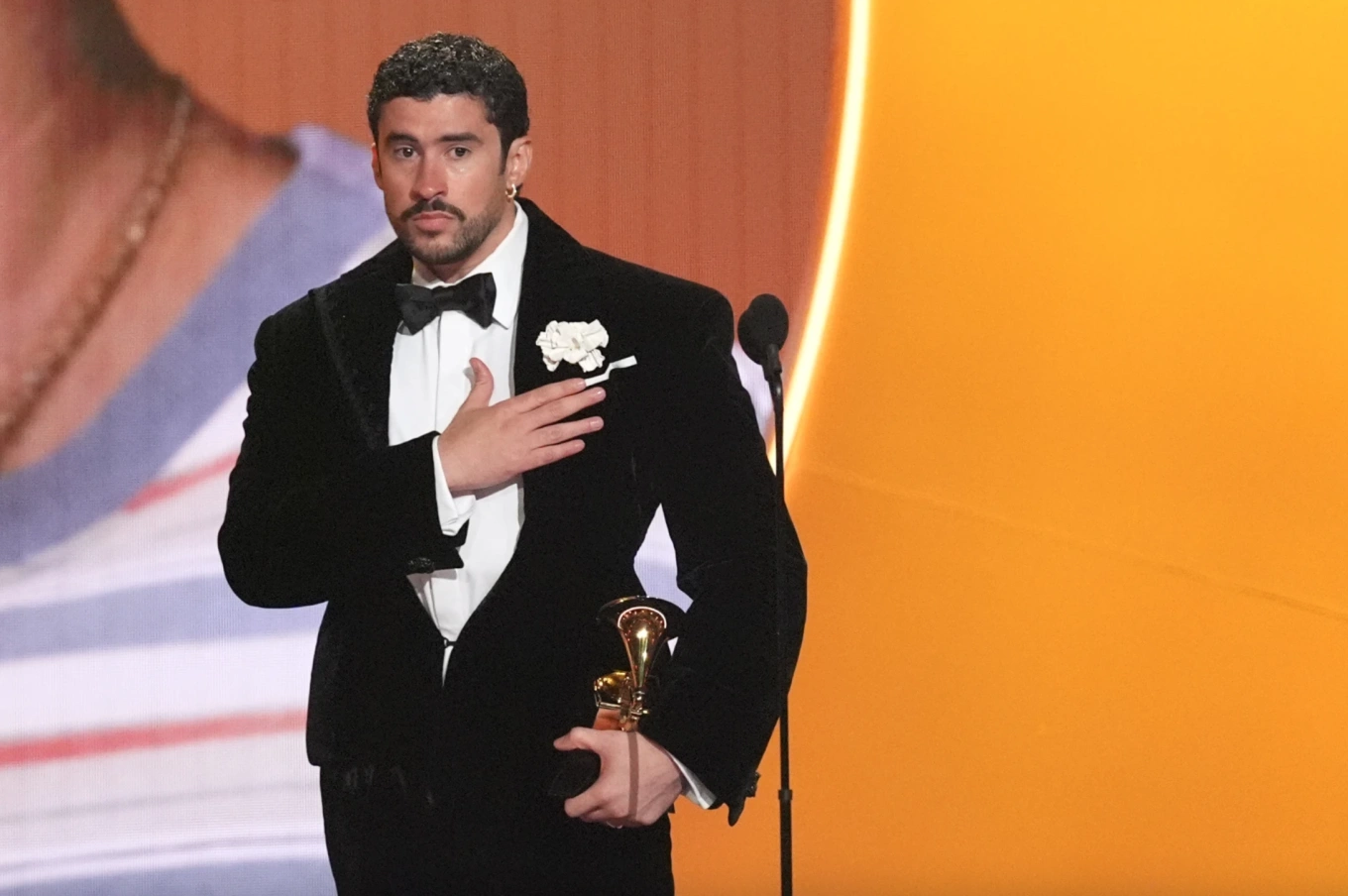
His historic presence at the Grammys—both as an artist and as a cultural force—represented more than individual success. It underscored a shifting reality in American popular culture, one in which Spanish-speaking artists no longer operate on the margins, and where political expression is not an anomaly but an expectation. That shift has unsettled institutions accustomed to defining “mainstream” culture on narrower terms, and nowhere has that discomfort been more visible than in the reaction from conservative media organizations like Turning Point USA.
In recent days, Turning Point USA has scrambled to promote an “All-American Halftime Show,” widely viewed as a reactionary counter-programming effort ahead of the Super Bowl. As of six days before the event, the organization had yet to announce a venue or a single performer—an absence that has drawn both ridicule and scrutiny. Vanity Fair reported that the event’s website remains virtually unchanged months after its launch, and that even internal spokespeople could offer little clarity beyond vague assurances that “updates” were forthcoming.
The contrast could not be starker. On one side, a globally recognized artist whose work seamlessly blends music, language, fashion, and political consciousness. On the other, an ideologically driven organization struggling to manufacture relevance in a cultural moment that no longer centers it.
Bad Bunny’s influence extends well beyond awards stages. In recent interviews, he openly acknowledged concerns about Immigration and Customs Enforcement (ICE) activity at U.S. concerts, noting that the possibility of ICE raids factored into his decision to limit performances in the United States. Such candor—particularly from an artist at the peak of commercial success—would have been nearly unthinkable a generation ago. Today, it is increasingly emblematic of a new norm: artists who see silence not as neutrality, but as abdication.
He was not alone.
The Grammys this year featured a series of unambiguous political statements from winners and presenters alike. Billie Eilish used her acceptance speech to affirm that “no one is illegal on stolen land,” punctuating her remarks with a blunt condemnation of ICE. Other artists echoed similar sentiments, framing love, solidarity, and resistance as moral imperatives rather than partisan positions. The speeches were not carefully hedged or sanitized for broader appeal. They were direct, emotional, and unapologetic.
For critics on the right, these moments were framed as evidence that “Hollywood had gone too far.” Conservative commentators described the speeches as anti-American, vulgar, or disrespectful to tradition. But such critiques often revealed more about the speaker than the speech itself. Complaints that artists like Bad Bunny do not represent “true American values” rely on an increasingly fragile definition of Americanness—one that excludes language, culture, and identity that no longer fit a shrinking mold.
The backlash has been particularly revealing in its tone. Rather than engaging substantively with the concerns raised—about immigration enforcement, state power, or civil liberties—much of the response has fixated on aesthetics: how artists dress, what language they speak, or whether their music aligns with nostalgic expectations. These objections frequently invoke grandparents, tradition, or “what America used to be,” thinly veiled appeals that mask discomfort with demographic and cultural change.
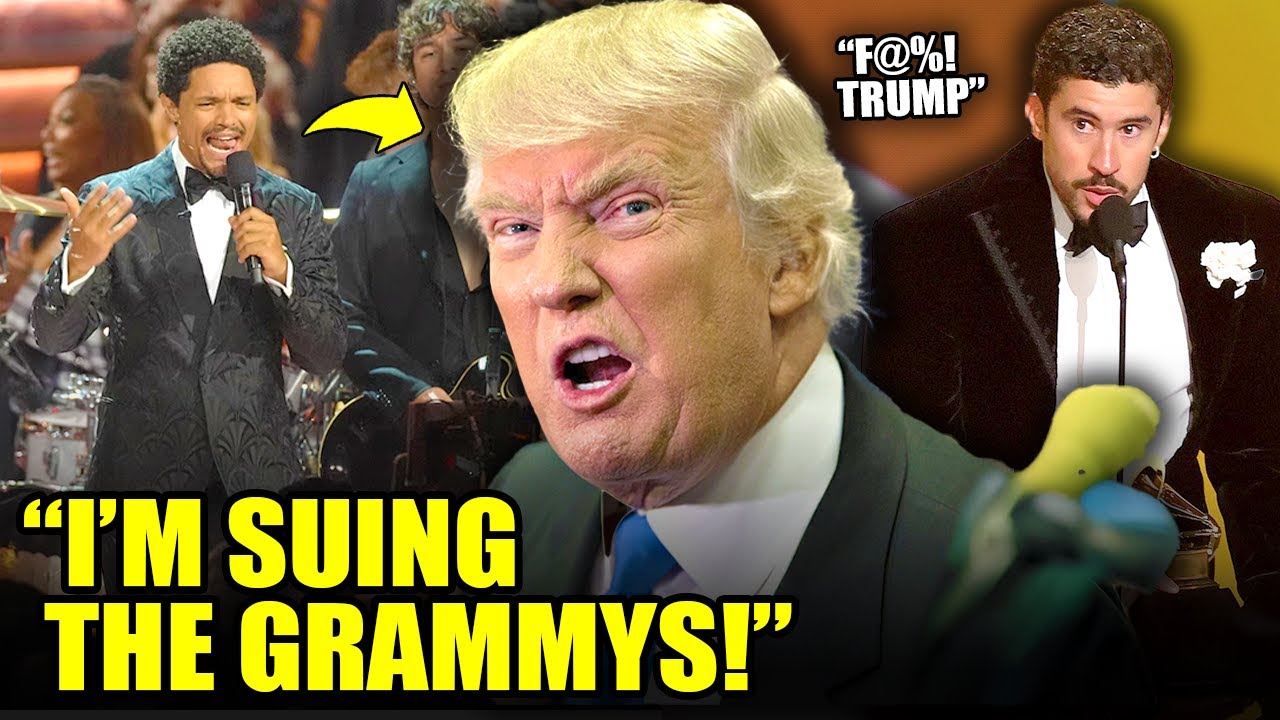
What makes this moment distinct is not merely that artists are speaking out, but that their audiences expect them to. Younger generations, raised amid climate crises, mass surveillance, and polarized politics, are less inclined to separate art from the world that produces it. Silence is increasingly interpreted as complicity. Even figures long considered apolitical have begun to respond to that pressure. Martha Stewart, for instance, recently shared a message from her granddaughter questioning the morality of staying quiet—prompting Stewart to issue a public statement of her own.
These dynamics help explain why reactionary responses like the “All-American Halftime Show” feel less like genuine cultural initiatives and more like improvised defenses. They are not born of creative vision, but of anxiety—an attempt to reassert control over a cultural narrative that is slipping away.
Bad Bunny’s success exposes that anxiety with particular force. By simply existing—by performing in Spanish, by embracing gender-fluid fashion, by speaking openly about immigration—he challenges assumptions about who belongs at the center of American culture. He does so without polemics or provocation. His offense, to some, is not what he says, but what he represents.
And representation, once dismissed as symbolic, has proven materially powerful.
In this sense, Bad Bunny’s greatest accomplishment may not be his Grammys or his chart dominance, but his ability to compel reaction. Entire organizations have been forced to spend time, money, and energy attempting to counter his influence. That asymmetry is telling. Cultural power no longer flows exclusively from institutions downward. It radiates outward—from artists, communities, and audiences who recognize themselves in the work.
As the Super Bowl approaches, the contrast will only sharpen. Whatever form the “All-American Halftime Show” ultimately takes, it will be judged not on its patriotism but on its relevance. And relevance, in 2026 America, is inseparable from diversity, dissent, and discomfort.
The Grammys made that clear. The question now is whether the rest of the country is ready to accept what the music already knows: that America’s culture is not being destroyed—it is being redefined, in real time, by voices that refuse to ask permission.