By XAMXAM
WASHINGTON — What Republican lawmakers appeared to envision as a confrontational reckoning instead unfolded as a striking demonstration of institutional resolve.

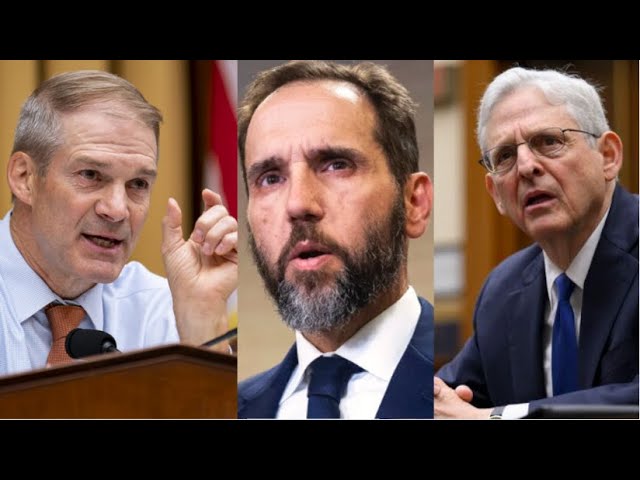
In a heated congressional hearing on Tuesday, Jack Smith, the special counsel overseeing investigations related to Donald Trump, forcefully rejected accusations that his work was politically motivated and warned lawmakers against what he described as efforts to intimidate prosecutors out of enforcing the law.
“No prosecutor in the United States should be intimidated out of doing their job,” Mr. Smith said, according to people present in the hearing room, responding to a barrage of criticism from Republican members aligned with Mr. Trump. The remark, delivered evenly but with unmistakable firmness, marked a turning point in a session that had quickly grown tense.
A Hearing That Went Off Script
The hearing, convened by a Republican-led committee, was billed as an examination of what lawmakers called the “weaponization” of the Justice Department. Several members accused Mr. Smith of pursuing Mr. Trump for political reasons and suggested that the investigations were designed to influence electoral outcomes.
Instead, Mr. Smith repeatedly returned to a narrow theme: that his office operates under the same legal standards applied to all federal prosecutions — evidence, sworn testimony and established law — and not under political direction.
Witnesses said the contrast in tone was sharp. Lawmakers raised their voices, interrupted answers and framed questions around allegations of bias. Mr. Smith, by comparison, spoke deliberately, declining to engage in personal exchanges and emphasizing the independence of prosecutors from political pressure.
At one point, he described the environment surrounding the investigations as increasingly hostile, noting that he and members of his staff have faced sustained personal attacks and public vilification. Such campaigns, he warned, are not merely directed at individuals but risk undermining the rule of law itself.
Pressure and Its Limits
While Mr. Smith did not elaborate on specific threats, current and former Justice Department officials have said that prosecutors working on high-profile cases involving Mr. Trump have operated under extraordinary scrutiny and security concerns. The former president has frequently criticized Mr. Smith by name in public statements and on social media, portraying him as politically driven and illegitimate.
Republican lawmakers echoed that rhetoric during the hearing, arguing that the investigations reflect a double standard in American justice. Some suggested that federal law enforcement agencies had improperly targeted Mr. Trump while ignoring alleged misconduct by Democrats.
Mr. Smith did not address individual accusations in detail. Instead, he emphasized that accountability under the law “does not turn on political affiliation or public office,” according to a transcript reviewed by aides familiar with the proceedings.
That response appeared to frustrate several members of the committee, who pressed him repeatedly to concede bias or wrongdoing. As interruptions mounted, committee leaders struggled to maintain order.
A Broader Political Clash
The confrontation illustrated the widening gulf between legal process and political narrative in Washington. For Republicans aligned with Mr. Trump, the hearing was an opportunity to reinforce claims that the justice system has been politicized against conservatives. For Democrats and legal observers, it underscored the pressure facing prosecutors tasked with investigating a former president who remains a dominant political figure.
“This was less about uncovering new facts and more about competing visions of the rule of law,” said one former federal prosecutor who monitored the hearing. “Smith’s message was essentially that prosecutors cannot choose their cases based on politics, even when the political consequences are enormous.”
No new evidence was introduced during the session, and Mr. Smith declined to discuss details of ongoing investigations, citing long-standing Justice Department policy. That restraint drew criticism from Republicans, who accused him of evading oversight, but it is consistent with the department’s approach to active cases.
Fallout Beyond the Room
Within hours of the hearing’s conclusion, reactions diverged sharply along partisan lines. Conservative commentators described the session as proof of entrenched bias within the Justice Department. Liberal commentators, by contrast, framed Mr. Smith’s testimony as a rare public defense of prosecutorial independence.
The exchange comes at a moment of heightened political sensitivity. Mr. Trump remains a central figure in the 2026 political landscape, and the investigations overseen by Mr. Smith continue to shape debate about accountability, executive power and the limits of political immunity.
Legal scholars note that while congressional oversight of the executive branch is constitutionally grounded, attempts to discredit or intimidate prosecutors carry long-term risks.
“Once lawmakers cross from oversight into coercion, they weaken the very institutions they claim to defend,” said a constitutional law professor at a major university. “That tension was on full display.”
An Unquiet Road Ahead
If the hearing was intended to place Mr. Smith on the defensive, it may have accomplished the opposite. By the session’s end, the image that lingered was not of a prosecutor retreating under pressure, but of a Justice Department official drawing a firm boundary between politics and law enforcement.
The investigations themselves will continue largely outside public view, governed by courts rather than committees. But the political fight surrounding them shows no sign of abating.
As one senior aide to a Democratic lawmaker put it, “This wasn’t the end of the story. It was a preview of how loud, how polarized and how consequential the next phase is going to be.”
For now, the clash served as a reminder that the struggle over accountability in the Trump era is no longer confined to court filings and sealed motions. It is unfolding, increasingly, in public — where law and politics collide, and where neither side appears inclined to step back quietly.