The Supreme Court on Monday delivered a 6–3 decision striking down former President Donald Trump’s attempt to invoke emergency powers to impose sweeping tariffs. Writing for the majority, Chief Justice John Roberts framed the case as a straightforward question of statutory authority, concluding that the law cited by the administration did not authorize the tariffs. The ruling marks a significant setback for an initiative that had become central to Mr. Trump’s economic platform.

At issue was the International Emergency Economic Powers Act, a statute that grants the president certain authorities after declaring a national emergency. Mr. Trump argued that persistent problems such as drug importation justified emergency findings. The majority disagreed that the statute’s language — allowing the executive to “regulate” or “prohibit” specific economic transactions — could be stretched to encompass broad-based tariffs, which the court viewed as a core exercise of Congress’s taxing power.

Yet the legal simplicity of the outcome belied the depth of disagreement within the court. Justice Neil Gorsuch devoted dozens of pages to defending the so-called “major questions doctrine,” arguing that significant assertions of executive power require a clear statement from Congress. Justice Elena Kagan countered that traditional tools of statutory interpretation sufficed, while Justice Brett Kavanaugh authored the principal dissent.
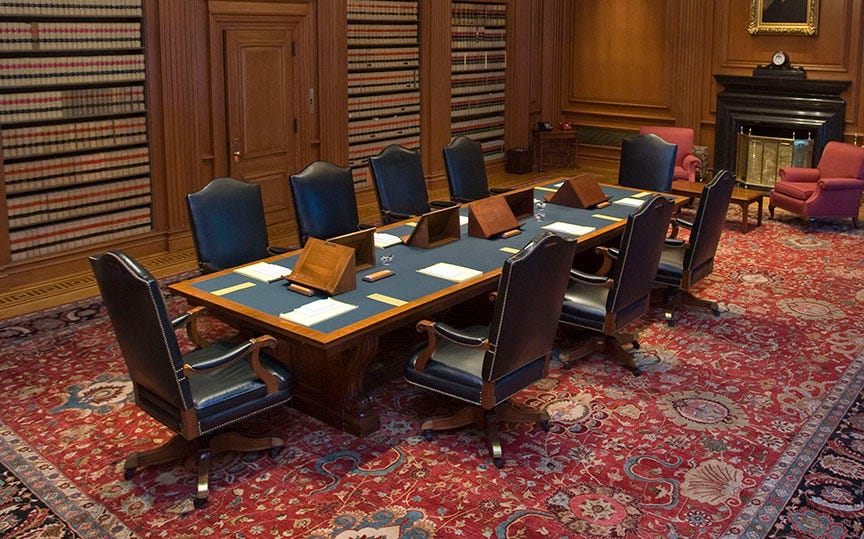
The major questions doctrine, articulated in recent years, instructs courts to demand explicit congressional authorization for executive actions of vast economic and political significance. Critics have described it as a judicial innovation that constrains administrative agencies; supporters contend it preserves the constitutional separation of powers. In this case, a majority appeared to agree that even without invoking the doctrine formally, Congress had not clearly authorized tariffs under the emergency statute.


Justice Amy Coney Barrett wrote separately to emphasize that ordinary interpretive principles led to the same result. Justice Clarence Thomas joined the dissent, which maintained that the statute’s language was broad enough to sustain the administration’s approach. The competing opinions exposed a philosophical divide about how far courts should go in policing expansive readings of federal law.


Practically, however, the ruling may not end the broader policy fight. During the litigation, the administration signaled it was exploring alternative statutory pathways to maintain tariffs. Businesses that adjusted supply chains in response to the levies now face renewed uncertainty. Economists note that the burden of tariffs typically falls on domestic importers and consumers, complicating efforts to unwind contracts, pricing arrangements and customs procedures already in motion.


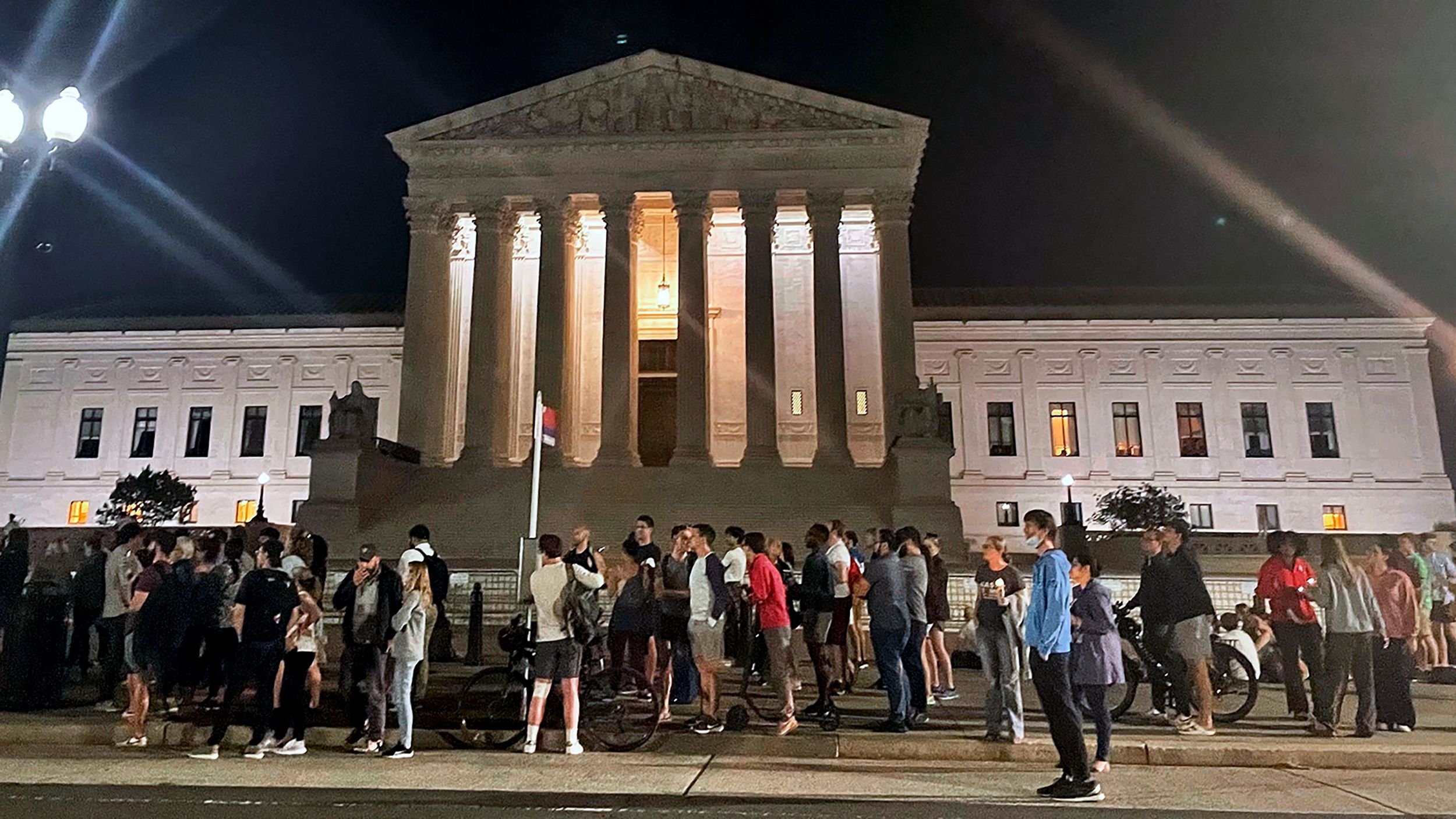
The court remanded the case to a lower tribunal to address remedies, leaving open difficult questions about refunds and enforcement. Lawyers for affected companies are preparing for additional proceedings, while administration officials weigh their next steps. Politically, the decision is likely to be framed as a rebuke to Mr. Trump, though the fractured reasoning underscores that the justices were far from unified in their analysis.


For now, the headline is clear: the tariffs imposed under emergency authority cannot stand. But the deeper story concerns the Supreme Court’s ongoing debate over how to interpret congressional silence and the limits of presidential power. As lower courts grapple with implementation and policymakers consider alternative routes, the ruling may prove less an endpoint than a new chapter in the continuing struggle over economic authority in Washington.