Canada’s Quiet Reset With China Signals a New Model for Middle-Power Power
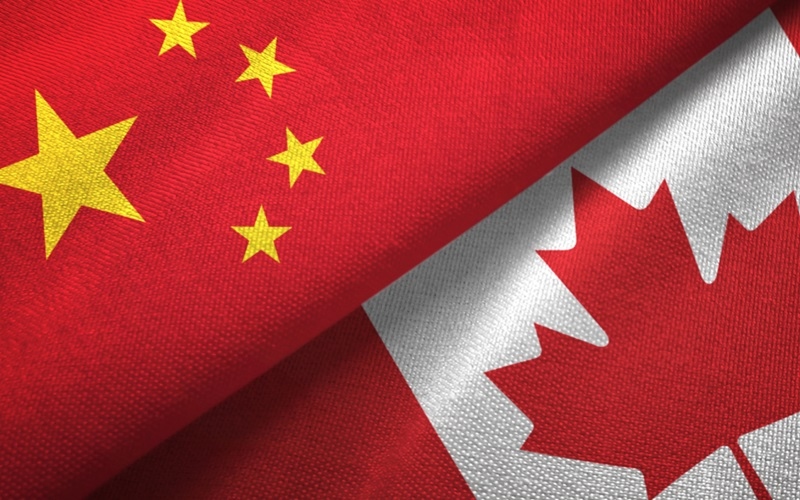
For nearly a decade, Canada’s relationship with China existed in a diplomatic deep freeze. Trade flows narrowed, political trust eroded, and dialogue became ritual rather than substantive. In Washington, the assumption hardened that Ottawa had little room to maneuver: too economically entwined with the United States to chart an independent course, too cautious to challenge the gravitational pull of American policy toward Beijing.
Then, in January 2026, Canada arrived in Beijing and proved those assumptions wrong.
What emerged from the meetings was not a dramatic breakthrough headline or a single sweeping agreement. Instead, it was something far more consequential: evidence that Canada had quietly reset its global posture, demonstrating that a middle power could pursue strategic autonomy without rupturing alliances or provoking confrontation. In a world increasingly defined by superpower rivalry, the message resonated far beyond Ottawa and Beijing.
The visit itself was telling. Rather than a symbolic delegation, Canada deployed a coordinated ministerial team spanning energy, foreign affairs, industry, and agriculture. Diplomacy, in this case, was not theater. It was architecture. By the time the first formal meetings began, much of the groundwork had already been laid through months of working-level engagement that avoided the glare of public diplomacy and social media outrage.
American analysts had largely dismissed the possibility of progress. Commentators on cable news and prominent voices on platforms like X framed Canada’s China policy as constrained, even paralyzed, by its alignment with Washington. Beijing, for its part, had grown accustomed to viewing Canada as a secondary actor, one whose decisions ultimately reflected American priorities.
That perception shifted quickly.
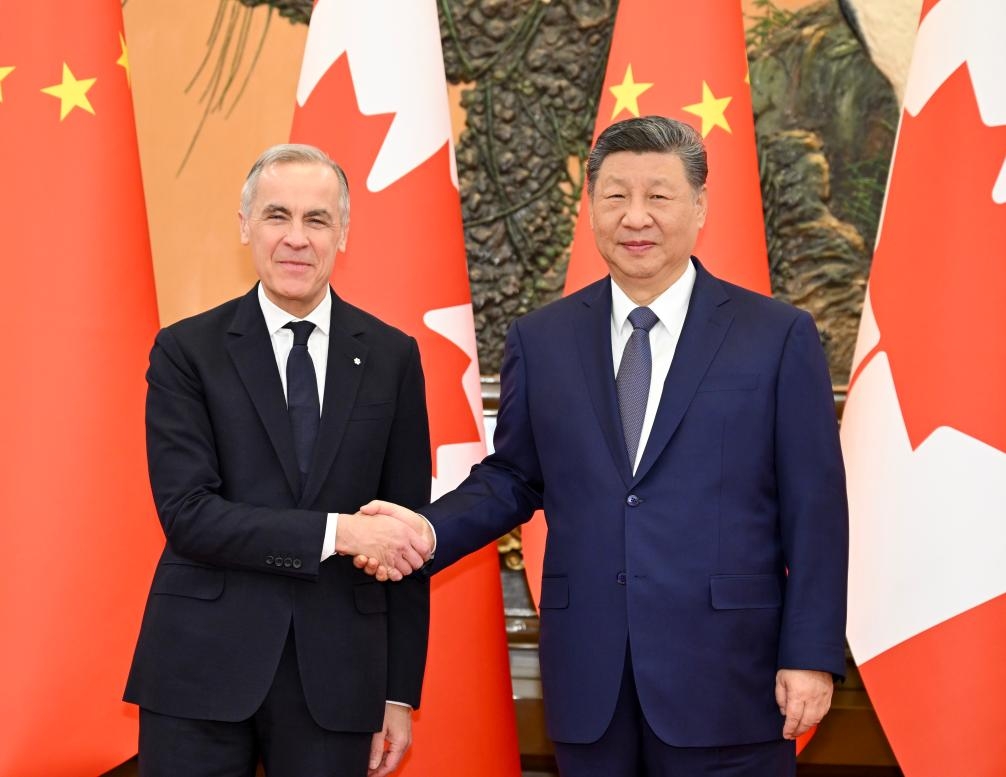
Within 24 hours, Canada and China announced a non-binding framework on energy cooperation, resumed ministerial-level talks suspended for years, and established an economic and trade cooperation roadmap that went well beyond vague diplomatic language. Senior Chinese officials publicly signaled an interest in rebuilding trust and removing long-standing obstacles to cooperation — statements that, in China’s political system, carry weight precisely because they are not made lightly.
Energy cooperation attracted much of the immediate attention, but it was agriculture that revealed the deeper strategy. China’s retaliatory tariffs on Canadian agricultural exports, imposed after Ottawa aligned with U.S. tariffs on Chinese electric vehicles, steel, and aluminum, had become a symbol of the broader freeze. Rather than escalating publicly or demanding instant concessions, Canadian negotiators approached the issue with deliberate patience. Talks were framed as “continuing” and “productive,” signaling momentum without overpromising results.
This restraint contrasted sharply with the confrontational style that has come to dominate great-power trade disputes. As analysts at Bloomberg and Politico have noted in recent commentary, China has grown increasingly sensitive to public pressure campaigns, often responding by hardening positions rather than softening them. Canada’s approach suggested an understanding of that dynamic — and a willingness to absorb short-term pain in pursuit of long-term leverage.
Energy, meanwhile, was never just about commodities. For Beijing, diversification of supply has become a strategic imperative, particularly as American energy exports are increasingly entangled with geopolitical signaling. Canada offers a different proposition: political stability, predictable regulation, and a reputation for honoring long-term contracts. Those qualities, often overlooked in headline-driven analysis, carry premium value in an era of volatile supply chains.
Equally significant was the focus on clean energy and critical minerals. Canada’s nuclear expertise, renewable capacity, and resource base align closely with China’s energy transition goals. Meetings with major Chinese battery and clean-technology firms were not ceremonial gestures; they were exploratory conversations about positioning Canada within future global supply chains rather than leaving it on the margins.
Taken together, these elements point to a shift that goes beyond trade diversification. What Canada demonstrated in Beijing was a form of geopolitical autonomy that many observers had assumed was no longer possible for middle powers. Rather than choosing between alignment and isolation, Ottawa carved out space to act in its own national interest while maintaining core alliances.
The timeline matters. In late 2024, Canada matched U.S. tariffs on Chinese electric vehicles, steel, and aluminum, a move widely interpreted as confirmation that Ottawa would remain firmly within Washington’s policy orbit. When China responded with agricultural tariffs, critics declared the bilateral relationship effectively dead. Yet behind the scenes, technical discussions continued. Energy frameworks were drafted. Trust, fragile but persistent, was rebuilt incrementally.
By early 2025, following a change in leadership, trade diversification ceased to be a slogan and became a governing strategy. Outreach resumed quietly, without press releases or podium rhetoric. By the time the Beijing visit was announced, the architecture was already in place — explaining why tangible outcomes materialized so quickly.
Perhaps the most important result of the talks was not any single agreement but a change in perception. For years, Beijing engaged Canada cautiously, assuming that meaningful decisions would ultimately be filtered through Washington. In January 2026, that assumption cracked. Canada presented itself as an independent, competent actor — not antagonistic, not deferential, but credible.
Perception, in diplomacy, is power. Once a country is seen as capable of acting autonomously, negotiations shift from transactional exchanges to long-term planning. Chinese firms begin to view Canada not as a political risk but as a stable gateway to North American and global markets. European and Asian partners, watching closely, reassess their own assumptions about what middle powers can achieve in a fractured global order.
Even Washington must recalibrate. As analysts on American policy podcasts and think-tank forums have observed, leverage functions differently when allies have options. Canada did not abandon its relationship with the United States. It expanded its strategic room to maneuver.
The broader implications are difficult to ignore. In recent years, global influence has often been equated with volume — the loudest voice, the largest economy, the most aggressive posture. Canada’s experience suggests a different model: influence built on patience, predictability, and professional statecraft. It is a model that may appeal to other midsized countries seeking to avoid becoming collateral damage in superpower rivalries.
What happened in Beijing was not a spectacle. There were no dramatic ultimatums, no viral sound bites, no declarations of victory. That restraint was precisely the point. By moving quietly and deliberately, Canada demonstrated that strategic autonomy remains achievable — and that credibility, once earned, can generate leverage no tariff ever could.
The question now is not whether the approach works. Beijing has already answered that. The more consequential question is how far Canada — and others watching closely — are willing to take this model as the old assumptions of global power continue to strain under their own weight.