Canada’s Beijing Pivot Signals a Strategic Recalculation Amid Strains With Washington
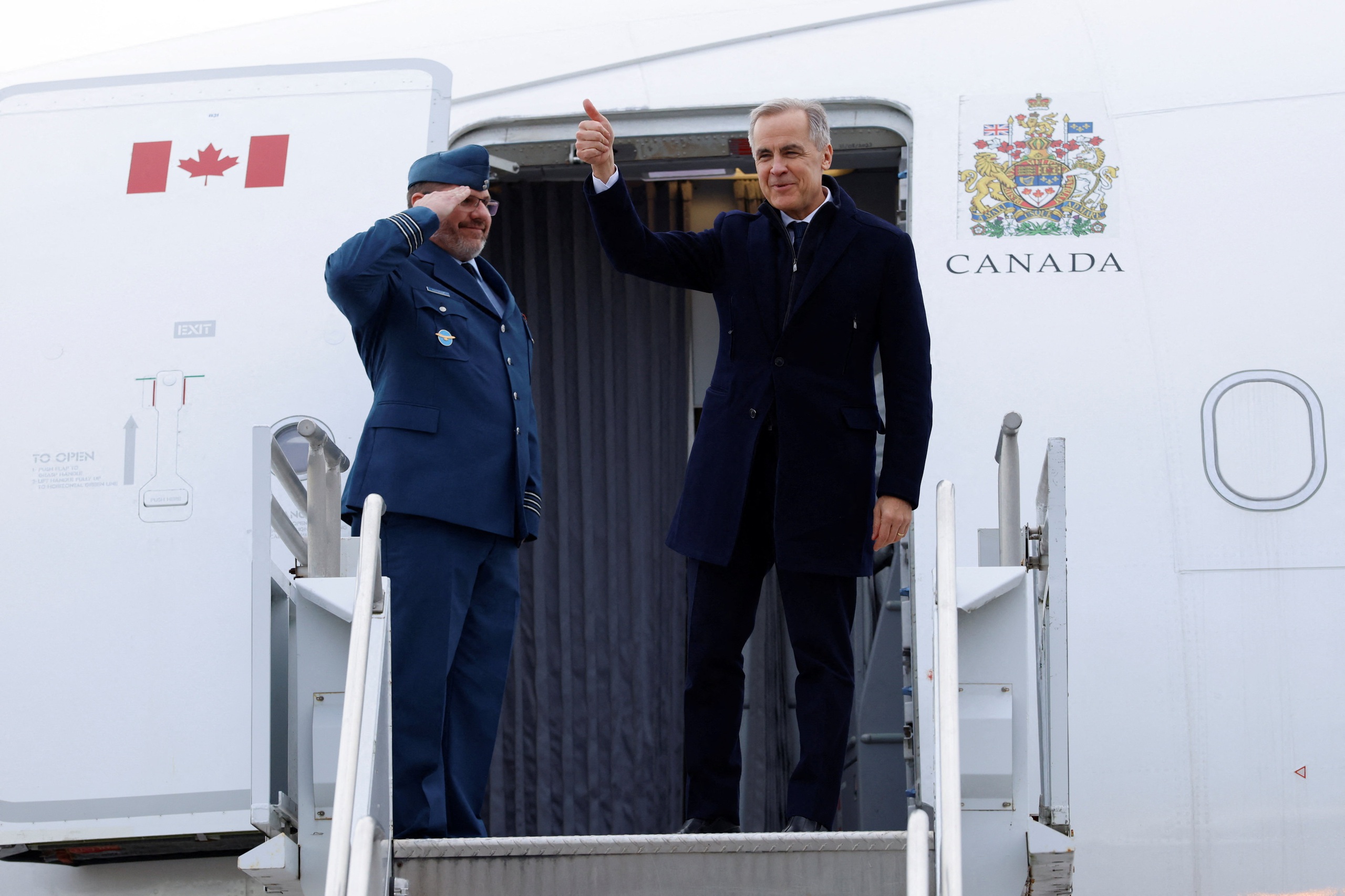
Beijing — When Prime Minister Mark Carney stepped onto a red carpet at Beijing Capital International Airport on the evening of Jan. 14, greeted by flowers, television cameras and a carefully staged ceremony, the message was unmistakable. China was not merely welcoming a visiting official. It was signaling that Canada, after years of strained relations, was once again being treated as a sovereign partner of consequence.
The visit, the first by a Canadian prime minister to China in eight years, unfolded with a level of pomp typically reserved for governments Beijing is eager to court. Chinese state television broadcast the arrival live. A young girl presented flowers. Senior officials lined up for a formal greeting. Within hours, the imagery was circulating widely across Chinese and Western social media platforms, amplified by commentators on X, YouTube and TikTok who framed the moment as a striking contrast to Canada’s increasingly tense relationship with the United States.
On Thursday morning, inside the Great Hall of the People, Mr. Carney met Premier Li Qiang, China’s second most powerful leader after President Xi Jinping. Cameras were allowed in for opening remarks, a privilege not extended to all foreign visitors. Mr. Li described the visit as a “turning point” and “a new starting point” for bilateral relations, language that Chinese diplomats reserve for moments of strategic reset rather than routine diplomacy.
Mr. Carney, in turn, praised Mr. Xi’s leadership repeatedly, saying he was “heartened” by both the direction of China’s governance and the speed with which relations had improved in recent months. He spoke of laying the foundation for a “new strategic partnership,” invoking cooperation across energy, agriculture, security, people-to-people exchanges and multilateral institutions.
The choreography mattered. In Beijing’s political culture, symbolism is substance. The sequence of meetings — with the premier on Thursday, followed by senior legislators and then a scheduled audience with President Xi on Friday — was designed to convey unity at the top of the Chinese system and seriousness about the relationship.
The substance matched the theater. Ministers from both countries signed a series of memorandums of understanding covering energy cooperation, combating transnational crime, food safety, plant and animal health, wood construction and cultural exchanges. The energy agreement stood out. It explicitly recognized Canada as an “important potential partner” in the global supply of oil, liquefied natural gas and liquefied petroleum gas, and established a ministerial-level dialogue to meet regularly over the next five years.

In practical terms, the deal reflects how dramatically Canada’s energy calculus has shifted. For decades, nearly all Canadian oil and gas flowed south to the United States. But the completion of the Trans Mountain pipeline expansion in 2024 gave Canada direct access to Pacific markets. Since then, crude shipments to Asia — particularly China — have risen steadily. Chinese buyers began taking deliveries of Canadian LNG in 2025, and officials on both sides now speak openly about long-term contracts and expanded volumes.
Energy Minister Tim Hodgson underscored the geopolitical undertones when he told reporters that China was looking for “reliable trading partners that do not use energy for coercion,” a remark widely interpreted online as a pointed reference to Russia’s tactics in Europe and to Washington’s willingness to weaponize trade under President Trump.
The broader context loomed over every handshake. President Trump has imposed sweeping tariffs on Canadian goods, threatened further duties on steel, aluminum and lumber, and repeatedly suggested that Canada should become America’s “51st state.” Those comments, often dismissed in Washington as bluster, have resonated deeply north of the border. Canadian political influencers and former diplomats, writing on platforms like Substack and appearing on U.S. podcasts, have framed Beijing as an unexpected beneficiary of Washington’s confrontational turn.
China’s own state-linked outlets have been unusually blunt. The Global Times argued that Ottawa had been “awakened” to its strategic autonomy by the costs of aligning too closely with U.S. trade policy, while China Daily warned that Canada would squander this reset if it again subordinated its China policy to Washington’s wishes. These messages were quickly translated, clipped and shared across American social media, where analysts debated whether Canada was genuinely rebalancing or simply hedging.
Beyond energy, the agreements signaled a comprehensive thaw. A new framework on food safety and animal health aims to resolve longstanding trade irritants, including China’s suspension of Canadian pet food exports during avian flu outbreaks. Cooperation on wood construction would promote Canadian lumber and green building techniques in Chinese cities. A law-enforcement accord commits the Royal Canadian Mounted Police and China’s Ministry of Public Security to information-sharing on cybercrime, money laundering and terrorism.
Mr. Carney also courted Chinese business leaders, meeting executives from Alibaba, China National Petroleum Corporation, major state banks and battery giant Contemporary Amperex Technology. Canada’s industry minister, Mélanie Joly, said the goal was not just trade but investment — Chinese capital building facilities in Canada, subject to security reviews. That stance marks a notable shift from years of Canadian skepticism toward Chinese investment.
For Beijing, the appeal is clear. China remains heavily dependent on imported energy and is eager to diversify suppliers away from politically volatile regions. Canadian oil and gas offer stability, lower carbon intensity than many competitors and the credibility of a rules-based system. For Ottawa, the attraction is equally evident: access to the world’s second-largest economy at a moment when its largest trading partner has become unpredictable.
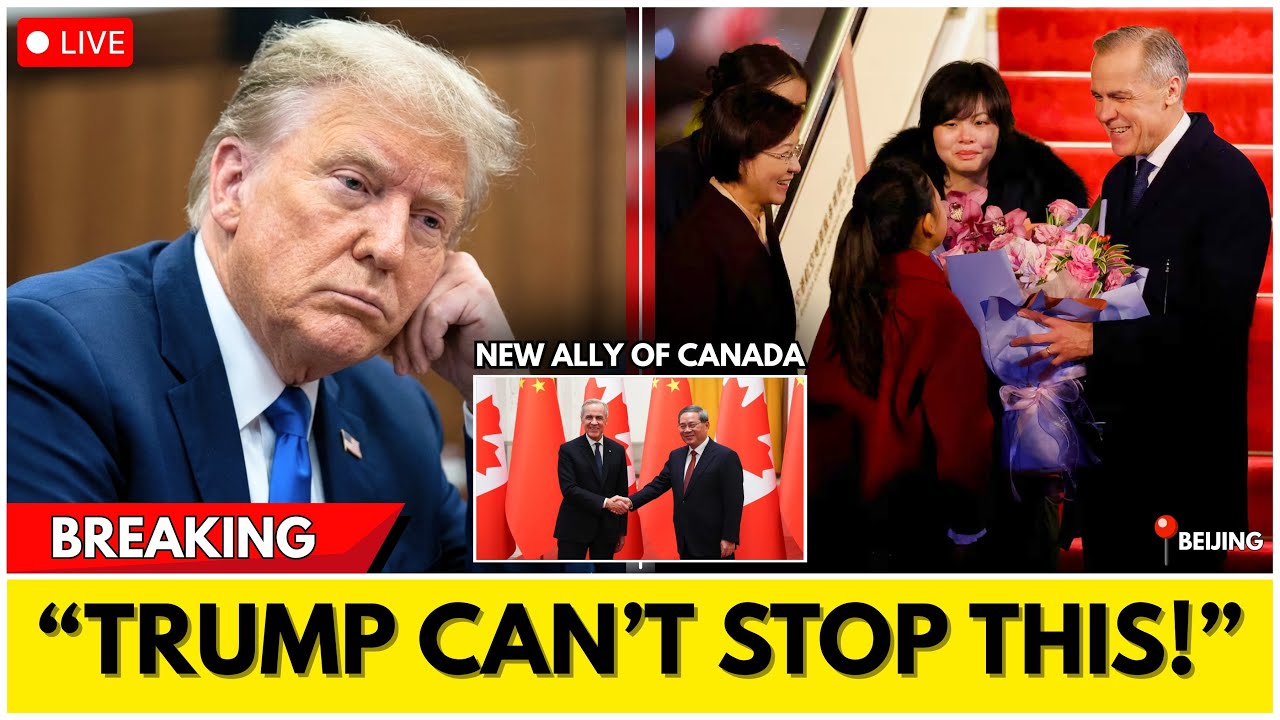
Critics warn of risks. Human rights groups and some security experts argue that deeper engagement could expose Canada to political pressure or intellectual property theft. On U.S. social media, commentators aligned with the Trump administration accused Mr. Carney of “drifting toward Beijing.” Canadian officials counter that engagement does not mean alignment and that diversification is a matter of economic resilience, not ideology.
The visit’s climax came with the anticipated meeting between Mr. Carney and President Xi, intended to set the tone for years to come. In Chinese diplomatic practice, such an encounter is not granted lightly. It signaled that Beijing sees Canada not as an adjunct of U.S. policy but as an independent actor worth cultivating.
Whether this recalibration endures will depend on follow-through: on contracts signed, disputes resolved and the delicate balance Canada seeks to maintain between two rival superpowers. But for now, the imagery from Beijing — the red carpets, the strategic language, the deliberate contrast with Washington’s threats — has already reshaped the conversation.
As one widely shared post by a former U.S. trade official put it, “When allies are treated like vassals, they start looking for options.” In Beijing this week, China made clear it was ready to be one of Canada’s.