False Claims About Courtroom Drama Involving the Attorney General Highlight the Growing Misinformation Crisis
In recent weeks, a sensational narrative has circulated widely on social media and video platforms claiming that Attorney General Pam Bondi admitted to unlawful conduct during a dramatic court hearing related to the aftermath of January 6, prompting former President Donald Trump to angrily exit proceedings. Despite its rapid spread and emotionally charged framing, the story is entirely fictional—underscoring the increasing challenge of misinformation in the digital age.
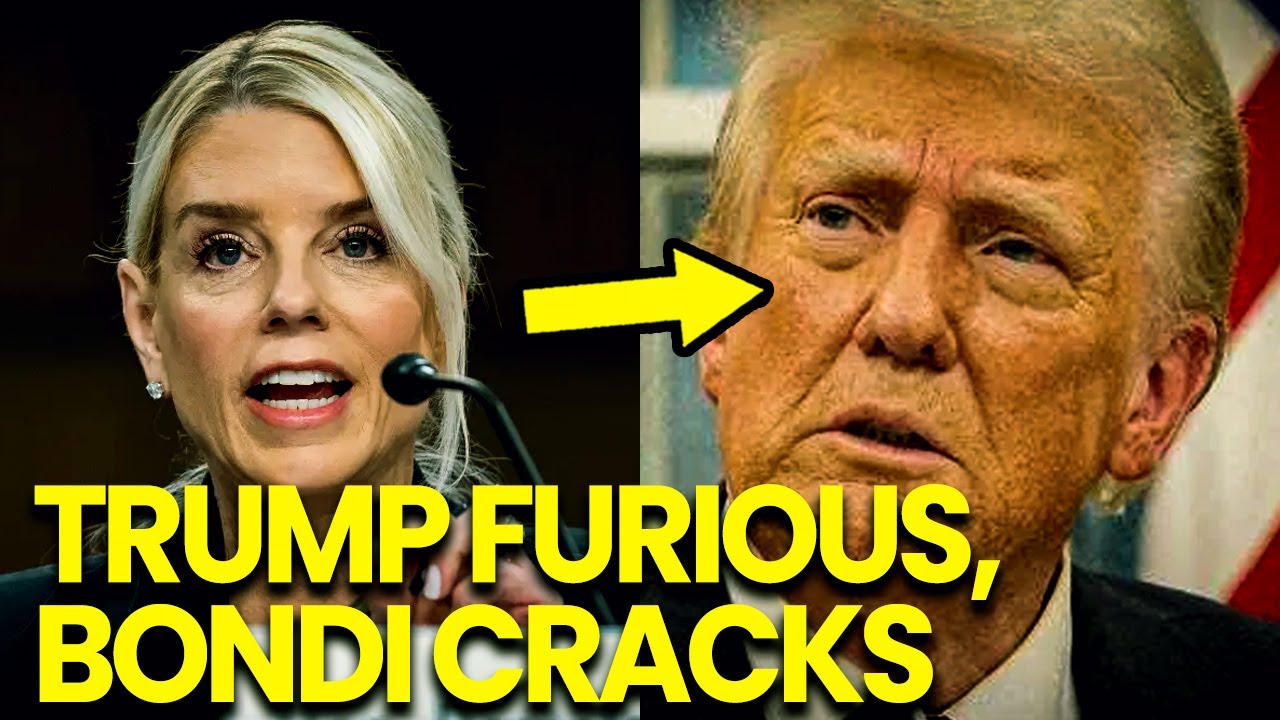
According to verified court records and reporting from established news organizations, no such hearing took place. There was no contempt proceeding held on January 6, 2026; Bondi did not testify in federal court; and no judicial finding of unlawful conduct was issued against her or the Department of Justice. The events described exist only within a fabricated narrative, not in the U.S. legal system.
Legal experts note that the story’s premise alone strains credibility. The attorney general, as the nation’s chief law enforcement officer, does not personally testify in district court proceedings regarding departmental compliance with judicial orders. Such matters are typically handled by career Justice Department attorneys through written filings, motions, and structured hearings. Any allegation that the attorney general admitted under oath to defying court orders would represent one of the most consequential legal scandals in modern American history—and would dominate coverage across every major global news outlet.

Instead, the claims have appeared exclusively on fringe media channels, often accompanied by dramatic language and cinematic descriptions more reminiscent of television courtroom dramas than real judicial proceedings. This pattern is familiar to misinformation researchers: real public figures are placed into fictional scenarios that borrow legal terminology and symbolic dates to create an illusion of authenticity.
The repeated use of January 6—a date deeply embedded in the American political consciousness—is particularly notable. Court schedules, legal scholars emphasize, are determined by procedural rules and case management needs, not symbolic resonance. The recurring appearance of that date across multiple unrelated viral claims is a common red flag for coordinated fabrication rather than legitimate reporting.
While the narrative is false, it is not without a kernel of truth. Pam Bondi is a confirmed attorney general. Federal judges, including those referenced in the story, do preside over cases involving Trump administration policies. And legal challenges to executive actions are routine in American governance. What is misleading is the transformation of these ordinary institutional facts into a sweeping, dramatized account of courtroom confessions and immediate punishment—events that simply did not occur.
The spread of such stories poses a broader concern beyond any single political figure. False claims involving the justice system risk eroding public confidence in the rule of law. When citizens are led to believe, incorrectly, that senior officials openly defy courts without consequence, trust in democratic institutions weakens, making it harder to distinguish genuine accountability from invented scandal.
As misinformation grows more sophisticated, media literacy becomes increasingly essential. Experts advise readers to apply a simple test: if a story describes an extraordinary legal event, verify whether it is being reported by multiple credible outlets and supported by public court records. In an era when fictional narratives can travel faster than facts, skepticism and verification remain the most reliable defenses.
The responsibility to protect the integrity of public discourse does not rest solely with institutions or platforms. It also lies with audiences, who must learn to distinguish between factual reporting and emotionally compelling fiction—especially when the stakes involve trust in the justice system itself.