Markets Jolt as Trump’s Greenland Tariffs Revive Fears of a Global Trade War

Wall Street opened sharply lower on Tuesday, rattled by renewed fears that President Donald Trump’s escalating confrontation with Europe over Greenland could tip the global economy into a destabilizing trade conflict. The Dow Jones Industrial Average fell more than 600 points in early trading, its steepest one-day drop in months, as investors reacted to the administration’s threat to impose sweeping tariffs on European allies who oppose U.S. claims over the Arctic territory.
The sell-off marked the first full trading session since markets reopened following the Martin Luther King Jr. Day holiday—and the first opportunity for investors to digest the president’s weekend announcement that his administration would levy 10 percent tariffs beginning February 1 on imports from eight NATO countries that have publicly backed Denmark’s sovereignty over Greenland.
While U.S. stock markets later trimmed some losses, the initial plunge underscored growing anxiety that Mr. Trump’s aggressive use of tariffs—now tied not only to trade imbalances but to geopolitical disputes—could have broader consequences for global growth, inflation, and America’s standing with its allies.
“This is classic Trump escalation,” said Joe Ciolli, executive editor at Business Insider and author of the First Trade markets newsletter, in a television interview Tuesday morning. “He comes out with the most extreme position possible, watches how markets and foreign governments react, and then decides how far he can push.”
A Familiar Playbook, Higher Stakes
During Mr. Trump’s first term, markets often learned to discount his toughest tariff threats, betting that negotiations or last-minute reversals would blunt the economic impact. Inflation from earlier tariffs, including those imposed on China and European steel and aluminum, proved less severe than many economists initially feared.
But analysts say the current episode differs in two crucial ways: the scope of the geopolitical conflict and the vulnerability of global markets after years of post-pandemic strain.
This time, the tariffs are explicitly tied to a foreign policy dispute—Mr. Trump’s insistence that the United States has a strategic right to control Greenland, a semi-autonomous Danish territory rich in rare earth minerals and critical Arctic shipping routes. The president has repeatedly linked the issue to grievances over NATO spending, European trade practices, and even his frustration at not receiving the Nobel Peace Prize.
“That rhetoric matters,” said one senior European diplomat, speaking on condition of anonymity. “When tariffs are framed as punishment for political disagreement rather than economic policy, it fundamentally changes how allies respond.”
Warning Signs Beyond Stocks

While the stock market drop drew headlines, economists noted that deeper warning signals were flashing elsewhere. Gold prices surged to new record highs, a classic sign of investor anxiety, as capital flowed toward perceived safe havens. At the same time, yields on U.S. Treasury bonds rose, suggesting that some investors were selling American government debt rather than buying it for safety.
That trend has raised particular concern in Washington and European capitals alike. Europe collectively holds roughly $3 trillion in U.S. Treasury securities, giving it significant leverage should trade tensions escalate further.
“If Europe were to retaliate not just with tariffs, but by reducing its holdings of U.S. debt, the consequences could be severe,” said Ron Insana, a veteran financial analyst. “You’re talking about higher borrowing costs, a weaker dollar, and downward pressure on U.S. equities.”
European officials have so far avoided such measures, but discussions in Brussels have increasingly centered on what some diplomats privately describe as “the nuclear options” of economic retaliation, should U.S. sanctions broaden or deepen.
Political Fallout at Home
The economic turbulence arrives as Mr. Trump marks the first year of his second term in office—an anniversary that has sharpened political scrutiny of his economic record. While unemployment remains historically low, prices for groceries, housing, and energy have continued to rise, leaving many voters skeptical that the promised economic gains of his presidency have reached their daily lives.
Polling released this week suggests that skepticism may soon translate into political consequences. According to CNN’s latest survey, Democrats hold a five-point lead on the generic congressional ballot ahead of November’s midterm elections—virtually identical to their advantage at the same point in 2018, when they went on to win control of the House.
Perhaps more striking is the enthusiasm gap. Among voters who describe themselves as “extremely motivated” to vote, Democrats lead Republicans by 16 points, a margin that analysts say could prove decisive in lower-turnout midterm contests.
“Voters don’t necessarily want chaos, even if they like disruption in theory,” said Harry Enten, CNN’s chief data analyst. “There’s a growing sense that there are no guardrails left—and that tends to mobilize the opposition.”
Republicans, Resistance, and Restraint
So far, congressional Republicans have offered little public resistance to the president’s trade and foreign policy moves. Speaker Mike Johnson and Senate Majority Leader John Thune have declined to challenge Mr. Trump’s authority on tariffs, despite the Constitution granting Congress primary power over trade.
Critics argue that this silence carries risks for the party. Independent voters, several polls suggest, increasingly favor a check on presidential power—even among those who approve of Mr. Trump personally.
“There’s a difference between supporting a president and giving him a blank check,” said one Republican strategist who requested anonymity. “Voters can sense when institutions stop doing their job.”
A World Adjusting to a New Reality
Perhaps the most lasting impact of the current crisis lies not in short-term market swings but in how America’s allies interpret U.S. intentions. European leaders who once viewed Mr. Trump’s first term as an aberration now increasingly see his return to power as reflective of a deeper shift in American politics.
During President Biden’s term, many European governments assumed a return to traditional U.S. leadership roles in NATO and global diplomacy. That assumption is now being reassessed.
“There’s no confidence anymore that this is temporary,” said a former U.S. diplomat now based in Berlin. “Even if Trump leaves office, Europeans are preparing for a United States that may no longer see alliances as sacred.”
That recalibration is already underway, with European defense spending rising, trade partnerships diversifying, and contingency plans being drafted for a future in which Washington may act less as a stabilizing force and more as a transactional power.
An Uncertain Path Forward
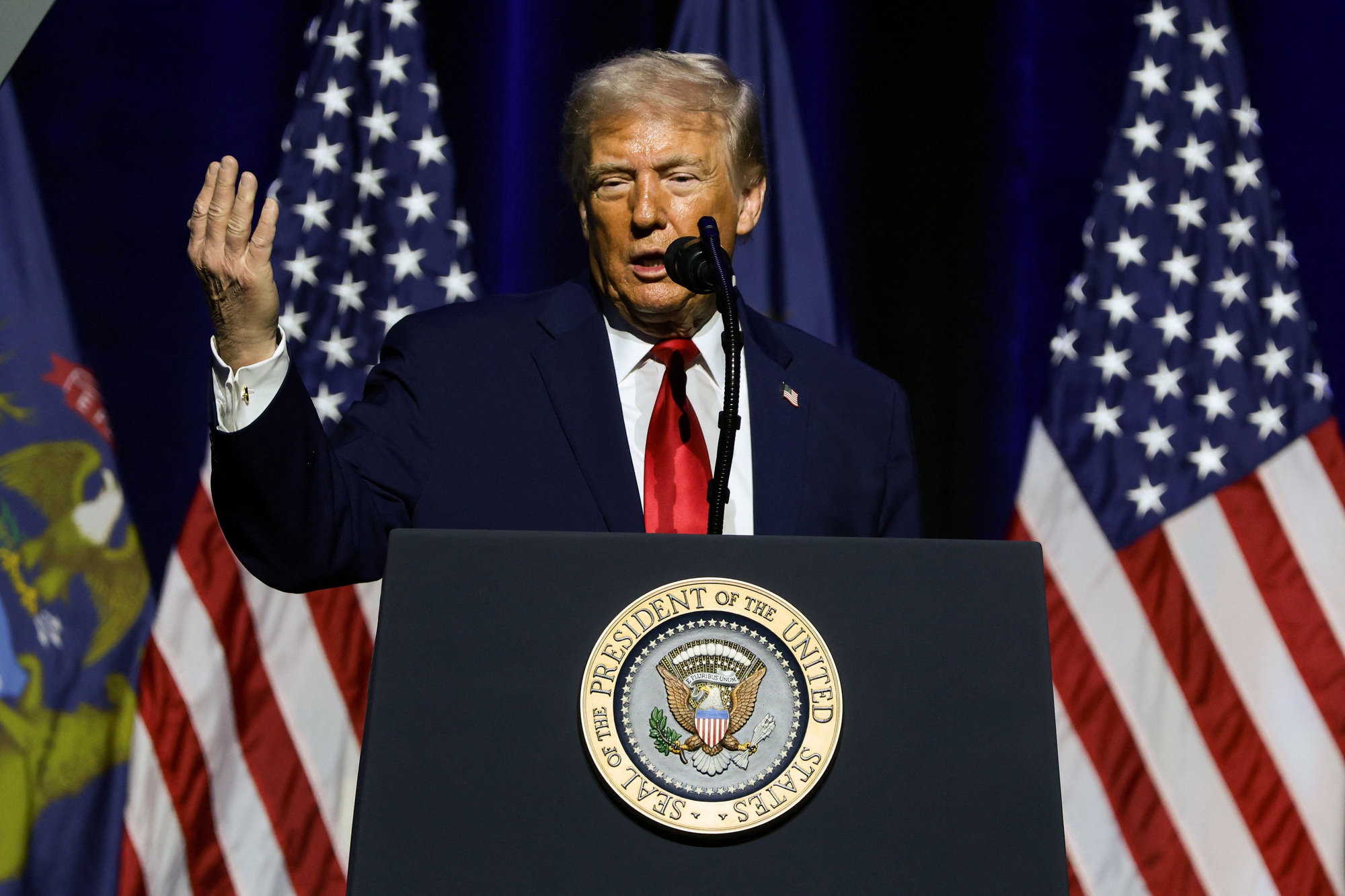
For now, investors are betting that Mr. Trump may yet soften his stance—particularly as he prepares to address global business leaders at the World Economic Forum in Davos later this week. Futures markets suggest an expectation that negotiations or partial rollbacks could limit the immediate damage.
But even a retreat may not undo the underlying harm. As one economist noted, “Markets can recover from bad policies. They struggle more with unpredictability.”
Whether Wall Street’s jolt proves a brief tremor or the opening act of a deeper economic rupture may depend on how far the administration is willing to push its confrontation with Europe—and whether political and market forces are strong enough to push back.
For now, the message from investors is clear: the risks are rising, and patience is wearing thin.