Trump’s NATO Remarks Ignite Fury Across Europe and Deepen Transatlantic Rift
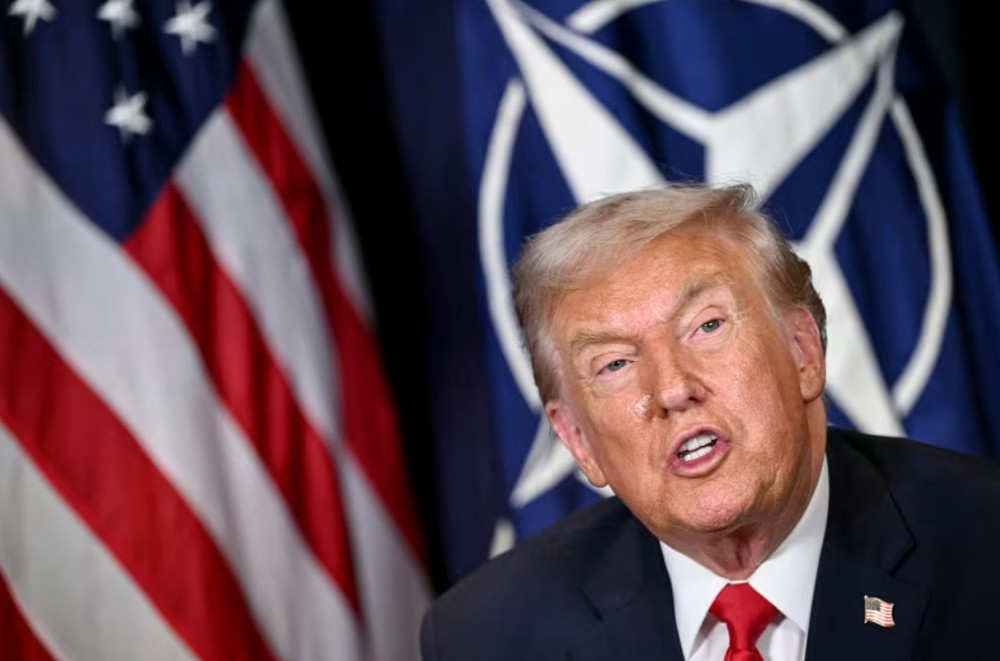
WASHINGTON — President Donald J. Trump has triggered a wave of anger and disbelief across Europe after claiming that America’s NATO allies “never sacrificed” for the United States during the war in Afghanistan — remarks that European leaders, military veterans, and former U.S. diplomats say insult the memory of hundreds of allied soldiers who died fighting alongside American forces.
The comments, delivered during a recent interview on Fox News and echoed in subsequent appearances on conservative media outlets, have reverberated far beyond Washington. In capitals from London to Copenhagen, officials responded with unusually blunt language, accusing Mr. Trump of rewriting history and undermining the foundations of the NATO alliance at a moment of heightened global instability.
“This crosses a red line,” said Rufus Gifford, a former U.S. ambassador to Denmark, in an interview on MSNBC. “These countries were in Afghanistan for one reason: the United States invoked Article 5 after September 11. They went because we asked.”
A Claim That Reopened Old Wounds
Mr. Trump asserted that NATO allies “stayed a little back” during the Afghanistan war and suggested that the United States had never truly needed them. The remarks echoed his long-standing skepticism toward NATO and revived language critics say mirrors his past disparaging comments about fallen U.S. service members.
But the reaction this time has been particularly intense, in part because Afghanistan remains a deeply personal and painful chapter for many allied nations.
The United Kingdom lost 457 service members during the conflict, suffering its heaviest sustained combat casualties since the Korean War. Denmark, a country of just under six million people, incurred one of the highest per-capita casualty rates of any NATO member in Afghanistan. Canadian, Dutch, French, and German forces also endured significant losses.
“These were not symbolic deployments,” said Ben Obese-Jecty, a British Conservative member of Parliament and Afghanistan veteran, in an interview with Sky News. “We fought in Sangin. We bled there. To say we weren’t on the front lines is outrageous.”
Political Backlash in Britain and Beyond
British politicians across party lines condemned Mr. Trump’s remarks. Ed Davey, leader of the Liberal Democrats, accused Mr. Trump of cowardice, noting that the former president had received five draft deferments during the Vietnam War.
“How dare he question the sacrifice of British troops,” Mr. Davey said in a video statement shared widely on X and Facebook. “This is an insult not just to Britain, but to every NATO ally.”
The United Kingdom’s Armed Forces Minister, Alistair Carns, who served multiple tours in Afghanistan, delivered one of the most forceful rebukes yet, calling Mr. Trump’s claims “utterly ridiculous” and emphasizing that NATO’s invocation of Article 5 after 9/11 was unprecedented.
“We shed blood together,” Mr. Carns said. “Not everybody came home.”
In Denmark, officials and veterans expressed what one former diplomat described as “cold fury.” Danish media outlets replayed footage of soldiers lost in Helmand Province, where Danish and British forces operated alongside U.S. Marines.
Veterans Speak Out
Among the most emotionally charged responses came from military veterans themselves. Liz McConaghy, a Royal Air Force veteran who flew medical evacuation missions in Afghanistan, said Mr. Trump’s comments erased the reality of combat and sacrifice.
“We picked up dying American soldiers,” she told Forces News. “We didn’t care what flag was on their shoulder. We all bled the same.”
Former heads of the British Army echoed that sentiment. General Lord Dannatt called Mr. Trump’s remarks “wrong, outrageous, and deeply disrespectful,” adding that they raise serious questions about his fitness for leadership.
A Diplomatic Pattern, Not an Isolated Incident
European officials say the controversy cannot be viewed in isolation. It follows a series of recent episodes that have unsettled allies, including Mr. Trump’s remarks about Greenland, confusion between Greenland and Iceland during an appearance at the World Economic Forum in Davos, and renewed threats to abandon or radically reshape NATO.
On social media and cable news, commentators have noted that these incidents collectively reinforce concerns that a second Trump presidency would accelerate Europe’s push toward strategic independence from Washington.
“We are already seeing new international structures forming,” Mr. Gifford warned. “Transatlantic cooperation that increasingly excludes the United States.”
The Historical Record
Military historians and defense analysts say the facts are clear: NATO allies played central roles throughout the Afghanistan war. British, Canadian, and Danish forces bore responsibility for some of the most dangerous regions, while allied special forces conducted joint operations with U.S. units.
Moreover, it was the United States itself that invoked Article 5 in 2001 — the only time in NATO’s history the mutual defense clause has been activated.
“To deny allied sacrifice is to deny NATO’s very purpose,” said a former Pentagon official in an interview with CNN.
Political Ramifications at Home
While European leaders have spoken out forcefully, reactions among U.S. Republican lawmakers have been more muted. Critics argue that silence from self-described “pro-military” politicians risks legitimizing rhetoric that demeans allied service members.
On social media, veterans’ groups and national security experts have urged bipartisan condemnation, warning that dismissing allied sacrifice could weaken deterrence against adversaries like Russia and China.
A Moment of Reckoning
For many in Europe, the episode has become a turning point — not just in relations with Mr. Trump, but in perceptions of American reliability.
“These are our closest allies,” Mr. Gifford said. “People who would have died for us — and did. Trust, once broken, is not easily repaired.”
As the controversy continues to ripple across NATO capitals, one message has emerged with unusual clarity: history, especially wartime history written in blood, is not easily erased — and attempts to do so can carry lasting consequences.