Europe Weighs a “Trade Bazooka” as Trump’s Greenland Threats Reshape Global Alliances
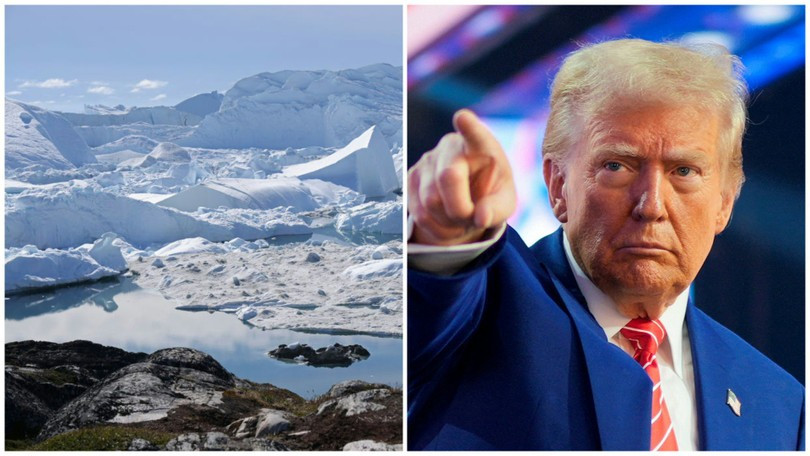
As President Donald Trump continues to issue threats to assert U.S. control over Greenland—and increasingly, to question Canada’s sovereignty—European leaders are preparing what some diplomats privately describe as a “last-resort” economic response: a sweeping trade countermeasure designed to cripple U.S. market access before the crisis escalates into a military confrontation.
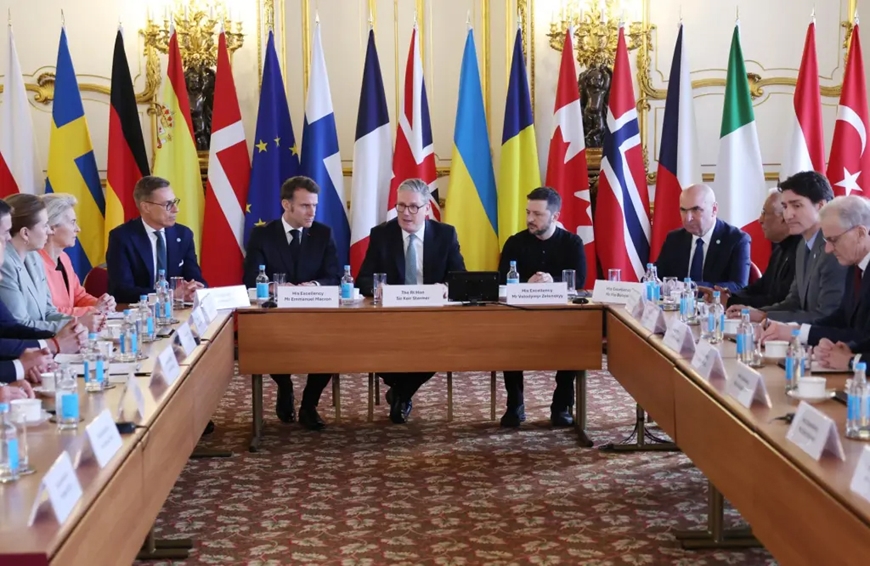
According to multiple European officials familiar with internal deliberations, senior ambassadors from across the European Union convened over the weekend in a closed-door emergency session to discuss activating the bloc’s Anti-Coercion Instrument, a powerful legal and economic mechanism informally dubbed the “trade bazooka.” Originally conceived as a deterrent against economic pressure from China, the instrument would allow the EU to impose broad retaliatory measures—including market closures, investment restrictions, and coordinated financial actions—against any country deemed to be using economic or military coercion against a member state or partner.
The extraordinary nature of the discussion reflects how sharply relations between Washington and its traditional allies have deteriorated.
A Crisis Centered on Greenland
The immediate catalyst is Greenland, the semi-autonomous Danish territory whose strategic Arctic location and mineral wealth have made it a focal point of Trump’s foreign policy rhetoric. In recent weeks, the president has publicly threatened tariffs against European countries that oppose U.S. control over the island, warning of a 10 percent levy beginning February 1, followed by an additional 25 percent later in the year.
European leaders view the threats as an unprecedented challenge to postwar norms of sovereignty and alliance solidarity. Denmark, a NATO ally whose soldiers fought and died alongside U.S. forces in Afghanistan after the United States invoked Article 5 following the September 11 attacks, has emerged as a symbol of what many in Europe see as betrayal.
In a joint statement issued by Denmark, Finland, France, Germany, the Netherlands, Norway, Sweden, and the United Kingdom, allied governments emphasized that recent Danish-led military exercises in Greenland were defensive in nature and conducted within NATO frameworks.
“We stand in full solidarity with the Kingdom of Denmark and the people of Greenland,” the statement said. “Tariff threats undermine transatlantic relations and risk a dangerous downward spiral.”
Preparing for Economic Escalation
European officials stress that the trade bazooka is not yet activated—but its discussion alone signals how far contingency planning has advanced. Under the Anti-Coercion Instrument, the EU could restrict U.S. firms’ access to European procurement markets, impose sector-wide tariffs, suspend intellectual property protections, or coordinate capital market responses.
Economists note that Europe collectively holds trillions of dollars in U.S. Treasury securities, giving it substantial financial leverage should relations spiral further. While officials caution against overestimating the likelihood of bond sales—an action that would also harm European interests—the mere existence of such leverage underscores the seriousness of the standoff.
“Europe is signaling that it has tools well beyond symbolic protest,” said one senior EU diplomat. “This is about deterrence.”
Canada Drawn Into the Crosshairs
At the same time, Trump has repeatedly suggested that Canada is “too vulnerable” and has privately told aides that the country should become the 51st U.S. state, according to reporting by NBC’s Kristen Welker. Those remarks have further alarmed allies and accelerated Ottawa’s efforts to diversify its trade relationships away from the United States.
Canadian Prime Minister Mark Carney has responded by deepening economic ties with Asia, including a landmark strategic trade framework with China covering electric vehicles, liquefied natural gas, and agricultural exports such as canola. The agreement, valued by analysts at up to $1 trillion over the long term, represents one of the most significant realignments of Canadian trade policy in decades.
Chinese electric vehicles are expected to enter the Canadian market in large numbers, a development that could further strain the already fragile North American auto sector. Meanwhile, public sentiment in Canada has shifted sharply: recent polls show that roughly three-quarters of Canadians are boycotting U.S. goods, a rare display of consumer-driven geopolitical protest between historically close partners.
NATO, Intelligence, and Trust Erosion
Compounding tensions are intelligence allegations that have deeply unsettled European capitals. Danish officials have acknowledged concerns that U.S. intelligence services have sought sensitive information about Greenlandic military installations, ports, and air bases. Similar allegations have emerged from France and Ukraine, where officials say they uncovered evidence that U.S.-provided intelligence was being relayed to Russia during the war in Ukraine.
In one striking episode, French and Ukrainian officials reportedly fed deliberately false intelligence into shared channels to test whether it would reach Moscow. When it did, confidence in Washington’s handling of allied intelligence eroded further.
“These are not misunderstandings,” said one European defense official. “They are breaches of trust.”
A World Reordering Without Washington
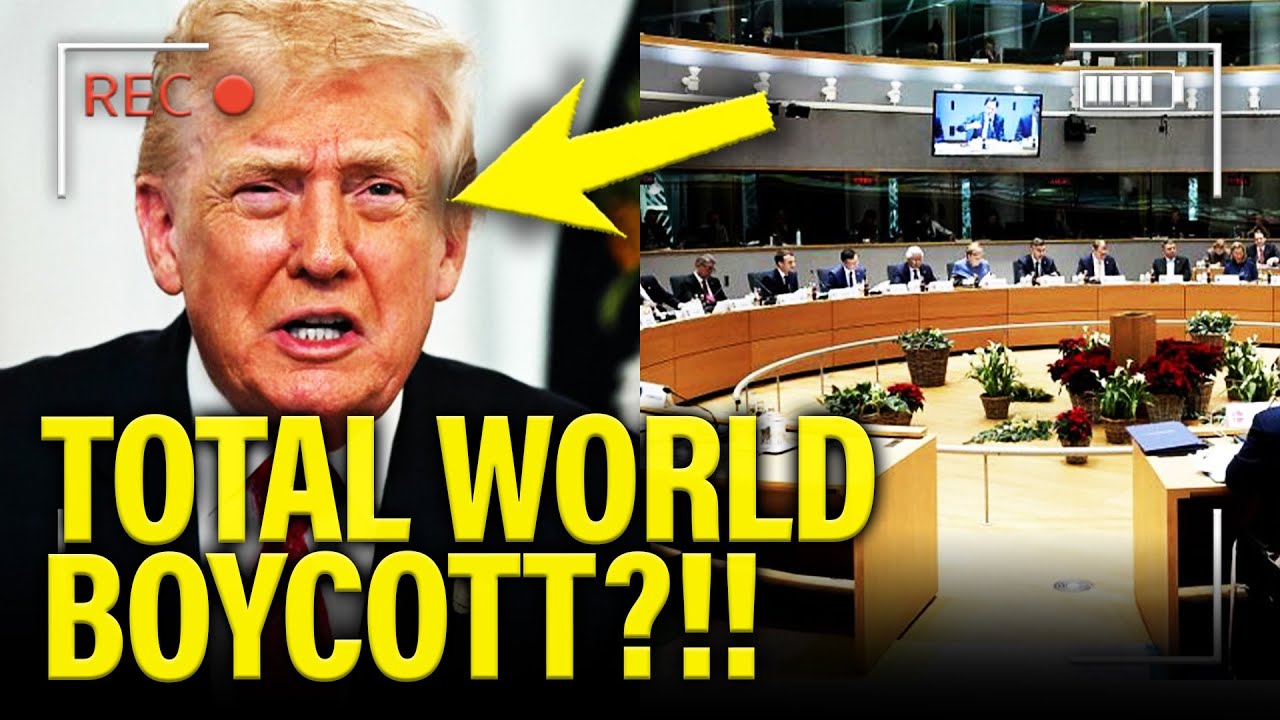
As Washington threatens tariffs and territorial expansion, other global actors are moving in the opposite direction—expanding trade networks and reinforcing multilateral frameworks. The European Union is finalizing one of the largest free trade agreements in its history with Mercosur nations in South America, encompassing more than 700 million consumers. China’s economy, despite U.S. decoupling efforts, grew approximately 5 percent in 2025, buoyed by new trade partnerships across Asia, Africa, and Latin America.
Even traditionally conservative European leaders, including Italy’s Prime Minister Giorgia Meloni, have openly questioned the logic of the administration’s Greenland strategy.
At the United Nations last week, the United States struggled to rally support on unrelated security initiatives, underscoring its growing diplomatic isolation. Countries that once reflexively aligned with Washington are now hedging—or openly declining to follow its lead.
A Moment of Reckoning
For many European leaders, the Greenland crisis is no longer about one territory. It is about whether the post–World War II alliance system can survive a U.S. president willing to use economic and military threats against allies.
Prime Minister Mette Frederiksen of Denmark put it bluntly in a written statement: “Europe will not be pressured. We seek cooperation, not conflict—but we will defend sovereignty.”
Whether the trade bazooka is ultimately fired remains uncertain. But its emergence as a serious policy option marks a turning point in transatlantic relations—one in which economic warfare is now viewed as preferable to military confrontation, and where the United States is increasingly treated not as an unquestioned ally, but as a potential coercive power.
For now, diplomats on both sides insist that dialogue remains possible. Yet the preparations underway suggest that Europe is bracing for a future in which restraint from Washington can no longer be assumed.