Republicans Break Ranks as Trump’s Hard-Line Agenda Faces Mounting Blowback
WASHINGTON — The most striking feature of President Trump’s second-term politics in recent weeks has not been Democratic resistance so much as a growing, public unease inside his own party — a scramble to assign blame, create daylight and, in some cases, inoculate vulnerable Republicans ahead of the 2026 midterms.
That intraparty turbulence has focused on the administration’s immigration enforcement posture and the political damage from high-profile incidents that critics say have undercut the White House’s claim of “orderly” operations. It has also been fueled by a fresh round of polling showing the president in a weaker position than he and his allies routinely portray. An Ipsos survey published on Jan. 28, 2026, put Mr. Trump’s approval rating at 38%.
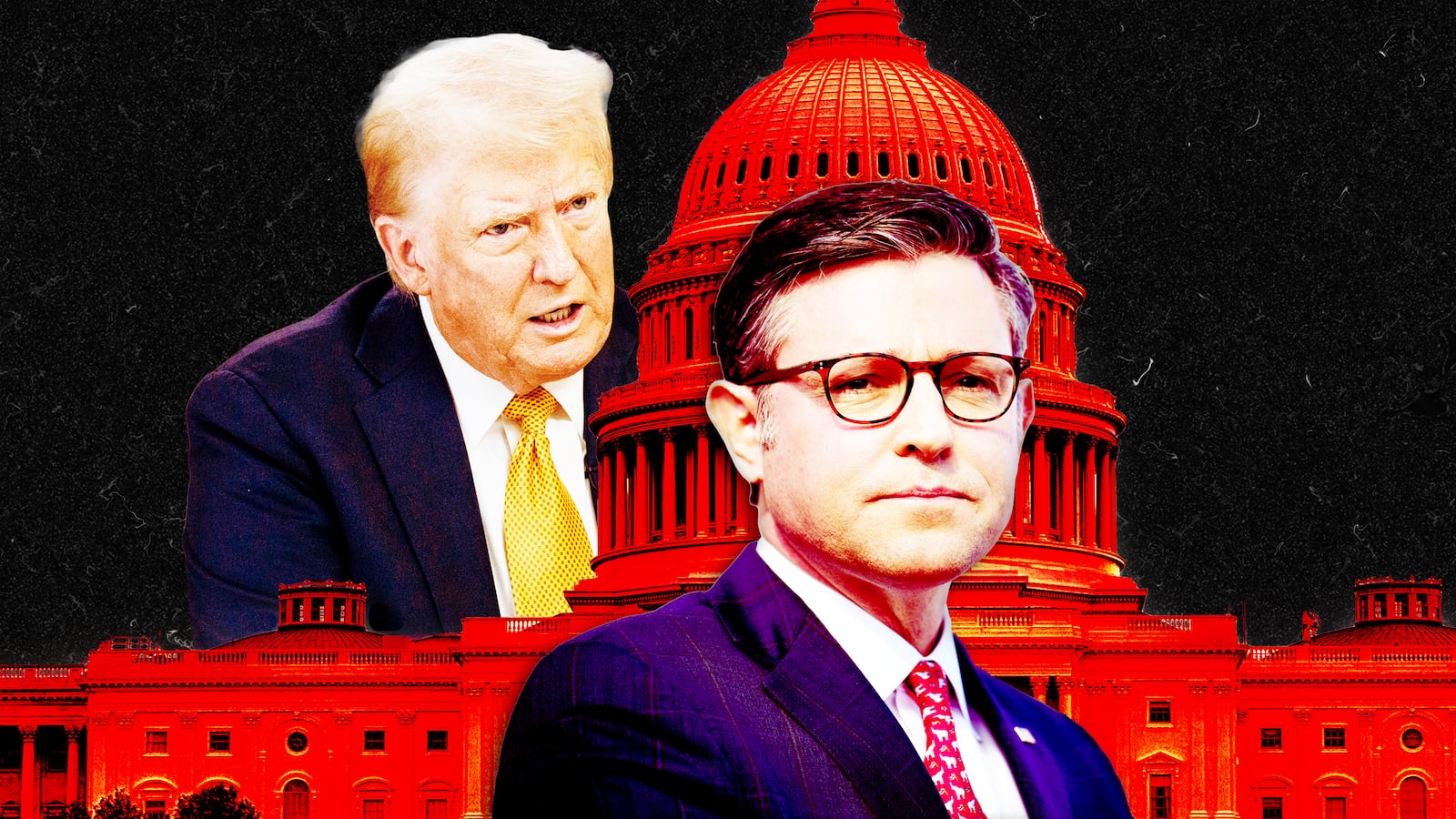
At the center of the Republican finger-pointing are two of the administration’s most visible architects of the crackdown: Kristi Noem, the Homeland Security secretary, and Stephen Miller, Mr. Trump’s influential adviser on immigration. In recent days, Republicans who have generally avoided direct confrontation with the White House have begun criticizing both — sometimes harshly — in language that underscores the political peril they see in the administration’s approach.
Senator Thom Tillis of North Carolina, a Republican who has at times tried to straddle the party’s pro-Trump base and its more traditional wing, delivered one of the most cutting rebukes, describing Ms. Noem’s leadership as “amateurish” and questioning her competence. In the same exchange, he derided Mr. Miller as well, saying he had “never fail[ed] to live up to my expectations of incompetence,” according to an Associated Press report.
Senator Lisa Murkowski of Alaska went further, telling reporters she had “lost confidence” in Ms. Noem — a notable statement from a Republican who has often positioned herself as an institutionalist wary of executive overreach, but who also supported Ms. Noem’s nomination.
The White House, for its part, has tried to project steadiness. But the internal dynamic described by administration-watchers increasingly resembles a circular firing squad: the Department of Homeland Security and its defenders arguing that agents on the ground are being scapegoated; Trump-world operatives signaling that agencies failed to follow guidance; and congressional Republicans insisting they are not the ones who should pay the political price.
That tension has played out in real time across cable news and social media, where short clips — often stripped of context and reposted with partisan framing — travel faster than official statements. On platforms like X, TikTok and YouTube, pro- and anti-Trump influencers have turned the dispute into a running narrative: that the administration is either being undermined by bureaucracy, or that it is operating beyond the bounds of restraint and accountability. The result is less a unified message than a collection of competing explanations, each tailored to a different audience.

For Republicans facing competitive races, the stakes are straightforward. Immigration, long a signature issue for Mr. Trump and a reliable rallying point for the party, is now entangled with public images and allegations that opponents say suggest chaos or excessive force. When Republican senators criticize senior officials, they are not merely venting; they are attempting to separate the party’s electoral fortunes from the most controversial elements of the White House’s enforcement strategy.
In interviews, GOP strategists describe a party trying to hold two ideas at once: that border security remains popular among Republican voters, and that certain tactics — or at least certain headlines — are becoming politically toxic in swing states.
That calculation is visible not only on Capitol Hill but also in the early maneuvering for 2026 gubernatorial races. In Ohio, Vivek Ramaswamy, the biotech entrepreneur and former presidential candidate, is preparing to launch a bid for governor, stepping into a crowded Republican contest to succeed the term-limited Gov. Mike DeWine. His candidacy reflects the party’s continued appetite for Trump-aligned figures — but also the risk that national controversies could swamp state-level messaging.
Democrats, meanwhile, are betting that fractures inside the Republican coalition will widen as the campaign season intensifies. Some party officials and allied groups have begun portraying the administration as both unpopular and unstable — a message reinforced by viral content and by the emerging genre of “accountability” clips that compile Republican criticisms of the administration into shareable videos.
In California, the political mood is different but no less shaped by the national moment. Tom Steyer, the billionaire environmental advocate who ran for president in 2020, has signaled plans to run for governor in 2026, arguing that California’s inequality demands aggressive policy responses — and that wealthy Californians should shoulder more of the burden. His pitch, in part, is that the era of corporate and billionaire deference to Trump-style politics has left civil society weaker than it should be.
The broader question is whether the Republican critiques of Ms. Noem and Mr. Miller represent a genuine break — or merely a tactical repositioning. Historically, intraparty dissent in the Trump era has often ended with Republicans returning to the fold, especially when faced with pressure from the president’s base. Yet the open nature of the recent attacks is difficult to ignore. It suggests not only discomfort with the administration’s messaging after controversial incidents, but also a deeper anxiety about governance and competence.
In public, Mr. Trump has largely responded to conflict the way he often does: dismissing criticism, touting favorable data points, and insisting the “real” story is one of success. But the polling that shows him at 38% approval is the kind of number that makes political professionals — donors, consultants, and candidates — start making contingency plans.
And so the blame game continues: an administration eager to claim maximal authority when announcing new measures, but increasingly willing to distribute responsibility when the aftermath turns politically damaging. For Republicans watching their own re-election prospects, the imperative is not theoretical. It is a cold electoral reality: if the party is to keep swing districts and contested Senate seats, it must persuade voters that it can deliver security without disorder — and strength without spectacle.
If it cannot, the midterms may become not just a referendum on Mr. Trump’s agenda, but a test of whether the Republican Party can remain cohesive while trying to outrun the consequences of the very politics that remade it.