Greenland and the Fracturing of Republican Power
Washington — Long after midnight, the lights remained on inside the Capitol. Staffers drifted through hallways with phones pressed to their ears. Text messages stacked up faster than they could be answered. The anxiety was familiar, but its source was not. This time, the unease rippling through the Republican Party was not driven by Democrats, the courts, or an election setback. It was coming from the Oval Office.

What began as an offhand fixation — Donald Trump’s repeated public musings about acquiring Greenland — has hardened into something far more destabilizing: a stress test of Republican unity, presidential restraint, and America’s credibility with its allies. What once sounded absurd is now treated in Washington as a political and institutional risk with real consequences.
The concern is not that the United States is on the verge of purchasing or invading the vast Arctic territory, which is governed by Denmark and protected under NATO. It is that the president’s insistence on ownership, rather than cooperation, has exposed deep fractures inside his own party — fractures that Republican leaders are struggling to contain.
Behind closed doors, lawmakers describe a familiar but intensifying pattern: an idea dismissed as rhetorical flourish becomes an obsession; resistance only deepens the fixation; and allies are left scrambling to manage the fallout. In this case, the stakes are unusually high. Greenland is not a rival or a neutral state. It is part of a NATO ally, home to long-standing U.S. military installations, and already integrated into American defense strategy.
“There is no strategic vacuum here,” one Republican national security aide said privately. “What’s missing isn’t access or cooperation. What’s missing is restraint.”
That assessment is increasingly voiced aloud. Representative Don Bacon of Nebraska, a former Air Force general and a mainstream conservative, drew national attention when he publicly criticized the Greenland fixation as reckless and warned that any attempt to coerce or seize allied territory would provoke bipartisan backlash — potentially including impeachment. His comments, widely circulated on cable news and social media, carried unusual weight precisely because Bacon is not known for provocation. He is also retiring, freeing him from electoral pressure that constrains many of his colleagues.
His warning underscored a shift that has been quietly unfolding for months: Republican anxiety about a president whose impulses are no longer viewed as containable. In previous controversies, lawmakers often reassured themselves that Trump’s rhetoric exceeded his intentions. This time, many are no longer convinced.
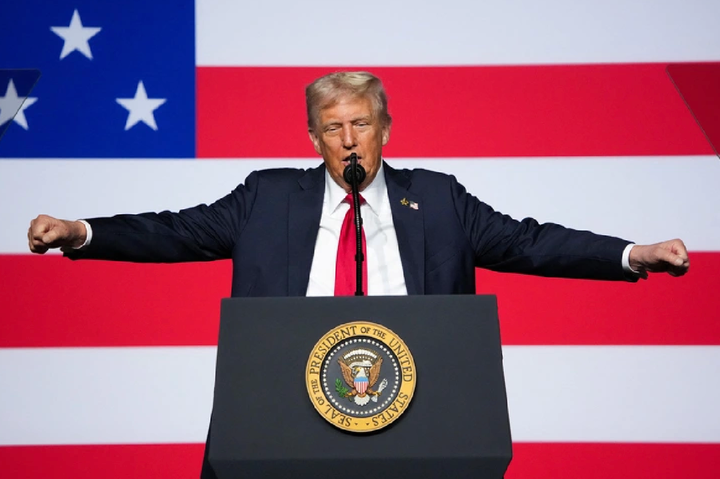
At the heart of the unease is not Greenland itself, but what it represents. Trump has repeatedly framed ownership as superior to alliances, leases, or treaties — an argument he echoed in interviews and public remarks that circulated widely across social media. The language mirrors his long-standing worldview: power is tangible, visible, and proprietary. To possess is to dominate.
That logic has unnerved foreign policy professionals across the ideological spectrum. Greenland already hosts U.S. military infrastructure critical to missile defense and Arctic surveillance. Vice President JD Vance has visited the region. There is no credible argument that American security requires sovereignty rather than partnership. The fixation, critics say, appears driven less by strategy than by symbolism.
Inside the House of Representatives, the political costs are mounting. Republicans in swing districts report that donors and voters alike are bewildered. Trump campaigned on affordability, inflation, and economic grievance. Yet the Greenland discussion invites an entirely different set of questions — about cost, priorities, and seriousness.
Campaign strategists warn that the optics are unforgiving. Democrats, they say, would have little difficulty framing the issue: while household expenses rise, the president talks about buying territory abroad. There is no populist framing that reliably neutralizes that contrast, especially when the target is an ally rather than an adversary.
Speaker Mike Johnson’s predicament illustrates the party’s broader dilemma. With a razor-thin majority and a fractured caucus, Johnson lacks the procedural control that once allowed leadership to shield members from politically perilous votes. Discharge petitions, standalone measures, and forced votes increasingly expose divisions that leadership would prefer to manage quietly.
This vulnerability has become more pronounced as Greenland intersects with another sensitive area: war powers. Recent Senate votes aimed at limiting unilateral presidential military authority — supported by several Republicans — have sent a clear signal. Lawmakers who once championed expansive executive power are now seeking guardrails, not against a Democratic president, but against their own.
That reversal is striking. It reflects not a philosophical shift, but a loss of confidence. When legislators believe a president may act impulsively, they reassess doctrines they once defended.
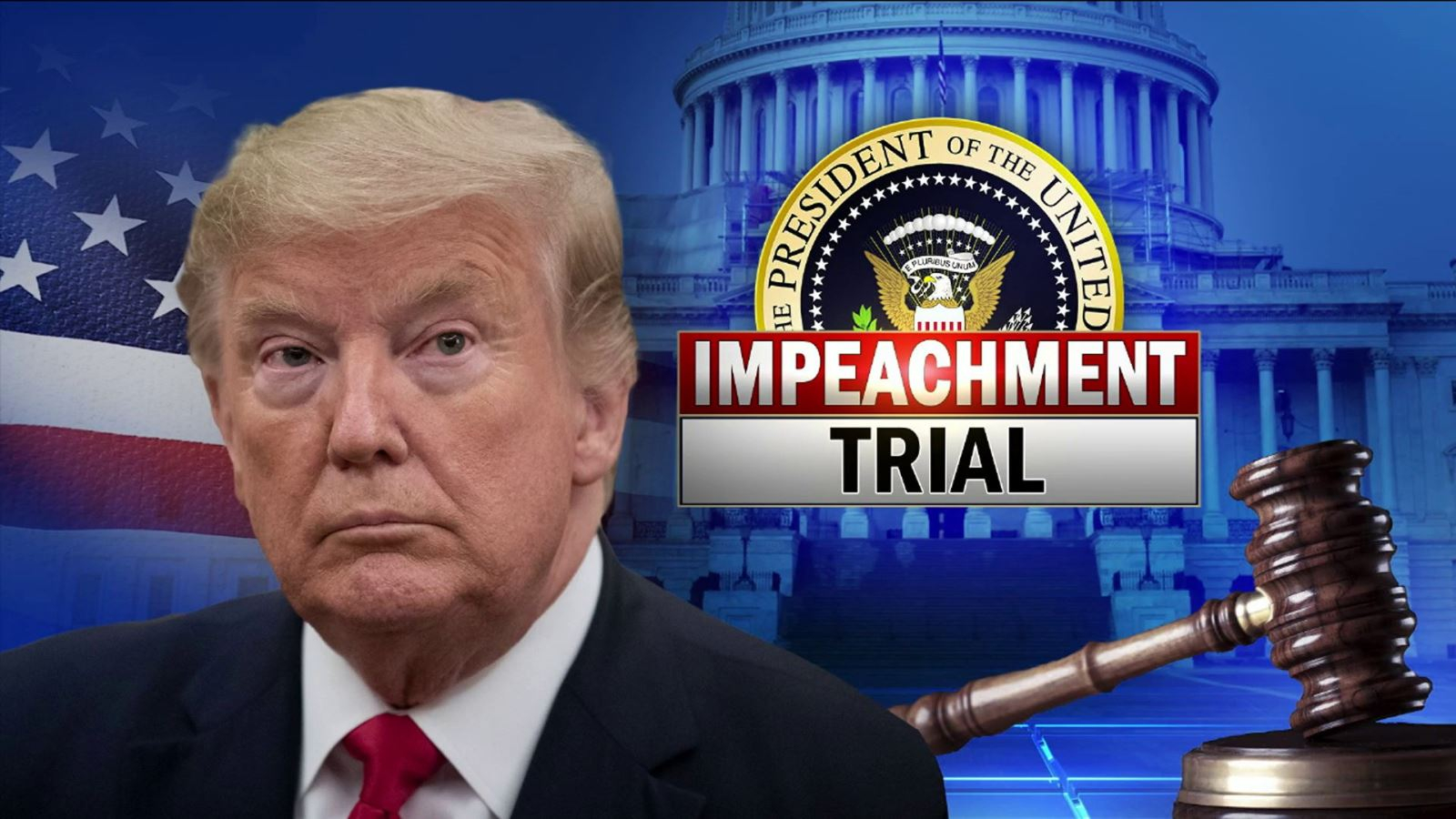
The impeachment question, though still hypothetical, now hovers over the conversation. Its significance lies less in likelihood than in impact. The mere discussion alters incentives. It raises the stakes of every statement and amplifies every internal disagreement. For a president who has long equated opposition with betrayal, that dynamic risks escalation rather than retreat.
All of this unfolds against a broader backdrop of strained alliances. Trump’s skepticism toward NATO, his transactional approach to Ukraine, and his willingness to echo adversarial talking points have already unsettled European partners. Greenland, in this context, becomes a symbol — not of Arctic strategy, but of an American presidency that views alliances as optional and sovereignty as negotiable.
Diplomats and military planners, accustomed to thinking in decades, now hedge against unpredictability. Even hypothetical scenarios alter calculations. Allies prepare quietly, not because they expect action tomorrow, but because uncertainty itself erodes trust.
Within the Republican Party, the fracture is no longer theoretical. It is visible in public statements, procedural breakdowns, and subtle repositioning. Some lawmakers double down on loyalty, betting that proximity to Trump remains the safest path. Others signal distance, presenting themselves as institutional checks rather than enthusiastic partners.
What makes the moment especially volatile is that it is unfolding without a clear trigger. There has been no order, no deployment, no irreversible act. Instead, pressure accumulates gradually — through repetition, resistance, and the growing recognition that norms alone may not suffice.

The MAGA movement was built around personal loyalty, not institutional discipline. That structure delivered victories, but it also left the party ill-equipped to manage a leader whose impulses collide with global realities. For years, Republicans accepted chaos as the price of power. Now, many are confronting the cost.
Greenland, a frozen landmass far from most American voters, has become an unlikely mirror reflecting a deeper crisis: a presidency increasingly untethered from strategic logic, and a party struggling to decide whether loyalty still outweighs consequence.
The question facing Republicans is no longer whether this fixation is damaging. It is whether they are willing — and able — to stop it before damage turns into rupture. The world, watching closely, is already adjusting its expectations.
And in Washington, as the lights stay on and the phones keep buzzing, the silence between decisions feels heavier than ever.