As Trump Threatens Mexico, Canada Confronts a New Era of American Power
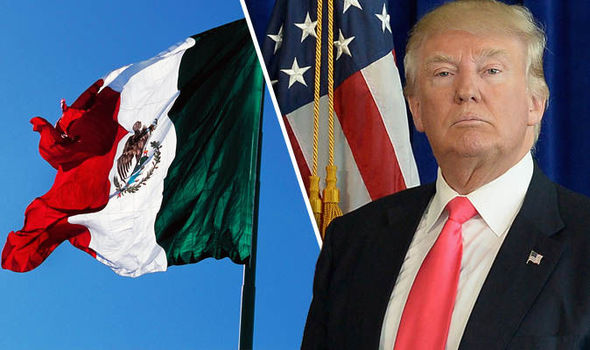
By any conventional measure, the language coming from Washington would once have been unthinkable.
In recent days, President Donald Trump has openly suggested the possibility of deploying U.S. military forces on Mexican soil, framing the move as a necessary escalation in the fight against drug cartels and what he has described as “narco-terrorism.” Mexico’s government has rejected the idea outright. But the threat itself — delivered publicly, without diplomatic ambiguity — has already altered the political landscape of North America.
For Canada, the implications are profound.
When a U.S. president openly threatens the use of force against a neighboring country, history suggests that the consequences rarely remain confined to one border. The concern in Ottawa is not that American tanks are preparing to roll north, but that the assumptions underpinning Canada’s security — sovereignty, predictability, and a shared commitment to international rules — are eroding in real time.
The threat toward Mexico does not stand alone. It follows a sequence of moves that have unsettled allies and adversaries alike: U.S. military action in Venezuela, renewed talk of acquiring Greenland “for security reasons,” and repeated rhetoric questioning the legitimacy of borders and international constraints. Each episode has been justified differently — counterterrorism, national defense, regional stability — but analysts say the underlying logic is consistent.
Force, in this worldview, is not a last resort. It is a policy option.
That shift matters deeply for Canada, a country whose national strategy has long relied on the assumption that disputes in the Western Hemisphere are managed through diplomacy, institutions, and law. On American cable news and across social media platforms like X, the Mexico threat has been debated largely through a domestic U.S. lens: border security, fentanyl, political optics. But Canadian analysts are watching a different signal.
They see normalization.
Trump’s language toward Mexico is neither vague nor hypothetical. He has explicitly raised the prospect of unilateral military action, even in the absence of consent from Mexico’s government. That mirrors the pattern seen in Venezuela, where Washington acted decisively despite international objections, and echoes his comments about Greenland, where he has said the United States is considering “all options,” including military ones.
In a widely discussed interview with The New York Times, Trump suggested that he does not view international law or congressional oversight as binding constraints, describing his own judgment and morality as the primary limits on his actions. The remark circulated rapidly online, triggering alarm among foreign policy experts who see it as a candid expression of executive unilateralism.
For Canada, the danger lies less in open conflict than in what former officials describe as “implicit coercion.” Increased U.S. military patrols justified as shared security measures. Expanded American presence in Arctic waters or airspace. Decisions made for Canada rather than with Canada, framed as technical necessities rather than political choices.

Sovereignty, experts note, rarely collapses all at once. It erodes through precedent.
Trump’s tendency to group Canada and Mexico together in his rhetoric amplifies those concerns. Whether discussing trade enforcement, border security, or fentanyl flows, he routinely treats North America as a single pressure zone — a space where tariffs, threats, and force can be applied interchangeably. The factual differences between Canada and Mexico often disappear in that framing, replaced by a transactional logic of compliance and leverage.
Canada has heard this language before. References to becoming a “51st state.” Dismissive remarks about borders drawn “a long time ago.” Suggestions that sovereignty is negotiable if it conflicts with U.S. interests. In isolation, such comments might once have been dismissed as provocation. In sequence, they look more like preparation.
The Arctic looms especially large in this calculus. Trump’s fixation on Greenland has always been about more than territory. As melting ice opens new shipping lanes and intensifies competition over energy and military positioning, the Arctic is becoming a central theater of global power politics. Canada’s northern infrastructure, though expanding, remains thin in key regions. That creates temptation — not necessarily for annexation, but for assumption: assuming patrols are required, assuming authority in the name of efficiency, assuming acceptance.
On American social media, some commentators have framed such scenarios as benign or even helpful to allies. Canadian officials see them differently.
What makes this moment particularly destabilizing is the broader impact on the rule-based international system. Canada has been one of its most consistent defenders in the Western Hemisphere, advocating multilateralism and constraints on force. That role brings influence — but also vulnerability. Countries that depend most on rules suffer first when rules weaken.
Yet Canada is not responding passively.
Under Prime Minister Mark Carney, Ottawa has moved to insulate itself from precisely this kind of pressure. Diplomatic engagement with Europe has intensified. NATO allies have been quietly alerted to Canadian concerns. French officials have warned publicly that threats against Canada would damage the global order itself. Arctic commitments are being reinforced, and Canada’s posture in multilateral forums has become more assertive.
Trump’s strategy has often relied on isolation. Pressure is most effective when a country stands alone, uncertain of support. Canada has worked deliberately to deny that condition. By anchoring itself visibly in alliances and norms, it has altered the cost-benefit calculation for any would-be coercion.
That does not mean the risk has vanished.
Trump’s threat toward Mexico should alarm Canada not because war is imminent, but because it confirms that restraint can no longer be assumed. The threshold for using force — or threatening it — has shifted. Each time such language goes unanswered, it becomes easier to repeat.
But there is a reality the White House may be underestimating. Canada today is not isolated, inattentive, or unprepared. Any serious attempt to pressure Canada militarily or politically would not remain a bilateral matter. It would reverberate across alliances, markets, and institutions — exposing not strength, but recklessness.
The question facing Ottawa now is not whether Canada is under immediate threat. It is whether the country is moving quickly enough to adapt to a world in which long-standing assumptions about American behavior no longer hold.
As Trump redraws the boundaries of acceptable power, Canada is being forced to redraw its own lines — not on a map, but in strategy, alliances, and resolve.
The era of quiet certainty is over. What replaces it will depend on how decisively Canada acts, and how clearly it signals that sovereignty, once tested, will not be surrendered quietly.